Why Is Topsoil Important for Lawns and Gardens?
Topsoil matters because the upper soil layer is where most lawn and garden roots get water, air, and nutrients. Without that layer, grass thins and beds hold moisture poorly. Ignore it, and seed, plants, and irrigation can go to waste on soil that drains badly or stays too tight. This guide explains what topsoil does, when to add it, and when compost, grading, or drainage fixes make more sense.
This guide is part of our Topsoil depth: how much you need and why it matters series.
What does topsoil do?
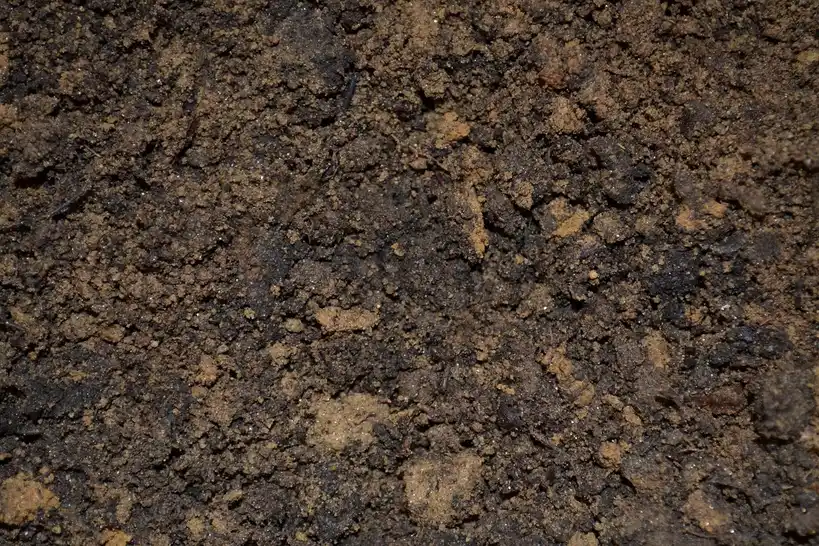
Topsoil is the uppermost soil layer above denser subsoil. It contains mineral particles, organic matter, and microorganisms, and it is usually the most fertile area for plant growth. It typically sits in the shallow, active root zone rather than deep down, which is why it matters so much for plant performance.
That thin layer matters because roots need more than “soil.” They need a zone that passes water, stores nutrients, and leaves enough air space for root growth. When that zone is thin, compacted, or low in organic matter, plants struggle even if the surface looks fine.
How do organic matter, minerals, and microbes help?
Topsoil holds mineral particles that give structure, organic matter that improves nutrient and moisture storage, and microorganisms that help cycle nutrients into forms plants can use. Real topsoil is usually darker and less compact than lower layers, and blended topsoil may also include mineral material and compost.
Organic matter does two jobs that matter in lawns and beds. It helps hold water so the root zone stays usable between rains or irrigation, and it helps hold nutrients so they are not lost as fast through drainage. It also supports microbial activity, which helps plants access nutrients over time.
Why do roots depend on this layer?
Roots need three things at usable depth: water uptake, nutrient uptake, and aeration. Topsoil is the working layer that supports all three at once, so roots can penetrate, breathe, and keep drawing moisture after the surface dries. If the layer is too dense or too loose, root growth suffers.
That is why topsoil is not just “dirt to spread around.” It is the layer that controls whether roots can penetrate, breathe, and keep drawing moisture after the surface dries.
Why does topsoil matter for roots?
Topsoil matters because roots do their work in that upper layer. It supports water uptake, nutrient uptake, and aeration at the same time, so plants can establish and keep growing. A root zone that is too shallow, too compacted, or too sandy will limit all three, even if fertilizer is added.
How does topsoil help water uptake?
Moisture retention is one of topsoil’s main jobs. It helps reduce evaporation from the root zone and keeps water available longer after rain or irrigation. That is important for lawns and garden beds because roots need a steady supply of moisture, not just a wet surface after watering.
For lawns, that means the top layer should hold enough moisture for roots to reach between watering cycles. For garden beds, it means seedlings and transplants are less likely to dry out between irrigations if the soil has enough organic matter and the right texture.
How does topsoil affect nutrient uptake?
Topsoil helps plants take up nutrients because the active root zone usually sits there. Nutrients are stored in that layer, then moved into the plant with water. If the root zone is thin or low in organic matter, fertilizer often washes past the roots or stays out of reach.
Soil pH also matters here. For many lawns and garden plants, a general target around 6.0 to 7.0 is a useful starting point because many nutrients are more available in that range. Outside it, plants may be in soil that contains nutrients but does not release them well.
Why does aeration matter so much?
Roots need oxygen as much as they need water. Topsoil with good structure leaves pore space for air, which helps roots penetrate and grow deeper. Compacted soil pushes roots sideways and reduces the volume of soil they can explore for moisture and nutrients.
That is why adding more material is not always the right answer. If the problem is compaction under existing turf, a thin new layer may hide the issue while roots still sit in tight soil below.
Does topsoil help grass grow?
Yes, topsoil can help grass grow when the lawn needs more root-zone depth, better moisture holding, or a looser surface for seeding. It is a good fix for shallow or worn areas where roots lack enough soil to anchor and take in water. It is not the best fix for every weak lawn.
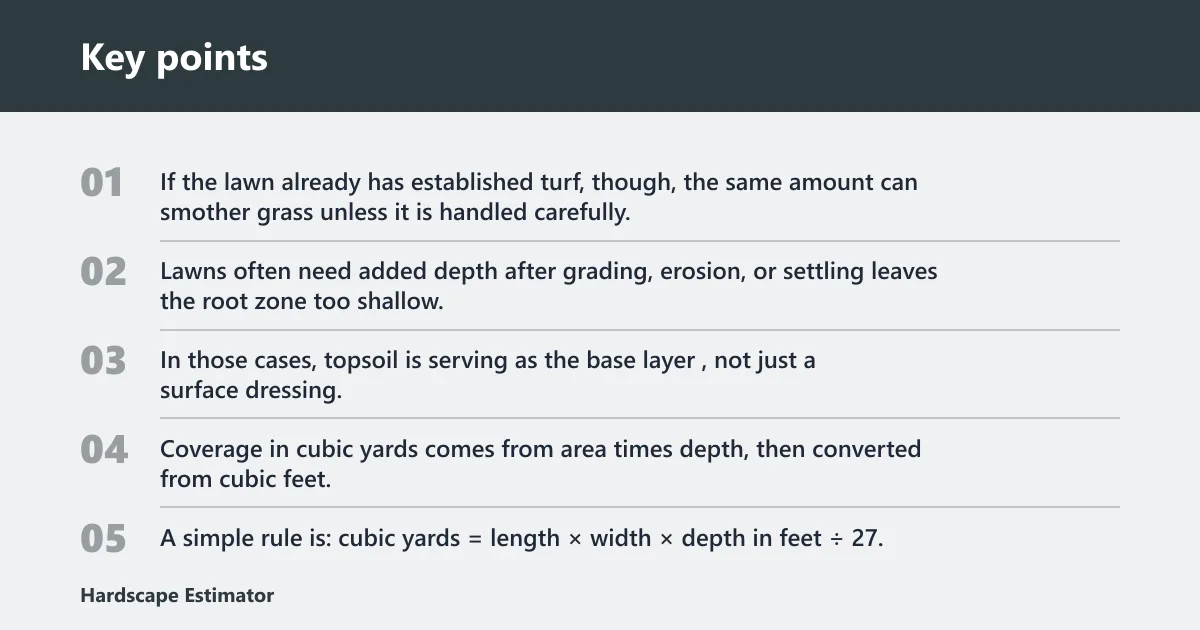
For example, if a backyard has a thin layer of topsoil over a low spot or sandy patch, adding more soil can give seed a better rooting zone and improve water retention. If the lawn already has established turf, though, the same amount can smother grass unless it is handled carefully.
When do lawns need added depth?
Lawns often need added depth after grading, erosion, or settling leaves the root zone too shallow. A thin layer over bare soil can help new seed establish, and a deeper rebuild is useful where roots have no workable soil beneath them. In those cases, topsoil is serving as the base layer, not just a surface dressing.
For estimating, depth matters. Coverage in cubic yards comes from area times depth, then converted from cubic feet. A simple rule is: cubic yards = length × width × depth in feet ÷ 27.
When is topdressing the better choice?
Topdressing is a thin application on existing turf, usually used to smooth minor dips, improve seed-to-soil contact, or add a small amount of organic matter. It is measured by depth, but the layer is shallow enough that grass blades are not buried. That is the right choice when the lawn already exists and only needs a light surface correction.
A common first-timer mistake is spreading several inches of topsoil over healthy turf to “help it grow.” That can block light, trap moisture at the crown, and leave grass yellow or thin under the new layer.
When can topsoil smother turf?
Topsoil can be the wrong fix when the lawn already has healthy coverage and only needs a small correction. Too much material can bury crowns, create a layered profile, and leave water perched above denser soil below. The result is often weaker turf, not stronger turf.
If the lawn is patchy because the soil is compacted or drains badly, topsoil alone may not solve it. Core aeration, grading, compost, or drainage work may be the better first step.
Is topsoil good for gardening?
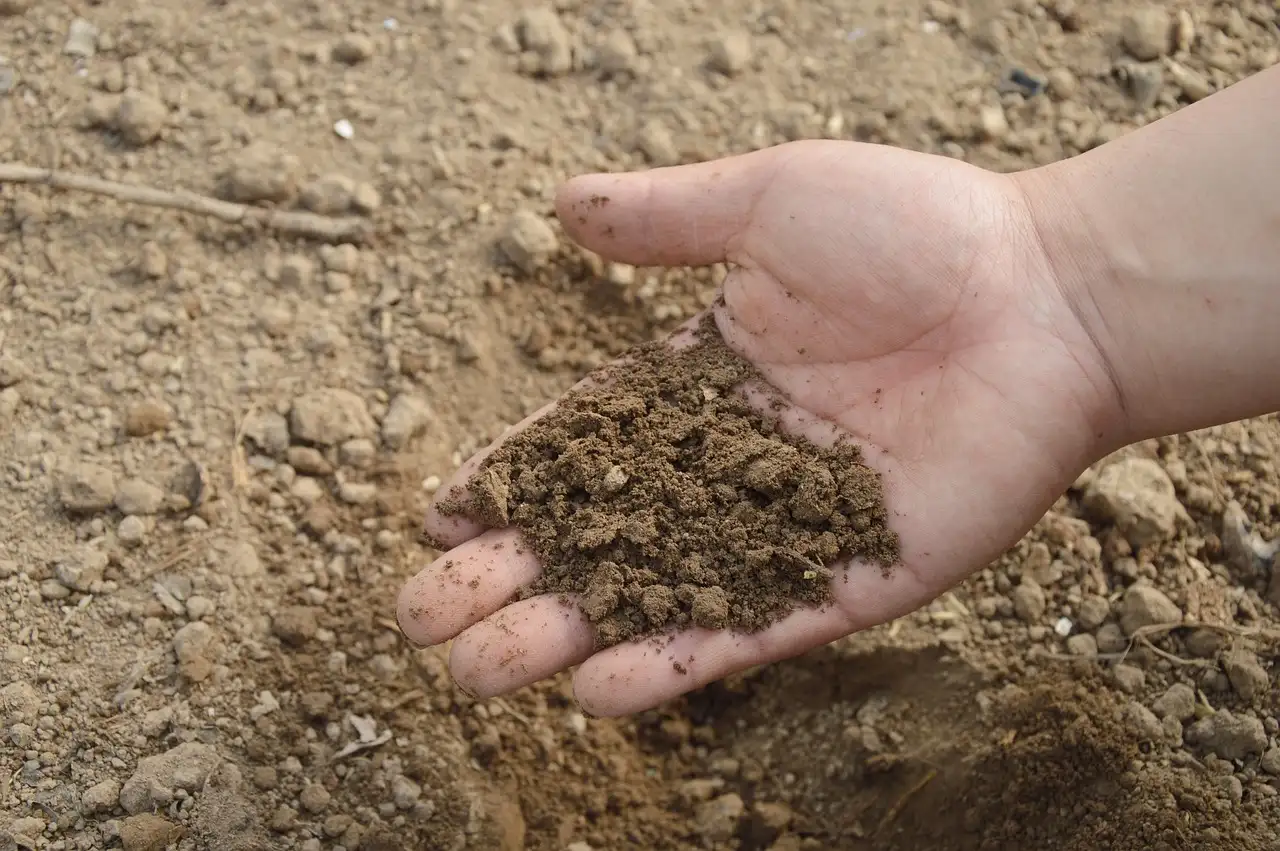
Yes, topsoil is good for gardening when you need a base layer for new beds, raised areas, or planting zones that lack workable soil. It is especially useful when the existing ground is thin, rocky, or low in organic matter. For many beds, though, garden soil is the more suitable finished product.
How does topsoil help new beds and raised areas?
For new beds, topsoil builds the root zone and gives plants a mineral base to grow into. It is often the first layer before compost or other amendments are mixed in. In raised beds, it helps fill volume, but it usually needs organic matter added so the bed holds water and nutrients better.
If you are filling a 4 ft by 8 ft bed to about 8 in. deep, the volume is roughly 1 cubic yard. That estimate helps before you order, because a bed that looks small on paper can still take more material than expected once depth is set.
How should topsoil be mixed into existing native soil?
Topsoil can improve native soil when it is worked in at a meaningful depth, not just spread on top. Mixing helps break up a poor texture and improve root access. A thin layer over clay, however, can create a layered effect that holds water above the interface instead of improving drainage through the whole profile.
If the native soil is heavy clay, compost or another amendment often does more for structure than a simple add-on of topsoil. The goal is a root zone that drains and aerates through the full active depth, not just a prettier surface.
When is garden soil a better buy?
Garden soil is usually an amended product meant for planting beds, not a raw base layer. It is often blended for better water holding, nutrient availability, and workability than plain topsoil. That makes it a better choice when the goal is to plant directly into the fill rather than build a base and amend it later.
Topsoil vs garden soil is mostly about use case. Topsoil is the base layer. Garden soil is the finished planting medium for beds that need a more balanced mix from the start.
How do moisture, drainage, and structure affect topsoil?
Topsoil affects plant performance because it controls moisture retention, drainage, and structure at the same time. A good layer holds enough water for dry periods, drains enough to leave oxygen around roots, and resists compaction so roots can keep expanding. That balance is what makes a thin upper layer so important.
How does topsoil hold moisture in dry periods?
Organic matter in topsoil helps hold moisture and slows evaporation. That matters in lawns that dry out fast and in beds that heat up during summer. Plants with deeper, better-structured topsoil are less likely to wilt between watering cycles because the root zone stays usable longer.
How does drainage keep roots healthy?
Drainage prevents waterlogging and keeps air around roots. Without that oxygen, roots can stall, rot, or stay shallow. A topsoil layer that drains at a reasonable rate supports healthier root growth than a dense layer that stays wet for too long.
Suppose a flower bed sits over clay and stays soggy after rain. Adding more topsoil on top of that clay without changing the base can make the bed wetter, not drier, because water may collect at the boundary between layers. In that case, drainage work matters more than extra depth.
Why does compaction resistance matter?
Soil structure is the feel and arrangement of the soil. Good tilth means the soil is loose enough for air and roots but stable enough to hold shape. Topsoil with better organic matter usually has better tilth and more resistance to compaction than thin, depleted surface soil.
Compact soil is a problem for both lawns and gardens. In lawns, it limits root penetration and water movement. In beds, it makes transplanting harder and increases the chance that plants stall after planting.
What is the difference between topsoil, garden soil, and amendments?
Topsoil, garden soil, and soil amendments solve different problems. Topsoil is the base layer. Garden soil is an amended planting product. Soil amendments change texture, fertility, or biology in the existing soil. Matching the product to the problem avoids waste and poor plant performance.
What is topsoil as a base layer?
Topsoil is useful when you need depth, grading, or a working soil layer under new turf or beds. Its value is in building the root zone. It is less about a perfect planting recipe and more about creating a usable foundation.
What is garden soil as an amended product?
Garden soil is usually designed for planting beds and often contains added compost or other organic material. It is often blended for planting performance rather than sold as a raw soil layer. That makes garden soil better for direct planting in beds that need a more finished mix.
What do soil amendments fix?
Amendments are the right choice when the issue is specific. Compost can raise organic matter, improve moisture holding, and feed microbial activity. Other amendments can change pH or open dense soil. If the soil already has enough depth but poor function, amendment often solves the problem better than adding more topsoil.
| Symptom | Likely soil issue | Recommended fix | Measure by depth or mixing ratio? |
|---|---|---|---|
| Thin lawn on bare patches | Root zone too shallow | Add topsoil to rebuild depth before seeding | Depth |
| Existing grass needs a light level correction | Minor dips or surface irregularity | Use topdressing in a thin layer | Depth |
| Established lawn already has healthy coverage | Surface only needs a light correction | Keep the layer shallow so the crowns stay exposed | Depth |
| Turf turns yellow after a new layer was spread | Grass crowns may be buried | Stop adding soil and rake down excess | Depth |
| Garden bed dries out too fast | Low organic matter | Mix compost or another amendment into the top layer | Mixing ratio |
| Bed stays wet after rain | Poor drainage or heavy clay | Improve drainage or change the bed profile, not just the surface layer | Depth plus site work |
| Plants sit in hard, tight soil | Compaction and weak structure | Loosen soil and mix in organic amendment | Mixing ratio |
Estimator note: if the fix is depth-based, convert the area and depth into cubic yards before ordering. If the fix is an amendment, estimate by mixing ratio, such as one part compost to three parts existing soil, then calculate only the portion being replaced or blended.
How do you choose the right planting material?
The right fix depends on the problem you are trying to solve. Use topsoil when you need depth or a new planting base, topdressing when a lawn needs a thin surface correction, and soil amendment when the soil has enough depth but the texture, fertility, or biology needs improvement. The wrong choice can bury turf, layer soil, or make drainage worse.
-
Measure the symptom area. Check whether the problem covers a whole bed, a bare patch, or only a few low spots. Area matters because the material estimate changes fast once you move from a small repair to a full rebuild.
-
Check the existing depth. If the root zone is shallow, add topsoil. If the lawn is already established and only needs a light correction, use topdressing. If the soil is deep enough but tight or low in organic matter, choose an amendment instead.
-
Match the fix to the plant. Grass, flowers, shrubs, and vegetables all use the root zone differently. A bed for transplants may need amended garden soil, while a rough grade under new sod may need plain topsoil first.
-
Convert depth to volume. Use cubic yards for bulk material: area in square feet × depth in feet ÷ 27. For example, 200 sq ft at 2 in. depth is 200 × 0.167 ÷ 27, or about 1.2 cubic yards.
-
Check drainage before ordering. If water already sits in the area, more topsoil alone may not help. Fix grading, compaction, or clay-related drainage problems first so the new soil actually supports roots.
Frequently asked questions
Is topsoil good for grass?
Yes, topsoil is good for grass when the lawn needs added depth, reseeding support, or a better root zone. It helps grass hold water and nutrients and gives new roots a place to extend. On existing turf, keep the layer thin enough that you do not bury the grass crowns.
Is topsoil good for plants?
Yes, topsoil is good for plants because it is the main root zone where water, air, and nutrients are available together. It supports root penetration and moisture retention. Many plants still do better when topsoil is amended with compost or adjusted for pH and drainage.
What is topsoil used for in gardens?
In gardens, topsoil is used to build beds, fill low areas, and create a planting base before amendments are added. It is useful for shaping the root zone and improving coverage depth. For direct planting, it is often mixed with compost or replaced with garden soil.
What is the importance of topsoil?
Topsoil matters because it is where most roots live and where water, nutrients, and air are most available to plants. It supports growth, moisture balance, drainage, and root penetration. Without a workable top layer, lawns thin out and garden plants struggle to establish.
What is topsoil good for?
Topsoil is good for rebuilding shallow ground, leveling beds, starting lawns, and giving plants a workable root zone. It is also useful as a base before compost or other amendments are added. The best use depends on whether the issue is depth, texture, or fertility.