How Long Can Sod Sit on a Pallet Before You Lay It?
Fresh sod should be installed the day it arrives. In cool shade, sod can often wait about 24 hours, but heat or sun may shorten that to about 6 to 12 hours. Wait too long and the roots dry, the stack heats up, and seams may fail to knit. This guide explains how weather, grass type, and pallet storage change the clock, plus what to do when sod is already warming or drying.
Why sod degrades fast when left on the pallet
Lay fresh sod as soon as it arrives. Same-day installation is the target, and risk rises with every hour it stays stacked on a wood pallet. In cool, shaded weather, a short delay may work. In heat, sun, or wind, the hold time drops fast.
The short answer for same-day installation
If the job is planned well, sod should leave the pallet and go on the ground the same day. A brief staging delay is usually safer than leaving it overnight, but there is no single safe maximum for every climate. Heat buildup, dry edges, and strong sun can turn a few extra hours into a loss.
Why the safe window shrinks fast
Sod is living turf cut into rolls or slabs and stacked for transport. That stack traps heat in the middle while the top and edges lose moisture first. The center of the pallet usually declines first, so a pallet can look fine outside and still be warming inside.
Say a 500 square foot pallet arrives at 8 a.m. on a 55°F cloudy day. If it stays in shade with light airflow, the sod may remain usable through the afternoon. Put the same pallet in direct sun at 88°F, and the usable window can drop to only a few hours.
What changes the safe window?
Temperature, direct sun, wind, shade, and moisture all affect how long sod can sit before installation. Grass type matters too. Warm-season sod and cool-season sod do not hold up the same way, so a good call depends on conditions, not just the clock.
Temperature and direct sun
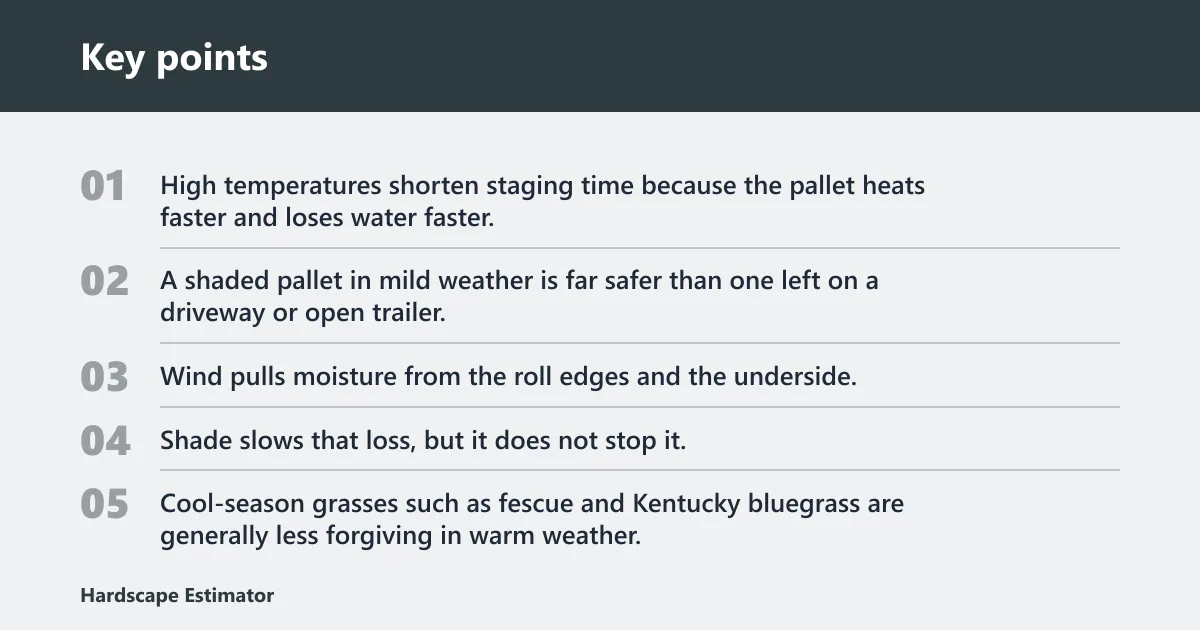
High temperatures shorten staging time because the pallet heats faster and loses water faster. Direct sun is worse than plain warmth because it bakes the top layer while the center keeps heating from inside the stack. A shaded pallet in mild weather is far safer than one left on a driveway or open trailer.
Wind, shade, and moisture loss
Wind pulls moisture from the roll edges and the underside. Shade slows that loss, but it does not stop it. If the sod starts to dry, the roots can become brittle before the color changes much, so the edges and underside need frequent checks.
Warm-season vs cool-season sod
Warm-season grasses such as bermudagrass and zoysiagrass often handle heat a little better than cool-season grasses, but they still suffer if stacked hot and dry. Cool-season grasses such as fescue and Kentucky bluegrass are generally less forgiving in warm weather. All four can fail if the pallet sits too long in sun or on a hot surface.
Trailer, truck-bed, and driveway storage
A trailer or truck bed can become a heat trap, especially if the pallet sits on metal or is wrapped with little airflow. A driveway can also send heat upward from concrete or asphalt. If the sod must wait, move it to shade and keep air moving around it without exposing it to direct sun.
Suppose a contractor is staging three pallets on a trailer in July. The safest move is to unload the first pallet into shade, then lay the hottest sections first. Leaving all three pallets strapped in place for half a day is much riskier than splitting the load and installing in order.
Sod hold-time table
Use this table as a field guide, not a promise. It gives estimated safe hold time ranges based on temperature band, sun or shade, wind, and grass type. The center of a pallet can warm faster than the outside looks, so shorten the window if the rolls feel warm or the edges begin to dry.
| Conditions | Estimated hold time | Notes |
|---|---|---|
| Below 60°F, shaded, light wind, moist rolls | 12 to 24 hours | Best case for a short delay. Check the pallet center every few hours. |
| 60°F to 75°F, shaded, low wind | 8 to 16 hours | Same-day installation is still the goal. Dry edges start to matter by late day. |
| 60°F to 75°F, sun exposure or open driveway | 4 to 8 hours | Top layers dry first. Move to shade and install the most exposed sections first. |
| 75°F to 90°F, shaded, light wind | 6 to 12 hours | Warm weather shortens the window even in shade. Watch for heat in the center of the pallet. |
| 75°F to 90°F, sun exposure or truck bed | 2 to 6 hours | Risk rises fast. Direct sun and hot surfaces can make the pallet unsafe before the day ends. |
| Above 90°F, sun, wind, or enclosed trailer | 2 to 4 hours | Use immediate installation if possible. If the rolls feel hot, treat them as a salvage job. |
| Warm-season grass in mild shade | Use the upper end of the range | Bermudagrass and zoysiagrass often tolerate heat a bit better, but not long storage. |
| Cool-season grass in warm sun | Use the lower end of the range | Fescue and Kentucky bluegrass tend to show stress sooner in heat and full sun. |
How do you tell sod is too hot or dry?
Hot or dry sod usually shows color change, odor, and texture changes before it fails completely. If the rolls feel warm to the touch, smell sour, or have brittle roots, the pallet is no longer in a comfortable holding window. The center of the stack is the first place to inspect.
Color, smell, and texture checks
Healthy sod should stay green, not tan or gray. Sour odor, slimy surfaces, and weak roots are warning signs that the turf is heating or breaking down. A roll that feels hot, not merely warm, should be installed at once or sorted for salvage.
Check the roll edges and underside
Do not judge the pallet only from the top. Lift a corner and check the underside and roll edges for dry, curling turf or brittle roots. If the edges are crisp while the middle still looks green, the pallet has already started losing moisture from the outside in.
What a hot pallet center means
A warm center means the stack is fermenting or self-heating. That is more than a surface problem. Yellowing, slime, and odor usually begin in the middle of the pallet before the rest of the load looks bad, so open the stack and inspect it before assuming the outside tells the whole story.
What should you do if installation is delayed?
If the job runs long, move the sod to shade, keep it off hot pavement, and install the hottest or most exposed sections first. Light watering can help if the edges are drying, but do not soak the stack. Too much water can trap heat, soften the rolls, and raise rot risk.
-
Stage the pallet in shade.
Move it under cover, under trees with open airflow, or to another shaded spot away from concrete and metal heat. Keep the stack flat and close to the install area so you spend less time handling it.
-
Open the pallet carefully.
Cut straps and wrap only as needed to reach the warmer or drier sections. Use a utility knife or sod knife with gloves so the rolls can be separated without tearing the turf.
-
Water lightly if drying starts.
Use a hose or sprinkler to mist the exposed edges and underside just enough to restore surface moisture. Stop well short of soaking the stack, because excess water can warm the pallet and create soft, damaged turf.
-
Lay the highest-risk rolls first.
Install the top layer, outer edges, and any rolls from the sunniest side before the cooler core sections. This reduces the chance that the most exposed turf will dry out while the crew finishes grading or trimming.
-
Trim damaged sections last.
Use a sharp blade to cut away dry or browned edges after the main layout is in place. A hand truck or pallet jack helps move partial stacks without dragging them across hot ground.
Common first-timer mistake: a pallet sits in shade for most of the day, so the crew assumes it is fine. Then the top two layers are peeled back and the center gives off a warm smell with tan edges. In that case, the center needs immediate attention even if the outside still looks usable.
Can sod survive overnight on a pallet?
Overnight storage is least risky only in cool, shaded conditions with moist turf and little wind. Even then, same-day installation is still better. In hot weather, full sun, or on a truck bed, overnight storage is often too risky and can leave the turf too dry or too hot to install well.
When overnight storage is least risky
Cool temperatures, shade, and a moist pallet give the sod the best chance to survive a short overnight delay. A mild night can slow drying and heat buildup. Check the stack again in the morning before laying it, because the center may still warm up even when the air cools off.
When to treat it as a loss
If the sod feels hot, smells sour, shows slime, or has brittle roots, do not count on overnight recovery. Yellowing or gray color usually means the turf has already declined. When several warning signs are present, laying poor turf can create a weak lawn that struggles to knit.
Frequently asked questions
How long can sod sit on a pallet before you lay it?
In cool, shaded conditions, sod may remain usable for about 24 hours. In heat or sun, the practical window can drop to 6 to 12 hours, and sometimes less on a hot truck bed. Same-day installation is still the safest target.
How do you know if sod is too hot or dry to install?
Check for warmth in the center, tan or gray color, brittle roots, slime, and sour odor. Healthy sod should feel cool to slightly warm, stay green, and hold together at the roots. If the roll edges are curling or dry, the pallet needs immediate attention.
Should you water sod while it is still on the pallet?
Light watering can help if the turf starts drying, especially at the edges and underside. Use only enough water to restore surface moisture. Do not soak stacked sod, because too much water can trap heat, slow handling, and raise the chance of rot or breakage.
What happens if sod sits in the sun for too long?
Direct sun speeds drying and raises the temperature inside the stack. The top and edges dry first, while the center can self-heat and begin to break down. That leads to browning, smell, slime, and roots that do not knit well after installation.
Is it okay to leave sod on a trailer or in a truck before installation?
Only for a short time, and only if the trailer or truck is cool and shaded. A hot bed, metal sides, or closed trailer can trap heat and speed up spoilage. If the sod must wait, unload it into shade as soon as possible.
How can you tell if sod has gone bad before laying it?
Look for tan or gray color, brittle roots, sour odor, slime, and hot rolls. The center of the pallet often fails first, so check there before you commit to installation. If several warning signs appear together, much of the load may be poor enough to reject.
What is the safest way to store sod for a few hours before install?
Keep it in shade, off hot pavement, with light airflow and no direct sun. Leave the pallet flat, inspect the edges and underside, and install the warmest or driest sections first. If the sod starts to dry, apply only light moisture and keep moving toward installation.