When to Buy Bags Instead of Bulk for Small Projects
A common rule of thumb is to buy bags when the job needs less than about 1 cubic yard of aggregate or under 1 ton of stone, or when you need exact quantities and cannot justify a bulk delivery fee. Ignore that cutoff and you can pay more for delivery, end up with leftovers, or spend extra time hauling material home in multiple trips. This guide gives a simple break-even check for bags vs. bulk, plus quick examples for sand, gravel, and base material.
Calculating when bags beat bulk delivery fees
The break-even point for a small hardscape job usually starts with three questions: how much material is needed, how much delivery costs, and how much waste a bagged order creates. For projects under about 1 cubic yard, bagged material often wins on total cost if a bulk delivery fee wipes out the unit-price savings.
Bulk material is priced by the cubic yard or ton, while bagged material is sold by volume or weight depending on the product. Bag sizes commonly include 0.5 cu ft, 0.6 cu ft, and 1 cu ft. That size difference matters because the bag count changes the effective price per usable yard once rounding and waste are added.
| Factor | Bagged material | Bulk material |
|---|---|---|
| Typical purchase unit | 0.5 cu ft, 0.6 cu ft, or 1 cu ft bags | 1 cubic yard or 1 ton |
| Best fit | Small repairs, edging, patch work, touch-up jobs | Large fills, repeat use, larger patio or driveway work |
| Delivery pressure | Low if the bags fit in a vehicle | High if a truck delivery fee is required |
| Rounding loss | Higher, because you round up to whole bags | Lower, because bulk is purchased by the yard or ton |
| Precision | Strong for exact quantities | Less convenient for tiny, irregular quantities |
Where the practical threshold starts
A common rule of thumb is that sub-yard projects often favor bags. Once the order gets close to or above 1 cubic yard, bulk usually starts to catch up on unit cost, especially if the supplier’s delivery fee is modest. The exact cutoff depends on bag size, material type, and whether the order can be picked up without extra transport cost.
One cubic yard equals 27 cubic feet. That means about 27 bags at 1 cu ft each, about 45 bags at 0.6 cu ft each, or about 54 bags at 0.5 cu ft each before waste is added.
How much fits in a bagged order?
To convert bulk to bags, divide 27 cubic feet by the bag volume and round up to the next whole bag. Then add a waste allowance for spill, compaction, and leveling. For small jobs, 5% to 15% is a common allowance, with hand-spread material usually needing the higher end of that range.
Bag-size conversion
- Measure the project volume in cubic feet or cubic yards.
- Add a waste allowance, usually 5% to 15% for small work.
- Convert to cubic feet if needed: 1 cubic yard = 27 cubic feet.
- Divide by the bag size in cubic feet.
- Round up to whole bags.
Why 0.5 cu ft, 0.6 cu ft, and 1 cu ft change the math
Bag size changes the final count more than many buyers expect. A 1 cu ft bag takes 27 bags per cubic yard. A 0.6 cu ft bag takes 45 bags per cubic yard. A 0.5 cu ft bag takes 54 bags per cubic yard. That difference affects price, carrying time, and cleanup too.
Suppose a patio repair needs 0.4 cubic yard of base material after waste is added. That equals 10.8 cubic feet. At 1 cu ft per bag, the order becomes 11 bags. At 0.6 cu ft per bag, it becomes 18 bags. At 0.5 cu ft per bag, it becomes 22 bags. Same job. Very different checkout total.
Bags or bulk cost comparison
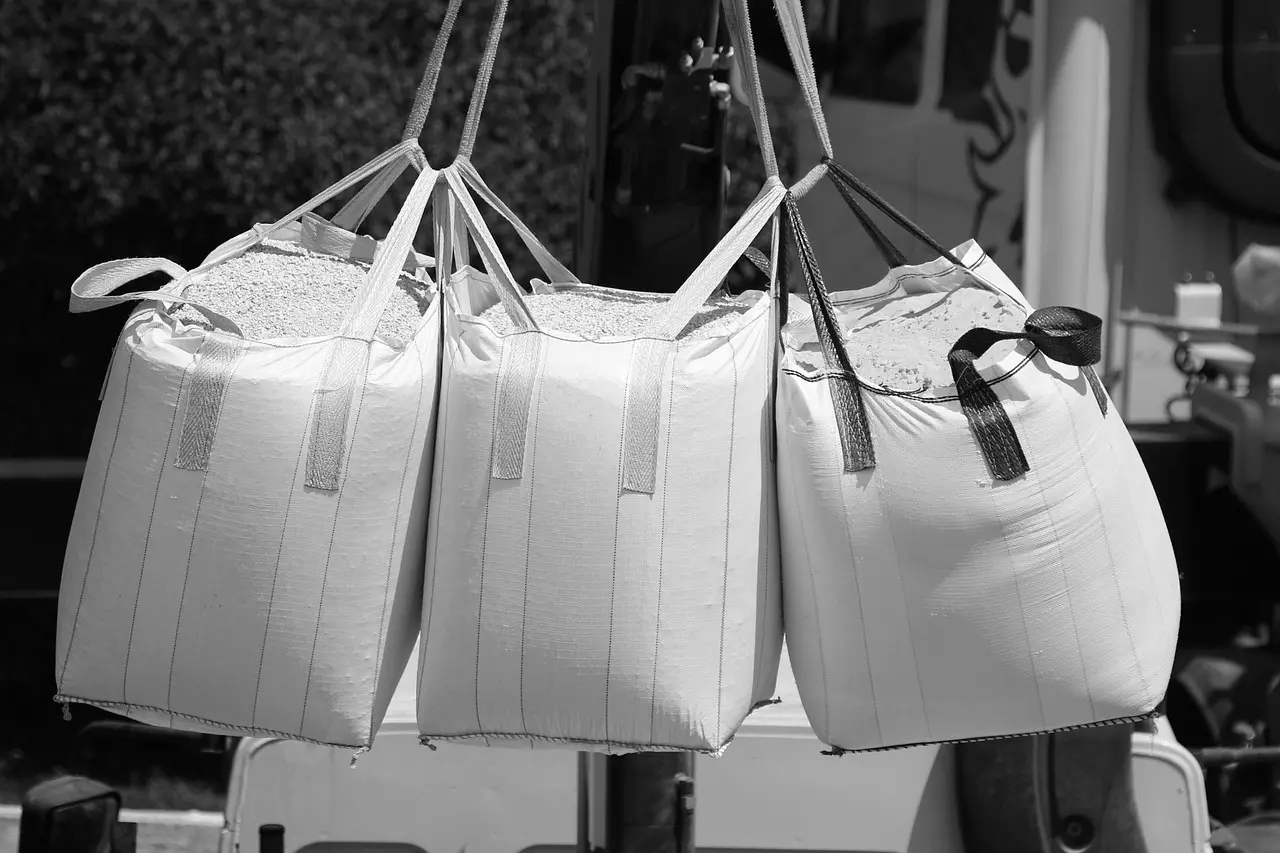
Bagged material can cost more per yard than bulk, but the full comparison has to include delivery, pickup, and waste. Bulk usually has the lower unit price at larger volumes. For a small order, a delivery fee and minimum load charge can erase that advantage fast.
What changes the total cost
There are four cost pieces to compare: material price, delivery fee, bag rounding, and waste. Bulk pricing looks better on paper when the yard price is lower, but a single delivery fee can wipe out that difference on a small order. Bagged material often avoids that fee, but the per-yard price is usually higher.
Material density matters too. Stone, sand, soil, mulch, and concrete mix do not all weigh the same. Moisture changes the weight as well. That matters when bulk is sold by the ton, because a wet load can compare differently from the same product in dry bags.
When bulk is still cheaper
Bulk becomes cheaper when the project is large enough that the delivery fee is spread across enough material, or when the material can be picked up without much added time and fuel. If the order is under a yard, the unit-price savings from bulk may be small enough that bags remain the simpler buy.
When do delivery fees change the answer?
Delivery fees change the answer when they are large enough to erase the unit-price gap between bulk and bags. On a small order, even a modest minimum delivery charge can cost more than the difference between bagged and bulk material. Pickup limits and travel time matter too, because a one-person DIY job may need multiple trips.
For a sub-yard order, the deciding factor is often not the quoted yard price. It is the total landed cost: material plus delivery plus the value of your time and vehicle capacity. If bulk requires a truck rental, a second vehicle, or repeated loading, the price gap narrows quickly.
| Example order | Bag count at 1 cu ft | Likely delivery impact | Rounding waste risk | Point where bulk becomes cheaper |
|---|---|---|---|---|
| 6 cu ft project | 6 bags | Bulk delivery usually dominates total cost | Low if exact 6 bags are used | Only if bulk pickup is free or already planned |
| 10 cu ft project | 10 bags | Bulk may still lose if delivery fee applies | Low to moderate with a 5% waste allowance | When delivery is low and pickup is easy |
| 20 cu ft project | 20 bags | Bulk starts to close the gap | Moderate if the area is irregular | Often near this range if delivery is modest |
| 0.5 cubic yard project | 14 bags | Bulk can be cheaper only if delivery is inexpensive | Moderate if using 0.5 or 0.6 cu ft bags | Usually near or above this point |
| 1 cubic yard project | 27 bags | Bulk usually regains the lead on unit cost | Higher if hand-spread and irregular | Often at this size if delivery is available |
Choose bags if you need precision
Bags are the better choice when the exact amount matters more than the lowest unit price. That includes narrow edging strips, small patio repairs, top-dressing, and touch-up work where buying a full bulk load would leave leftovers. Bags also fit better when the site is tight, access is awkward, or cleanup time matters.
Common small-project cases
Picture a 3 ft by 10 ft walkway patch that needs a thin layer of sand and only a few inches of gravel base. A bulk delivery may be far more material than the job needs, and the extra volume can sit unused. A bagged order keeps the purchase close to the actual measured need.
A common first-timer mistake is ordering bulk for a small repair because the per-yard price looks lower. If the project uses only part of the load, the leftover material can make the effective cost per usable cubic yard higher than bagged product.
How much waste should be added?
Add 5% to 15% for most small projects. Use the lower end for simple, square areas with light compaction. Use the higher end for hand-spread material, uneven ground, or jobs with a lot of edging and trim cuts. The smaller the project, the more a small miss can affect the final count.
Labor and transport limits
Bagged material is often easier to move by hand, store, and stage near the work area. Bulk may still be the better unit price, but only if the truck, unloading method, and job size make sense. For one-person DIY work, the time spent loading and moving bulk can be part of the real cost.
When to buy bags instead of bulk

Choose bags when the project is under about 1 cubic yard, when delivery fees would erase the bulk savings, or when precise quantity matters more than the cheapest unit price. Choose bulk when the volume is larger, the site can accept a truck delivery, and the material will be used with little leftover.
Choose bags if…
- The order is well under 1 cubic yard.
- You need exact quantities for a patch, edge repair, or top-dress.
- A delivery fee would make bulk more expensive overall.
- You do not want leftover material sitting on site.
Choose bulk if…
- The project is near or above 1 cubic yard.
- You can receive the load without a large delivery surcharge.
- You want the lower unit cost and can handle the material in one trip.
- The material will be used across multiple areas or future work.
Frequently asked questions
When is it cheaper to buy bags instead of bulk for a small project?
Bags are usually cheaper for small projects when the order is under about 1 cubic yard, the delivery fee for bulk is high, or the site needs only a precise amount. Once bulk delivery, pickup time, and waste are counted, the unit-price savings can disappear fast on small jobs.
How many bags do I need for a patio repair or walkway patch?
Start with the measured volume of the repair in cubic feet, then divide by the bag size and round up. A 1 cu ft bag gives 27 bags per cubic yard, while 0.6 cu ft and 0.5 cu ft bags need 45 and 54 bags per cubic yard, before waste.
What project size is too small for bulk delivery?
Anything far under 1 cubic yard is often too small for bulk delivery unless the fee is low or the delivery is already bundled with another job. Small patch repairs, narrow edging, and top-dressing usually fit bagged orders better because they need less material and less cleanup.
Do bagged materials cost more per yard than bulk?
Usually, yes. Bagged material often costs more per usable cubic yard than bulk because of packaging and handling. But that is only part of the picture. Once delivery fees, minimum order charges, and bag rounding are included, bags can still be the lower total-cost choice on small jobs.
How do I compare bagged material to bulk by cubic yard cost?
Convert the bag price into a cubic yard price by multiplying the bag price by the number of bags needed for 1 cubic yard. For 1 cu ft bags, that means 27 bags per yard. Then add waste and compare that total with bulk material plus delivery. Use the full landed cost.
Where do bag sizes like 0.5 cu ft and 1 cu ft change the math?
They change the math at every step. A 0.5 cu ft bag takes twice as many bags as a 1 cu ft bag for the same volume, and a 0.6 cu ft bag falls in between. That affects price, carry weight, vehicle space, and the amount of rounding waste on small jobs.
Where to buy small plastic bags?
If the question is about packaging for a small project, look in hardware stores, home centers, or packaging suppliers that sell clear poly bags, zipper bags, or contractor waste bags. If the goal is to hold sand, stone, or soil, use bags made for that material, not thin general-purpose plastic.