Is Polymeric Sand Safe for Pets, Plants, and Bare Feet?
Polymeric sand is often considered safer for pets, plants, and bare feet after it fully cures, usually about 24-48 hours in dry weather. Keep pets and foot traffic off wet or dusty material, and try to prevent licking or inhaling fines. Wet residue can track into soil, irritate skin and eyes, and be eaten by pets before the binder sets. This guide breaks down dust, wet spill, cured joint contact, accidental ingestion, and cleanup steps around pavers and planting beds.
Polymeric sand safety at a glance
Polymeric sand is quartz sand blended with polymer binders. It is dry and dusty before activation, then hardens after wetting and curing in paver joints. The biggest safety differences come from when contact happens and how the material is exposed: dry dust, wet spill, partially cured joints, or fully cured joints.
Joint width and depth matter too. Wider joints hold more material and can create more loose residue during filling and cleanup. Deep joints can trap extra sand at the surface if they are not compacted well, which raises the chance of dust on skin, paws, and nearby soil.
For most homeowners, the practical rule is simple: loose dry material is the main exposure risk, wet activated material is the messiest phase, and cured joints are usually the lowest-risk phase for pets and bare feet.
What changes before and after cure?
Before activation, polymeric sand can create fine dust and loose granules. During wetting, it becomes tacky and hard to move without smearing or washing it into places you did not want it. After full cure, the joint surface is more stable, less dusty, and less likely to transfer to skin or paws.
That does not make every cured surface identical. A joint that has cured overnight in dry weather is different from one that was rained on too early or overwatered. Temperature, humidity, joint depth, and the brand’s label all affect when the area is ready for normal use.
Is polymeric sand safe for pets?
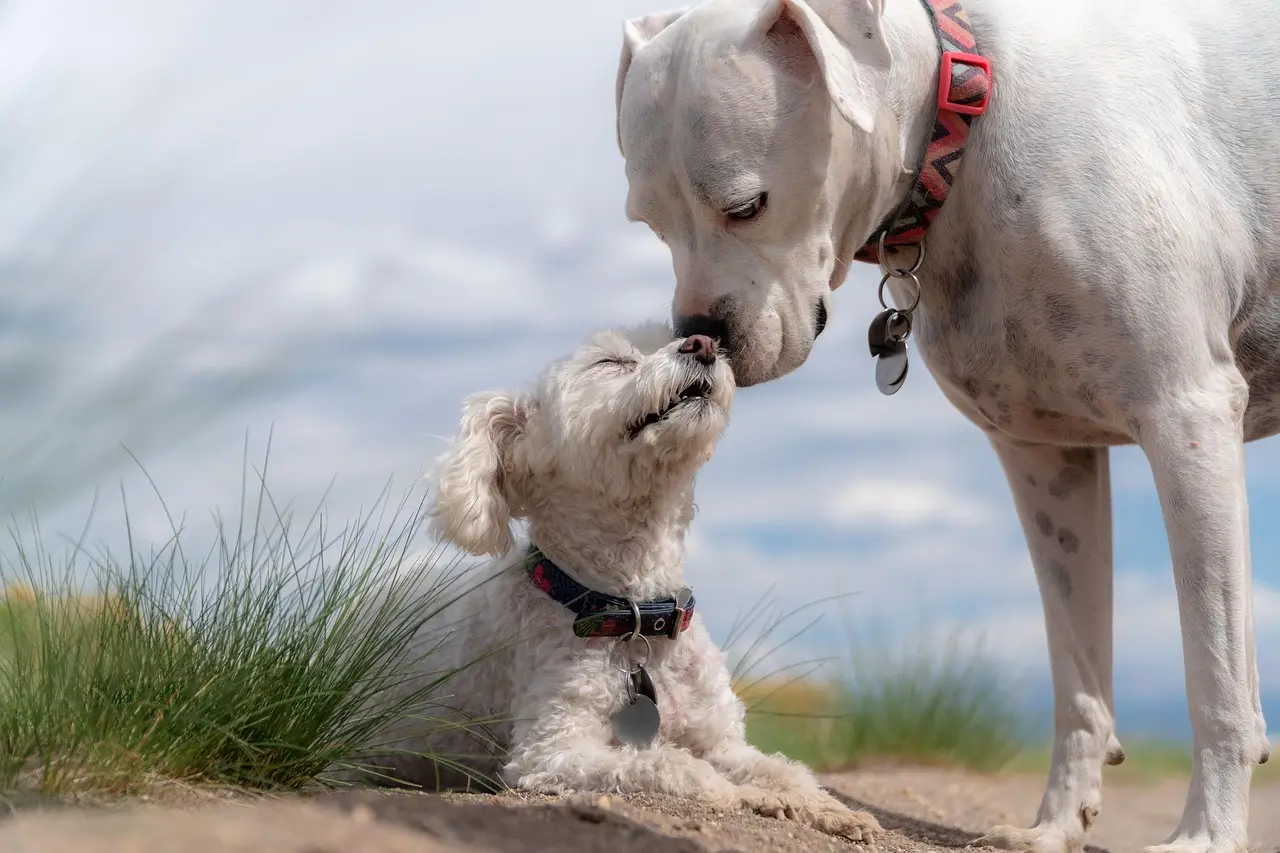
Polymeric sand is generally safe for pets after it fully cures, but the main concern is exposure before cure or ingestion of loose material. Dogs and cats can track dust on their paws, lick fresh residue, or walk through uncured joints and then groom themselves. Keep them off the area until the manufacturer’s cure time has passed.
Dogs and cats on fresh joints
Fresh joints are the higher-risk stage because the surface can be soft, dusty, or partially bonded. A dog walking across new pavers can pick up granules on paws and fur, then lick them off later. Cats are a similar concern because they groom more often.
Rain during early cure can also move material out of the joint and into surrounding soil or turf, which increases tracking and cleanup. Many products call for about 24 hours before light foot traffic, and that should be treated as the minimum rather than a reason to test early.
Licking paws, fur, or loose granules
Small amounts of incidental contact are usually less concerning than direct ingestion, but licking fresh residue is still the exposure to avoid. The binder is meant to set inside the joint, not on fur or in a pet’s mouth. Loose dust can also irritate the nose and eyes.
Say your 45-lb dog crosses a patio 6 hours after installation. If the paws come back dusty, clean the paws and restrict access until the joints are fully cured, rather than waiting to see whether symptoms appear.
When to call a veterinarian or poison line
Call a veterinarian or animal poison line if a pet eats a noticeable amount, keeps pawing at the mouth, vomits, drools, coughs, or seems distressed. Check the product label and Safety Data Sheet for brand-specific first-aid guidance and ingredient warnings, because formulas are not identical.
If the pet only brushed against a small amount and is acting normally, cleanup and observation are often enough. If the exposure involved wet material, eye contact, or a large gulp of dust or granules, get professional advice sooner rather than later.
Is polymeric sand safe for plants and soil?
Polymeric sand is usually fine near plants once the joints have cured, but spills into turf, beds, or groundcover are a different matter. Overspill can sit on soil surfaces, land in root zones, or get watered deeper into beds before it sets. That is the point where cleanup matters most.
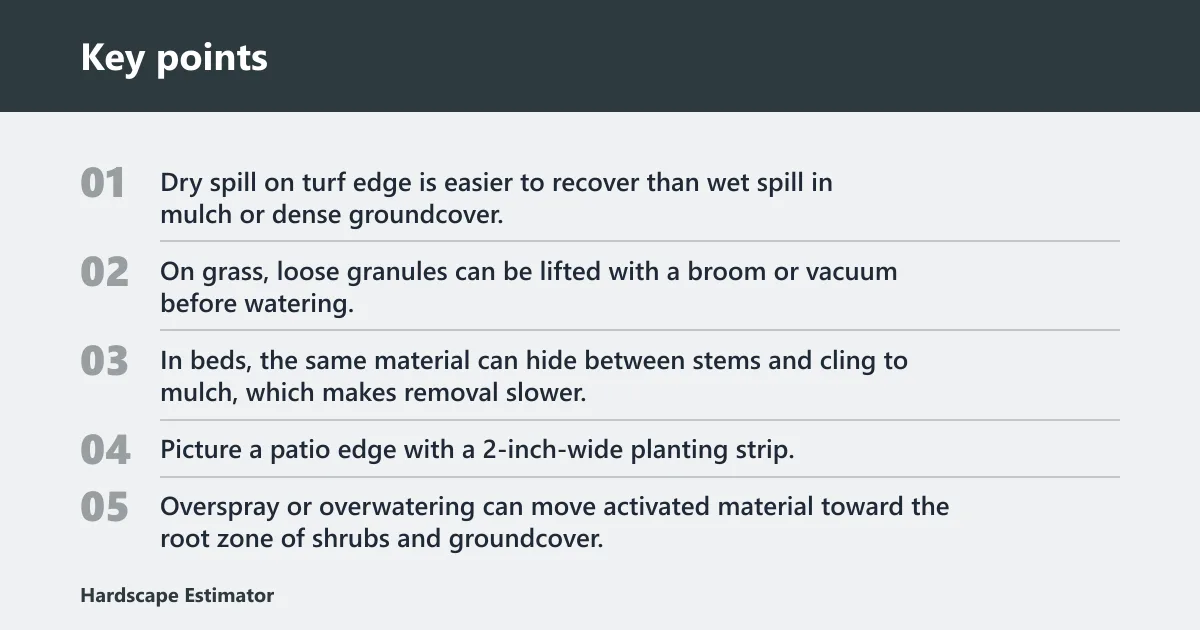
Spill into turf, beds, and groundcover
Dry spill on turf edge is easier to recover than wet spill in mulch or dense groundcover. On grass, loose granules can be lifted with a broom or vacuum before watering. In beds, the same material can hide between stems and cling to mulch, which makes removal slower.
Picture a patio edge with a 2-inch-wide planting strip. If a handful of sand lands in the bed before activation, remove it dry right away rather than waiting until watering pushes it under leaves and into the top inch of soil.
Overspray near roots and edging
Overspray or overwatering can move activated material toward the root zone of shrubs and groundcover. That does not mean a small spill is catastrophic, but it does mean the soil surface may be contaminated enough to warrant removal before the next irrigation cycle.
Keep joint fill low enough that excess does not slough over the edge. If the paver edge is open to the bed, a temporary barrier such as a strip of cardboard or plastic can help keep dry spill out of the planting area during filling and sweeping.
Cleanup before watering
Dry removal is the safer choice before activation. Once the binder is wet, trying to rinse a spill can spread it farther, especially in mulch, turf, or porous soil. Water-only cleanup after activation is risky because it can lock the material in place where you did not want it.
Is polymeric sand safe for bare feet and skin?
Polymeric sand is less comfortable on bare feet before cure. Loose grit is abrasive, and dust or fresh material can irritate skin, especially if it gets into small cuts or sensitive areas. After full cure, the joint is usually much less bothersome, though rough paver edges can still feel abrasive.
Loose dust versus cured joints
Loose dust can cling to sweaty skin and feel scratchy. A fully cured joint is firmer and less likely to transfer material, so it is usually better for barefoot use. The difference is practical, not cosmetic: cured means the material has set enough that it does not readily shift, smear, or dust off under normal contact.
Do not treat “dry on top” as the same as cured. If the top surface feels hard but the joint below is still soft, bare feet can still disturb the fill and pick up residue.
Irritation, abrasion, and comfort
Minor skin irritation can come from the quartz grit itself, from fine dust, or from the polymer residue before cure. Closed-toe shoes, gloves, and a dust mask or respirator for dry handling reduce exposure during installation. Eye protection matters when brushing or blowing excess from the paver surface.
If skin feels gritty after contact, rinse with clean water and mild soap. If redness, persistent itching, or a rash develops, follow the product label’s first-aid instructions and seek medical advice if symptoms do not settle.
Polymeric sand exposure-risk matrix
This matrix maps common situations to practical risk and next steps. It is most useful when deciding whether to stop work, clean dry, or call the product label or a veterinarian for more detail. Brand SDS language still matters, but this gives a field-ready starting point.
| Scenario | Risk level | Immediate cleanup steps | When to consult SDS or a veterinarian |
|---|---|---|---|
| Dry dust on pavers | Low to moderate | Broom or leaf blower first; then vacuum or shop vac if needed. Wear eye protection and a dust mask. | Check the SDS if dust control or respiratory warnings are unclear. |
| Wet spill in planting beds | Moderate to high | Scoop out excess immediately with a dry tool. Avoid watering it deeper into soil. | Use the SDS for cleanup guidance if the material has already activated. Call a vet if a pet ate it. |
| Cured joint under bare feet | Low | No special cleanup if the surface is fully cured and stable. Remove any loose grit left on top. | Consult the SDS if the surface is still dusty or if a brand lists unusual warnings. |
| Pet licking fresh joints | Moderate to high | Keep the pet off the area, rinse paws if dusty, and remove any visible residue. | Call a veterinarian or poison line if the pet swallowed a noticeable amount or shows symptoms. |
| Minor skin contact | Low | Wash with soap and water. Remove trapped grit from nails, creases, or shoes. | Use the SDS if irritation persists or if the product has a stronger warning statement. |
How can I install polymeric sand more safely around a patio with kids and pets?
Safer installation starts with dry control, not with extra water. Keep kids and pets away until the joints are cured, wear basic protective gear, and remove loose material from the surface and edges before activation. The less residue left behind, the less likely it is to track into soil, paws, or shoes.
-
Block access first. Keep dogs, cats, and children out of the work zone before opening the bag. A clear boundary matters because loose sand and wet residue are both harder to manage once traffic starts.
-
Wear basic PPE. Use gloves, closed-toe shoes, eye protection, and a dust mask or respirator when handling dry material. That is the best protection against dust, grit, and minor eye splash during brushing or blowing.
-
Fill joints evenly. Compact and top off the joints so the surface is level before activation. Uneven fill leaves loose material on top of the pavers, which is the part most likely to end up on feet, paws, and into beds.
-
Contain the edges. Use a broom, small vacuum, or shop vac to collect excess from the patio and from bed edges before watering. A leaf blower can help move dry residue off hardscape surfaces, but keep it away from open mulch or soil.
-
Respect cure time. Follow the label for foot traffic and pet traffic, then extend that time if the weather is cool, damp, or rainy. Cure time is not fixed across all brands, and early traffic is what turns a clean job into a dusty one.
What to do if there is a spill or exposure
Dry spills are easiest to control. Wet or activated spills need a slower response because water can move the material into places that are harder to clean. For eyes, skin, and pets, the first move is always to stop exposure, then follow the label or get medical or veterinary help if symptoms appear.
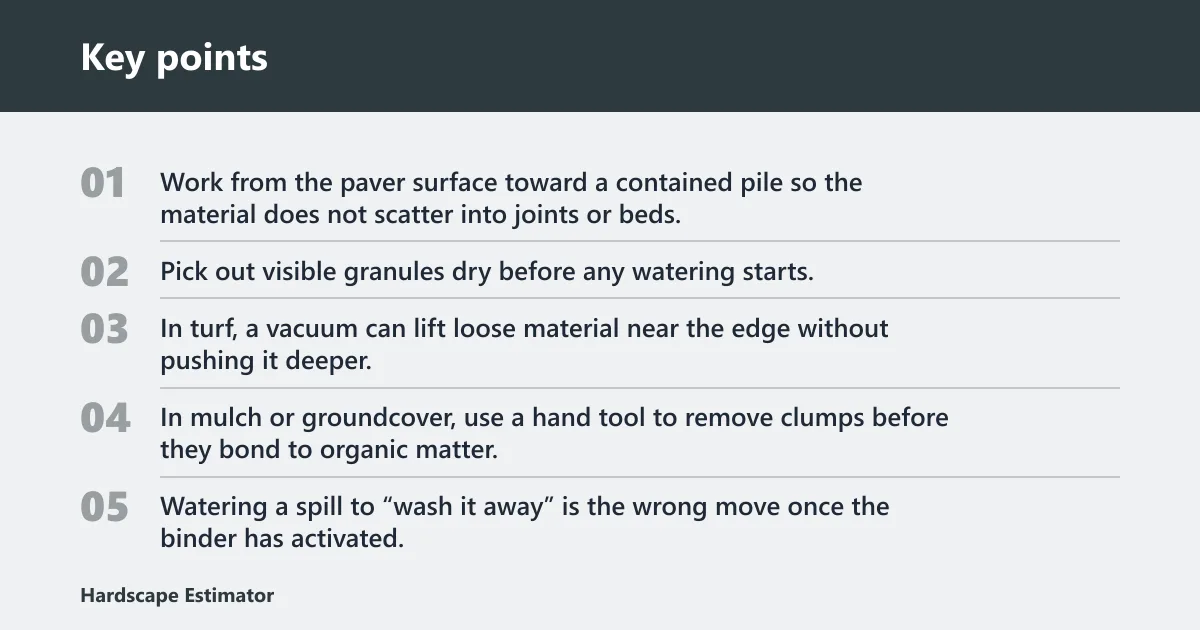
Dry cleanup on pavers and hardscape surfaces
Use a broom first, then a leaf blower if the area is large, and finish with a vacuum or shop vac where loose dust remains. Work from the paver surface toward a contained pile so the material does not scatter into joints or beds. Keep the area dry during cleanup.
Cleanup in beds or turf edges
Pick out visible granules dry before any watering starts. In turf, a vacuum can lift loose material near the edge without pushing it deeper. In mulch or groundcover, use a hand tool to remove clumps before they bond to organic matter.
Watering a spill to “wash it away” is the wrong move once the binder has activated. It tends to set the material where it lands, which makes later removal harder and can leave residue in soil or around roots.
Eye, skin, and pet exposure response
If sand gets in the eyes, rinse with clean water for several minutes and follow the label’s first-aid direction. For skin, wash with soap and water and remove trapped grit from folds, nails, or shoes. If a pet licked or ate the material, call a veterinarian or poison line, especially if the exposure was wet or involved a large amount.
Frequently asked questions
Is polymeric sand safe for pets after it cures?
Yes, generally. Once the joints are fully cured, polymeric sand is usually stable enough for normal pet traffic. The main risk is before cure, when dogs and cats can track dust on paws, lick loose granules, or ingest fresh residue. Keep them off the area until the label’s cure time has passed.
Is polymeric sand safe for plants and landscaping beds?
Usually, yes after cure, but overspill into beds is the part to watch. Dry spill can be removed before watering, while wet spill can move into mulch and soil surfaces. Keep the material out of root zones and remove visible residue from turf edges and groundcover as soon as possible.
Can polymeric sand irritate bare feet or skin?
Yes, especially before cure. Loose grit can feel abrasive, and dust or fresh material can irritate skin or eyes. After full cure, the joint is less likely to transfer material, but any loose residue left on top of the pavers can still scratch or feel gritty underfoot.
How long should pets stay off polymeric sand after installation?
Keep pets off until the joints are fully cured according to the manufacturer, which is often 24-48 hours in dry weather. Cooler air, higher humidity, deep joints, or rain during early cure can extend that window. If in doubt, wait longer rather than testing with a short walk.
What happens if polymeric sand gets on grass or garden soil?
Dry granules can often be removed before they settle. If the material has been wetted, it can bond to mulch or soil surfaces and become harder to lift. Remove excess dry first, avoid watering it in, and use the product SDS if the spill is large or the label gives special instructions.
Do some brands of polymeric sand use harsher additives than others?
Yes, ingredient lists and warning statements can vary by manufacturer. That is why the product label and Safety Data Sheet matter. One brand may have different binder chemistry, dust warnings, or first-aid language than another, even when both are sold for the same paver joint use.