Screened Topsoil vs Unscreened: What Is the Difference?
Screened topsoil is usually sifted to a set mesh size, often around 1/2 in or finer, so it tends to spread and grade more evenly; unscreened topsoil is rougher, with clods, sticks, and stones, and it is better suited to rough fill or larger-area reclamation. Using the wrong type can mean extra raking, poor seedbed contact, and paying twice for cleanup. This guide explains screen size, common uses, and when the extra screening cost is worth it.
Comparing cost, quality, and best uses
| Decision factor | Screened topsoil | unscreened | Winner |
|---|---|---|---|
| Finish quality | More uniform; fewer rocks, roots, and clumps | Can contain stones, twigs, roots, and larger lumps | Screened topsoil |
| Cost | Typically 25-50% more per cubic yard | Lower-cost raw material | unscreened |
| Best use | Lawns, garden beds, topdressing, overseeding | Bulk fill, rough grading, base layers | Tie |
| Drainage and spreadability | Usually spreads and drains more evenly | Can trap water and leave an uneven surface | Screened topsoil |
| Hidden-layer value | Overkill for buried fill | Good when the surface will be covered later | unscreened |
Screened topsoil vs unscreened: the core trade-off
The choice comes down to surface quality and budget. Screened topsoil is processed for a more uniform finish layer, while unscreened topsoil keeps more of the original field material and costs less. If the layer will be seen, planted, or raked smooth, screening usually pays off. If it will be buried, rough-graded, or hidden, unscreened is often the better value. Extension guidance on seedbed preparation generally favors finer, more uniform soil at the surface for even germination, while coarser material is more acceptable below the finish grade (see Cornell Cooperative Extension and similar land-grant recommendations).
Finish quality
Screened topsoil gives a finer, more even texture because it has been run through mesh screening. That matters when the top layer must accept seed, sod, or a smooth hand rake pass. Unscreened soil can still work, but rocks and clods make the surface harder to level cleanly.
Budget
Typical screened topsoil can cost more per cubic yard. That difference reflects screening, handling, and sorting costs added to a raw soil pile; the exact premium depends on haul distance, moisture, and local material availability. For a buried fill layer, paying that premium often buys little visible benefit.
Project fit
Screened topsoil is the safer pick for finish work. Unscreened topsoil is better when the goal is to move earth, build grade, or fill space below the final surface. The product is not “better” in the abstract; it is better matched to a different layer.
What screened topsoil
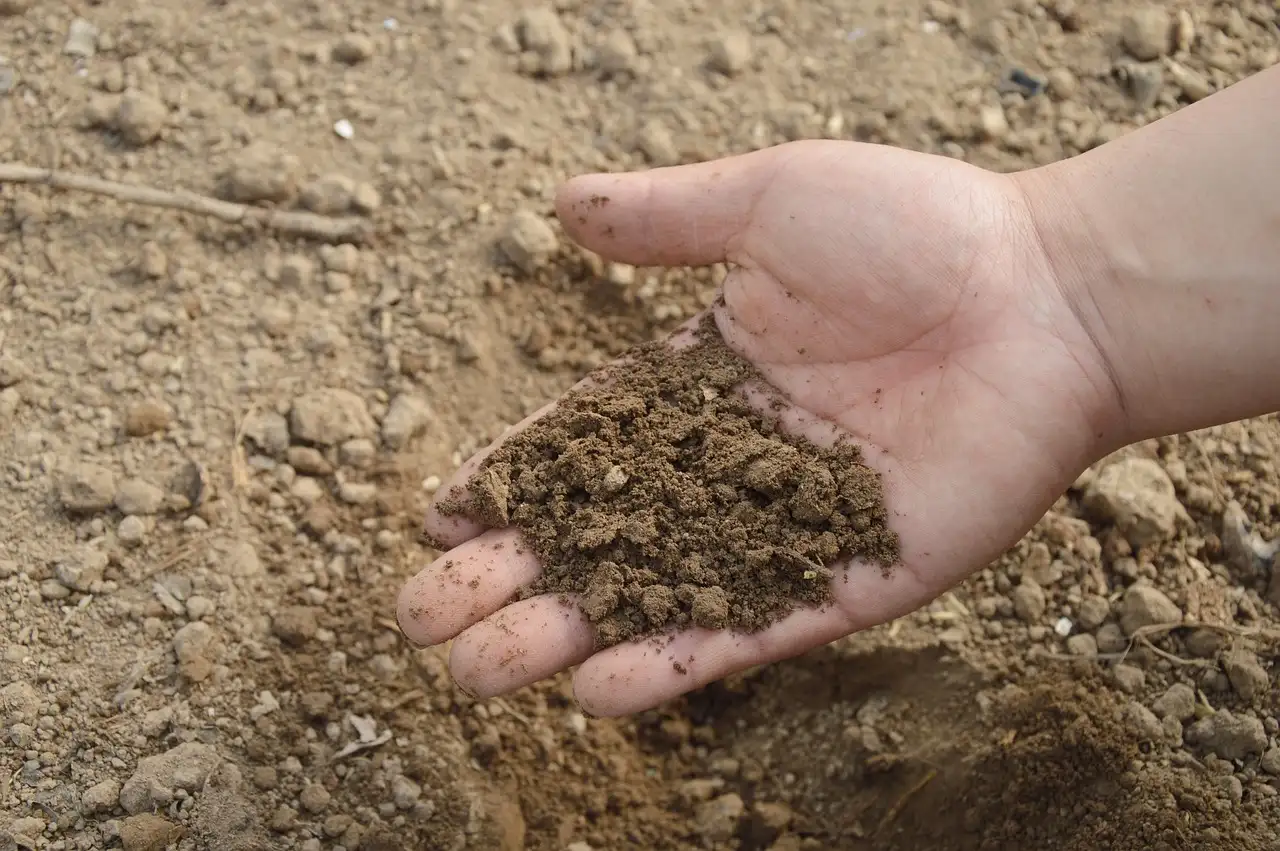
Screened topsoil is topsoil that has been run through a mesh or rotating screen to remove larger debris. The screening process filters out stones, roots, and clumps so the pile is looser and softer, with a more uniform texture for spreading and leveling.
How mesh screening changes the pile
Mesh screening sets the largest particle that can stay in the pile. Material larger than the screen opening is removed, so a finer screen produces a cleaner, finer product. A wet load can still clump, though, which makes screened stock behave less uniformly until it dries.
Common screen sizes
Common screen sizes include 1/4 inch, 1/2 inch, 5/8 inch, 3/4 inch, and 1 inch. A 1/4-inch screen is very fine for seed beds and topdressing. A 1/2-inch screen is the common grade for lawns and beds. A 5/8-inch or 3/4-inch screen sits between those uses and coarser fill. A 1-inch screen is coarse enough that gravel and grit may remain, which is usually too rough for vegetable beds. Screening size matters because finer openings remove more coarse fragments, a standard approach in soil handling and classification systems used in soil science and industry guidance (for example, ASTM soil material classification practices and land-grant extension advice for seedbed prep).
Why finer texture matters
Finer screened soil is easier to rake, spread, and grade. It also helps seed make better surface contact and lets thin layers lay down at a more even depth. That is why screened topsoil is common for lawns, garden beds, and topdressing.
What unscreened topsoil
Unscreened topsoil is raw, unprocessed topsoil that comes out of the ground with less sorting. It can contain stones, twigs, roots, wood chips, and larger lumps of soil. That rougher mix is why it costs less and why it is useful in less visible work.
Why it is cheaper
Less processing means lower production cost. The material is moved, loaded, and delivered with less handling, so the price is usually lower than screened topsoil. The trade-off is that the buyer accepts more cleanup, more rough texture, and less uniform spreading.
Where rougher texture is acceptable
Unscreened topsoil fits bulk fill, rough grading, and base layers. These uses do not demand a polished finish. Once the area is shaped or covered by a better top layer, the stones and clumps no longer matter as much.
What screen size should topsoil be screened to?
For close finish work, 1/4 inch is often a good fit. For most yard use, 1/2 inch is the common grade. A 5/8 inch or 3/4 inch screen is a middle ground when you want some screening without paying for the finest material. A 1 inch screen is coarse and best kept to budget-focused fill, not fine planting beds. In practice, finer screens are better for seed contact and thin surface applications, while coarser screens are reserved for rough fill or deeper layers. That aligns with extension guidance favoring a smooth, clod-free seedbed and with material grading concepts used in soil and aggregate specifications.
0.25 inch for seed beds and topdressing
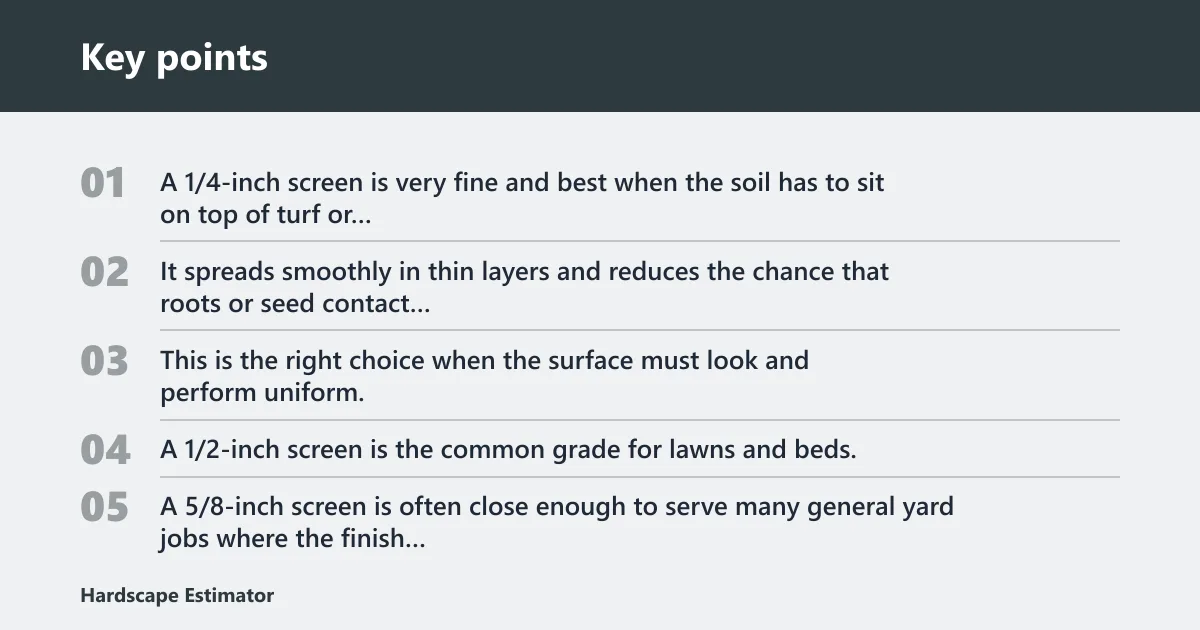
A 1/4-inch screen is very fine and best when the soil has to sit on top of turf or around seed. It spreads smoothly in thin layers and reduces the chance that roots or seed contact gets interrupted by larger debris. This is the right choice when the surface must look and perform uniform.
0.5 inch and 5/8 inch for common yard use
A 1/2-inch screen is the common grade for lawns and beds. A 5/8-inch screen is often close enough to serve many general yard jobs where the finish still matters, but the budget is tighter than for finer topdressing. These sizes balance cost and usability.
3/4 inch and 1 inch for coarser, budget-focused fills
A 3/4-inch or 1-inch screen leaves a rougher product that can still work where the final surface is not the priority. The bigger the screen, the more grit and small stone can remain. That makes it less suitable for vegetable beds, overseeding, or a thin surface layer.
Is screened topsoil better for lawns and garden beds?
Yes, screened topsoil is usually the better pick for lawns and garden beds because those areas need a smoother finish and more even moisture movement. Unscreened soil can leave bumps, voids, or buried debris at the surface, which makes mowing, seeding, and planting less consistent.
Lawns, overseeding, and topdressing
Lawns need soil that can be spread thinly and uniformly. Topdressing especially depends on a fine product, because a rough mix can bury turf unevenly or leave exposed stones. If the goal is overseeding, a 1/4-inch or 1/2-inch screened product is the safer choice.
Garden beds and smaller spaces
Garden beds benefit from workable soil with a finer texture and more even drainage. Screened topsoil is popular here because it is easier to plant into and easier to blend with compost or amendments. Unscreened soil can still be used, but larger debris makes hand planting and weeding more awkward.
When unscreened causes problems at the surface
A common first-timer mistake is using unscreened soil for a thin top layer over seed or sod. Even a few clods and stones can leave high spots, shallow hollows, and poor seed-to-soil contact. That can slow establishment and force another round of leveling.
Can you use unscreened topsoil under screened topsoil?
Yes. That is often the most cost-effective way to build a site: use unscreened topsoil as the lower layer for bulk fill or rough grading, then place screened topsoil on top for the finish grade. The key is keeping the rough material buried so rocks and clumps do not migrate into the surface layer.
How to avoid mixing hidden debris into the top layer
Place and compact the unscreened layer first, then add the screened layer only where the final surface will be seen or planted. Do not churn the two together during grading, or the coarse material can work upward and spoil the finish. A clean transition line matters more than a perfect blend.
When this combination makes sense
Suppose a yard needs about 8 in of added soil to correct grade, but only the top 2 in will be planted. In that case, unscreened below and screened above is the sensible split. The lower lift does the heavy filling; the upper lift handles the surface finish.
When it does not
If the whole layer is shallow, such as a 1 in topdressing over turf, the rough material does not belong underneath. There is not enough depth to hide the debris, and the surface can end up lumpy even after raking. In that case, screened material should carry the full depth.
Screened topsoil decision table
This table matches project type, finish quality, and budget to the right product and screen size. The minimum screen size matters because it tells you the largest particle likely to remain in the load. If the use is thin, visible, or planted, screen finer; if the use is buried, screen coarser or skip screening.
| Project use | Recommended soil | Minimum screen size | Why it works | When it fails |
|---|---|---|---|---|
| Topdressing lawn | Screened topsoil | 1/4 inch | Spreads in a thin, even layer and does not leave coarse debris on the turf | Fails if the pile is wet and cloddy, or if the screen is too coarse |
| Overseeding | Screened topsoil | 1/4 inch to 1/2 inch | Improves seed contact and keeps the surface level enough for germination | Fails when rocks or clumps prevent close seed-to-soil contact |
| Garden bed finish layer | Screened topsoil | 1/2 inch | Workable texture for planting and better moisture movement than rough fill | Fails if large debris is left in the top few inches |
| Rough grading | unscreened | None required | Low-visibility layer where cost matters more than fine finish | Fails if left exposed as the final surface |
| Bulk fill | unscreened | None required | Cheaper for large volumes and acceptable where the soil will be buried | Fails under sod, seed, or a thin decorative layer |
| General yard top layer | Screened topsoil | 5/8 inch | Balances finish quality and cost for most home yard work | Fails if the job needs a very fine seed bed |
Screened topsoil vs unscreened checklist
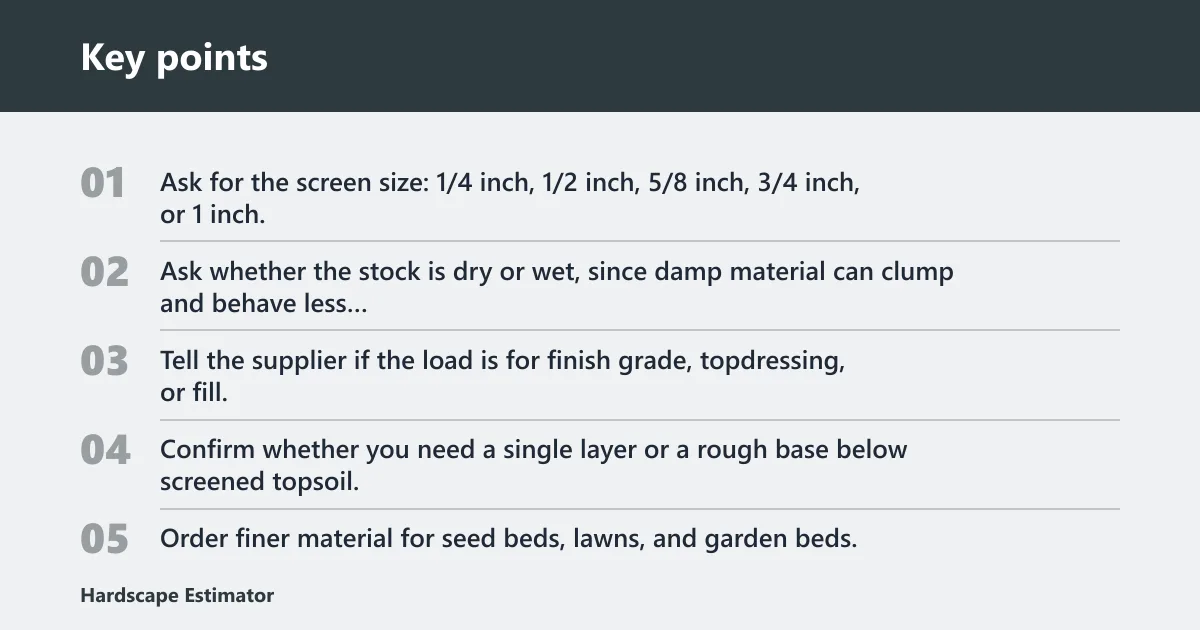
- Ask for the screen size: 1/4 inch, 1/2 inch, 5/8 inch, 3/4 inch, or 1 inch.
- Ask whether the stock is dry or wet, since damp material can clump and behave less uniformly.
- Tell the supplier if the load is for finish grade, topdressing, or fill.
- Confirm whether you need a single layer or a rough base below screened topsoil.
- Order finer material for seed beds, lawns, and garden beds; order rougher material for buried fill.
Choose Screened topsoil if… / Choose unscreened if…
Choose Screened topsoil if the soil will be the visible finish layer, support seed or sod, topdress a lawn, or fill a garden bed where even spreading matters. It is also the better choice when you want better drainage, easier raking, and fewer rocks or roots at the surface.
Choose unscreened if the material will sit below the finish grade, serve as bulk fill, or shape rough contours before a better top layer goes on. It saves money when appearance and fine texture are not important.
Frequently asked questions
What happens when screened topsoil is used in wet weather?
Wet screened soil can clump, smear, and bridge unevenly even if the screen size is correct. That does not make it the wrong product, but it does make spreading harder. On damp jobs, it is often better to wait for drier conditions or break the load apart before finishing the grade.
Why do some regions need different topsoil mixes?
Regional native soils vary a lot. Heavy clay areas often need a finer, better-structured surface layer to improve workability, while sandy regions may prioritize moisture-holding amendments over a very coarse screen size. In windy or drought-prone areas, a screened top layer can help establish turf more evenly, but the underlying soil texture still controls most drainage behavior.
When does unscreened topsoil cause the most trouble?
The biggest failures usually happen on shallow applications: a thin topdressing, a lawn renovation, or a vegetable bed finish layer. In those cases, one stone or root wad can telegraph through the whole surface. The rough material also makes it easier to leave low pockets that settle later.
Can coarse topsoil be used successfully if it is amended later?
Sometimes, but only when there is enough depth and time to correct it. If coarse topsoil is buried and then topped with compost or screened material, the final surface can still perform well. If the coarse layer is left near the surface, the improvement is limited and the cleanup work usually outweighs the savings.
How do I know whether the screen size is too coarse for my project?
If the finished area will be seeded, hand-planted, or kept visibly smooth, a coarse screen is probably the wrong choice. Bigger openings allow more debris and larger mineral fragments through, which is fine for fill but not for a seedbed. For visible work, smaller screens are safer; for hidden work, larger screens can be acceptable.
How much cheaper is unscreened topsoil than screened topsoil?
The price gap matters most on large volumes and thicker fills, where screening adds cost across the whole load. For a buried base layer, unscreened soil usually offers better value.