Paver Thickness Sizes in Mm and Inches Explained
Many standard residential pavers are commonly 40 mm for walkways, 60 mm for patios and driveways, and 80 mm for heavier vehicle areas. A paver that is too thin for the load can crack, rock under tires, and need early replacement. This guide gives a quick mm-to-inch chart and matches each thickness to common load uses.
Paver thickness conversion table
| Thickness in mm | Thickness in inches | Typical use | Traffic level | Not recommended for |
|---|---|---|---|---|
| 40 mm | 1.6 in | House walking path, decorative pedestrian areas | Light foot traffic | Driveways, parking spots, any vehicle lane |
| 50 mm | 2.0 in | Pedestrian pavements with heavier foot traffic | Light-duty pedestrian use | Driveways and truck zones |
| 60 mm | 2 3/8 in | Patios, walkways, common residential driveway use | Light-to-medium traffic | Heavy trucks, RV lanes, industrial yards |
| 80 mm | 3 1/8 in | Truck lanes, service areas, heavier vehicle traffic | Heavy traffic | Decorative-only paths where load is minimal |
| 100 mm+ | 3 15/16 in+ | Depots, ports, transit sites, factories, petrol stations | Heavy-duty and industrial | Specifying it just because the project is a patio |
| 120 mm | 4 3/4 in | Grass paver example with voids for grass growth or infill | Specialized use | Assuming it behaves like a standard solid paver |
The quick read is simple: 40 mm and 50 mm sit in pedestrian territory, 60 mm covers many residential driveways, 80 mm moves into truck and RV traffic, and 100 mm+ belongs in heavy-duty settings. Concrete pavers are commonly available in 1 3/4 inch, 2 3/8 inch, and 3 1/8 inch thicknesses, so shopping often starts with those three sizes.
How thick are pavers in mm and inches?
Common pavers are sold in a few standard thickness bands, and the inch size matters because many product listings still use imperial measurements. The practical range most buyers compare is 40 mm, 50 mm, 60 mm, 80 mm, and 100 mm+, with 60 mm and 80 mm the most common vehicle-grade choices.
Common residential thickness bands
At the light end, 40 mm pavers are described for a house walking path. A 50 mm paver suits pedestrian pavements that see more foot traffic. A 60 mm paver is a common driveway choice, while 80 mm is the safer step up for heavier vehicles.
One source places under-60 mm pavers in the decorative or walkway-only range. That gives a simple buying filter. If a product page does not clearly state vehicle use, treat it as pedestrian-only until the spec sheet says otherwise.
Why the inch size matters when shopping
Many shoppers compare products across metric and imperial listings. A 60 mm paver is about 2 3/8 in, and an 80 mm paver is about 3 1/8 in. Those sizes appear often in concrete paver listings, so the conversion helps avoid ordering the wrong grade by mistake.
Common sizes can also vary by face dimensions. Concrete pavers are commonly listed at 8 in by 4 in and 9 in by 6 in. Thickness is separate from length and width, so a larger face does not automatically mean a stronger paver.
What is 60mm pavers in inches?
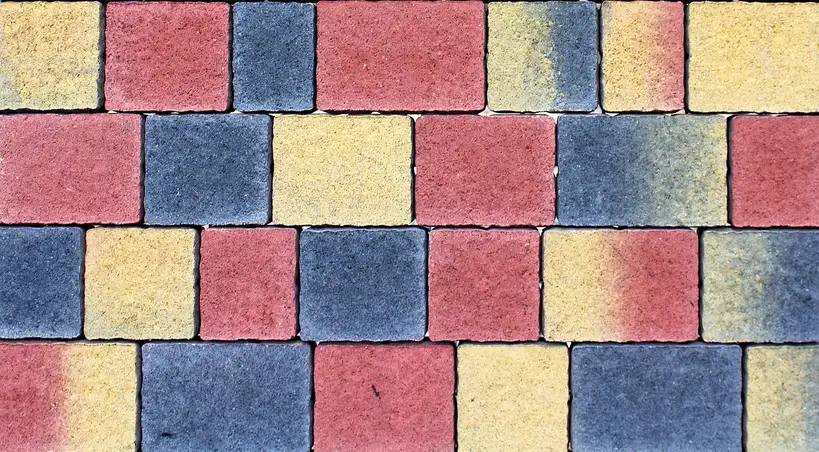
60 mm pavers are about 2 3/8 inches thick. That size is a common residential driveway thickness and a standard light-to-medium traffic option, so it fits many patios, walkways, and car parking areas without moving into truck-grade material.
Why 60 mm suits many driveways
For a house driveway, 60 mm is the usual middle ground. It is thick enough for passenger cars and typical home turning movements when the base is compacted correctly. It is also the thickness many buyers see in standard concrete paver ranges.
Picture a two-car driveway with a regular sedan and compact SUV. A 60 mm paver fits that use case when the base, bedding, and edge restraint are built for vehicle loading. The paver thickness is right, but the base still has to carry the load.
Where 60 mm still needs caution
60 mm is not the best answer for repeated heavy axle loads. If the area will see delivery trucks, RVs, dumpsters, or service vans making tight turns, 80 mm is the safer choice. Thickness alone does not stop rutting when the load class rises.
A common first-timer mistake is to choose 60 mm for a driveway and then park a camper or work truck on it every week. That asks a light-to-medium traffic paver to carry heavy-duty use.
What is 80mm pavers in inches?
80 mm pavers are about 3 1/8 inches thick. That thickness is the better choice for trucks, RVs, service lanes, and heavier traffic, and one source places heavy vehicles or trucks in the 70 mm to 80 mm neighborhood depending on the guide.
Truck and RV traffic needs
When traffic includes box trucks, refuse trucks, RVs, or repeated commercial entries, 80 mm is the safer buying choice. It gives more material depth under load and is commonly listed for heavier vehicle areas and commercial driveways.
60 mm to 80 mm is standard for light-to-medium traffic, but that range still needs context. For a driveway used only by passenger cars, 60 mm often fits. For repeated heavier vehicle traffic, move to 80 mm rather than hoping a thinner unit will hold up.
When 80 mm is the safer choice
Use 80 mm when the project has turning vehicles, more frequent loading, or a higher risk of point pressure from tires. That includes service lanes, access routes, and driveways that need to handle more than normal residential traffic.
Thicker is not always better. It is better when the traffic load calls for it. For a simple patio, 80 mm may be more than the project needs, and the extra cost will not buy much if the area never sees vehicle loading.
Which thickness fits each project?
Match thickness to use, not to a guess that heavier automatically means better. Walkways and patios usually need less thickness than driveways, while truck zones and industrial sites need more. Mixed projects often need more than one thickness in the same property.
Walkways and garden paths
40 mm pavers suit a house walking path, and 50 mm pavers are often better for pedestrian pavements with heavier foot traffic. For a path that only carries people, those thinner options usually make sense and avoid paying for driveway-grade material.
If a garden path will occasionally take a wheelbarrow or trash cart, 50 mm is the safer pedestrian choice. If a compact utility cart or maintenance vehicle will use it often, step up to a vehicle-rated thickness instead of treating the path like a decorative strip.
Patios and outdoor living areas
Patios usually fall in the 40 mm to 60 mm range, depending on whether the space is strictly pedestrian or sits near light vehicle access. A 60 mm paver is often the comfortable middle choice when buyers want a tougher patio surface.
Can thin pavers handle patios or garden paths? Yes, if the area is pedestrian only and the base is built correctly. They should not be treated like driveway pavers just because they look similar on the shelf.
Driveways and vehicle parking
For a driveway, 60 mm is the common residential answer. That matches the standard light-to-medium traffic option and the 2 3/8 in concrete paver size many buyers see in catalogs. It is a practical fit for most home driveways with passenger vehicles.
If the driveway regularly carries heavier vehicles, step up to 80 mm. That is the better choice for trucks and RV traffic, and it gives more margin when loads are higher or turning forces are sharper.
Truck zones and industrial sites
For depots, ports, transit sites, factories, and petrol stations, 100 mm or more is commonly the range to consider. Those settings have heavier traffic, more frequent loading, and more severe service conditions than a home driveway or patio.
Grass pavers are different again. One example lists them at 120 mm, and the open voids mean they are built for grass growth or infill rather than the same solid paving duty as standard interlocking units.
| Thickness | Walkway | Patio | Driveway | Truck zone |
|---|---|---|---|---|
| 40 mm | Good fit | Possible for pedestrian use | Not suitable | Not suitable |
| 50 mm | Good fit | Good fit for foot traffic | Not recommended | Not suitable |
| 60 mm | Good fit | Good fit | Common choice | Too light for repeated heavy traffic |
| 80 mm | Works, but usually more than needed | Works, but often overbuilt | Better for heavier vehicles | Good fit |
| 100 mm+ | Usually excessive | Usually excessive | Only for very heavy service needs | Best fit |
Why thickness is not the whole story
Thickness helps, but it does not decide performance by itself. Base depth, compaction, edge restraint, pattern, and paver shape all affect how well the surface spreads load and resists movement.
Base depth and compaction
A thick paver over a weak base can still rock, settle, or crack. A thinner paver over a properly compacted base may perform better than expected in pedestrian use. Thickness should match the base design, not replace it.
Pattern, edge restraint, and load spread
A break-joint pattern is described as the strongest common paving pattern. It helps distribute load across neighboring units instead of lining up joints in one weak path. That matters because the pavers work together as a system, not as isolated tiles.
Edge restraint also matters. Without it, pavers can drift at the perimeter, which changes joint width and can lead to rocking. The right thickness cannot fix a boundary that is moving.
Why shape and aspect ratio matter
Two pavers with the same thickness can behave differently if one is long and narrow while another is more compact. Shape changes how load travels through the pattern, and a unit with a poor aspect ratio may feel less stable even when the thickness number looks acceptable.
That is why product comparisons should include thickness, face size, and pattern, not thickness alone. A 60 mm unit in a break-joint layout can behave differently from a 60 mm unit laid in a pattern that leaves more continuous joint lines.
Paver materials and sizes
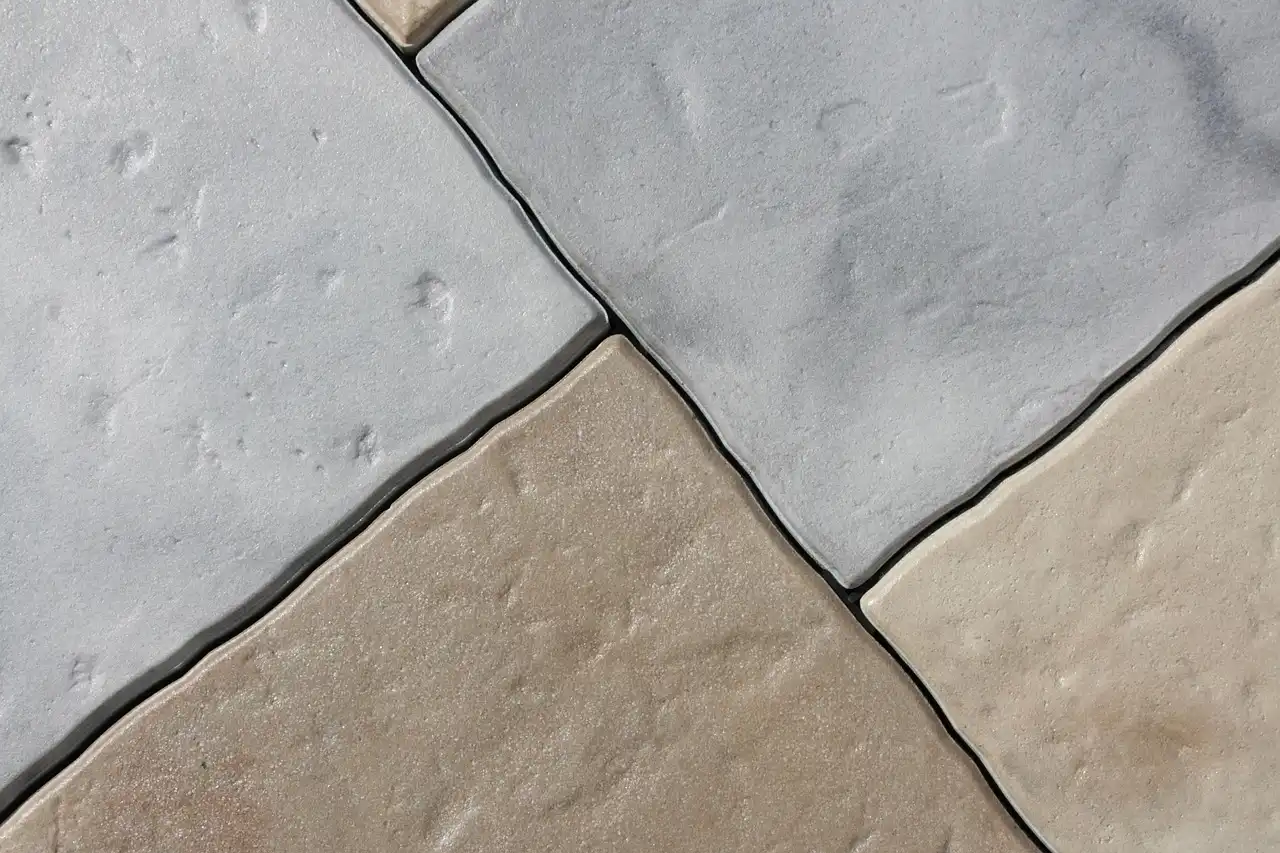
Concrete pavers and grass pavers do not behave the same way, even when the thickness number looks similar. Concrete pavers are the standard choice for most hardscape surfaces, while grass pavers are specialized units with voids and different load behavior.
Concrete paver thickness and common sizes
Concrete pavers are commonly available in 1 3/4 inch, 2 3/8 inch, and 3 1/8 inch thicknesses. Common sizes include 8 inches by 4 inches and 9 inches by 6 inches. Those dimensions help shoppers compare products that may be sold in different measurement systems.
The key point is that thickness is only one dimension. A 2 3/8 in paver can come in different face sizes, and a larger face does not automatically mean a stronger paver for vehicle use.
Grass pavers and their 120mm example
Grass pavers are not standard solid pavers. One example lists them at 120 mm, and their open structure is meant for grass growth or infill. They belong in a different category from the typical 40 mm to 80 mm solid units used for walkways, patios, and driveways.
If the goal is a firm parking surface with grass visible through the openings, grass pavers may fit. If the goal is a plain driveway or patio, a standard concrete paver is the more direct comparison.
Pavers versus slabs
Pavers are individual units laid in a jointed field. Slabs are larger-format pieces, often with a different handling, layout, and load behavior. That difference matters because a product labeled as a slab is not a direct substitute for a standard interlocking paver.
- Convert the thickness to inches first.
- Match that thickness to the traffic level.
- Check whether the product is concrete, grass paver, or slab.
- Confirm the pattern and base plan before ordering.
- Use 80 mm or 100 mm+ when the load calls for it.
Frequently asked questions
What thickness of pavers is best for a driveway?
For most home driveways, 60 mm is the common choice. If the driveway will handle trucks, RVs, or repeated heavier loading, 80 mm is safer. The base must still be compacted correctly, or even the right thickness can fail early.
Are 40mm pavers too thin for walkways?
No. A 40 mm paver is described as suitable for a house walking path, so it works for light pedestrian use. It is too thin for driveway use, though, because vehicle loads can crack or disturb a thin unit more easily.
When should I use 100mm pavers instead of 60mm?
Use 100 mm+ when the surface will see heavy traffic or industrial use, such as depots, ports, transit sites, factories, or petrol stations. Choose 60 mm for normal residential driveways and patios, and move up only when the load really demands it.
How do paver thickness and size differ?
Thickness is the depth of the unit. Size usually means the face dimensions, such as 8 inches by 4 inches or 9 inches by 6 inches. Two pavers can have the same thickness but different lengths and widths, which changes how they lay and distribute load.
What is the difference between pavers and slabs?
Pavers are individual units laid in a jointed system. Slabs are larger-format pieces and are not the same category as standard interlocking pavers. That difference matters when comparing thickness, handling, and the type of load the surface is meant to carry.