How to Level Low Spots in a Lawn Without Killing the Grass
Level shallow lawn low spots with a topdressing mix that is commonly about 70% sand and 30% screened dry topsoil. Apply it in 1/4 to 1/2 in. layers, then repeat after the grass grows through. Too much fill at once buries crowns, slows recovery, and can turn a small dip into a dead patch. This guide shows how to judge depth, choose the mix, spread it in safe lifts, and know when to stop and recheck.
What you’ll need
- Sand and dry topsoil for a half-and-half or near-half-and-half leveling mix
- Optional compost for a small shallow repair blend
- Flat shovel or leveling rake
- Push broom or stiff rake for distribution
- Water source for aftercare
- Tape measure or ruler for checking depth
- Bags, bin, or cart for mixing materials
Can you level a lawn without killing grass?
Yes, if the dip is shallow and the fill stays thin. Leave grass blades showing through the mix, then wait for active growth to push through before adding more. If the hollow is deep enough to bury most of the turf in one pass, topdressing alone is the wrong fix.
How thin is thin enough?
Use about one-half inch per pass, and stay closer to 1/4 inch when the grass is short or the dip sits beside dense turf. That limit matters because turf crowns need light and air. A heavier layer can seal the surface and slow recovery instead of helping it.
When is the spot too deep?
If the depression needs more than repeated shallow lifts to look level, stop and rethink the repair. A low spot that is several inches deep, keeps sinking after fill, or has a hard edge around it often needs lifting turf, patching, or regrading rather than topdressing alone.
Step 1: Measure the dip
Measure depth at the center and at the edges before you mix anything. A shallow bowl-shaped spot can often be corrected with topdressing. A sharp-sided hollow or a spot that returns after rain usually points to settling, buried debris, or drainage trouble.
- Set a straight board or rake handle across the low spot.
- Measure from the board down to the soil at the deepest point.
- Measure width and length to estimate square footage.
- Decide whether the dip is shallow enough for topdressing or deep enough for a bigger fix.
For example, say your lawn has a 4 ft by 5 ft hollow that is about 1/2 inch deep in the middle. That is about 20 square feet at a shallow depth, so it is often a good candidate for a topdressing pass. If the same spot is about 3 inches deep, turf lifting or regrading is usually the better fix.
Step 2: Apply a thin fill layer
Spread the mix in a thin, even layer and keep some existing grass visible. Use a sand-and-dry-topsoil blend, not pure sand, and work the material into the low area with a broom or leveling rake. The first pass should smooth the dip without smothering the turf.
- Mix sand and dry topsoil before spreading.
- Shovel or rake the blend into the low area.
- Pull the material level with a stiff rake or broom.
- Stop when grass blades still show through the surface.
- Water the repaired area thoroughly.
A common first-timer mistake is dumping a thick layer of fill soil into a sunken patch all at once instead of building it up gradually so the grass can keep growing through it. That can bury crowns and create a crust on top. A thinner lift takes longer, but it keeps the lawn alive while the fill settles.
Low spot depth table
This table converts square feet and fill depth into cubic feet, cubic yards, and bag counts for a sand-topsoil blend. It uses a 50/50 blend for the math, then you can adjust the mix toward about 70% sand and 30% dry topsoil if the surface needs a lighter texture. For bag counts, the table assumes 1 cu ft bags.
| Area | Depth | Cubic feet | Cubic yards | 1 cu ft bags |
|---|---|---|---|---|
| 10 sq ft | 1/4 in. | 0.21 | 0.01 | 1 |
| 10 sq ft | 1/2 in. | 0.42 | 0.02 | 1 |
| 25 sq ft | 1/2 in. | 1.04 | 0.04 | 2 |
| 50 sq ft | 1/2 in. | 2.08 | 0.08 | 3 |
| 100 sq ft | 1/2 in. | 4.17 | 0.15 | 5 |
| 100 sq ft | 1 in. | 8.33 | 0.31 | 9 |
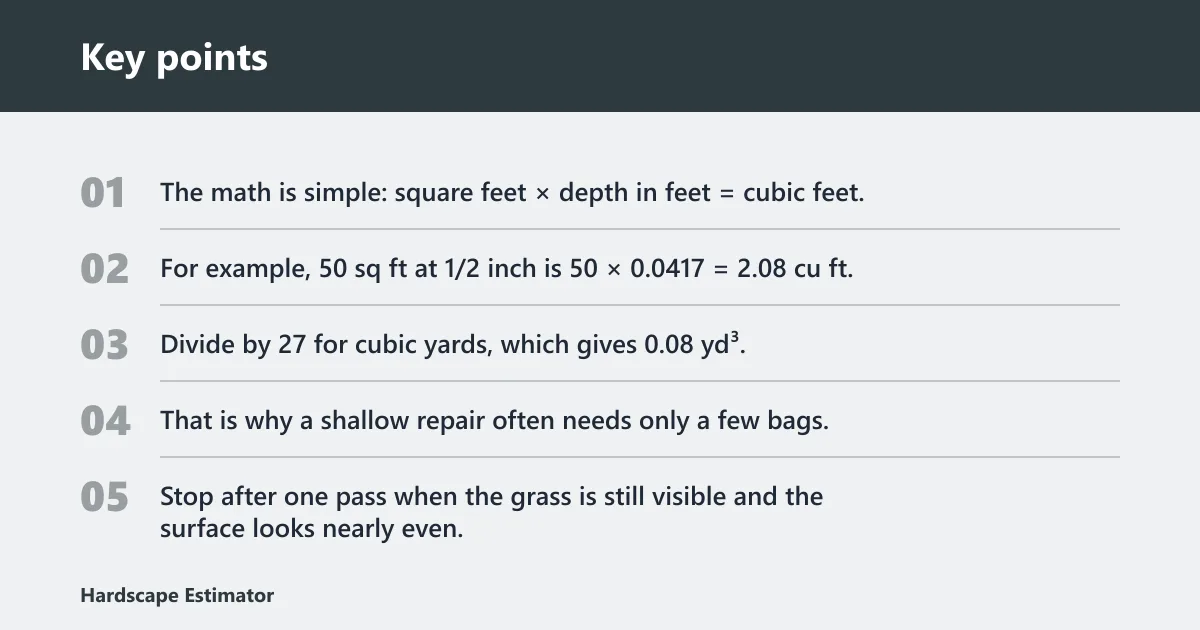
The math is simple: square feet × depth in feet = cubic feet. For example, 50 sq ft at 1/2 inch is 50 × 0.0417 = 2.08 cu ft. Divide by 27 for cubic yards, which gives 0.08 yd³. That is why a shallow repair often needs only a few bags.
Stop after one pass when the grass is still visible and the surface looks nearly even. Repeat after about four to six weeks only if the turf has grown through and the dip is still there.
Should you use sand or topsoil?
Use a blend, not sand alone. Pure sand should never be used by itself to level a lawn, especially on clay-heavy soil, because it can create a cement-like layer and make the surface harder to manage. Dry topsoil mixed with sand gives a safer texture for shallow repairs.
Why pure sand is usually the wrong choice
Sand can dry out rapidly in summer, which stresses grass. On clay-heavy lawns, sand alone can also bind poorly with the native soil and leave a hard, compacted result. That is why a half-and-half sand and dry topsoil mix is the safer default.
When compost makes sense
Compost can be added in small amounts for very shallow repairs. It can enrich the mix and help improve the low area when blended with sand and dry topsoil. Keep it as an ingredient, not the whole fill, so the surface still drains and settles evenly.
How different soils change the mix
Clay lawns usually need the most caution because they are most likely to crust over if the fill is too sandy. Sandy lawns still need topsoil in the blend so the repair does not dry too fast. Loamy lawns are the most forgiving, but they still need thin layers and a repeat check after growth.
When should you repeat the repair?
Wait about four to six weeks before adding another layer. That gives the grass time to grow through the first pass and show whether the dip is still open. If the turf has not recovered by then, the next pass should still be thin, not a buried second layer.
- Check whether blades have pushed through the fill.
- Rake lightly if the surface crusted after watering.
- Add another 1/4 to 1/2 inch only where the dip remains.
- Water thoroughly again after the new layer is spread.
If the low spot keeps coming back
Repeated settling usually means more than surface level loss. Hidden roots, buried debris, or a void in the soil can make the area sink again after each rain. Poor drainage can also wash material out of the repair, so a recurring dip may need deeper correction.
Suppose a 6 sq ft hollow in a shady side yard fills nicely, then drops again after the next storm. That pattern points away from simple topdressing and toward settling or water movement. In that case, the area should be opened up and the cause corrected before another layer goes on.
When to move beyond topdressing
If the spot keeps sinking after two or three shallow passes, or if it stays wet and soft while the rest of the lawn drains normally, stop topdressing. A deeper hole, buried debris, or a grading problem needs a more durable fix than repeated surface fill.
Frequently asked questions
How do you fill low spots in a lawn without killing the grass?
Use a thin topdressing mix, keep blades exposed, and water well after spreading. The key is to add only about 1/2 inch at a time so the turf can grow up through the layer instead of being buried under it.
Can you put topsoil over grass to level a low spot?
Yes, but only in a thin layer and preferably mixed with sand. Plain topsoil in a thick layer can smother the turf. A shallow fill that still leaves grass showing is the safer approach for most minor dips.
How much soil can you add to a lawn at one time?
About 1/2 inch per pass is the safe limit for topdressing. If the depression still shows after the grass grows through, wait about four to six weeks and repeat with another thin layer rather than trying to fix it all at once.
Should I use sand or topsoil to level a lawn?
Use neither alone for most lawns. Sand by itself can create problems on clay and can dry too quickly in summer. A blend of sand and dry topsoil gives better structure, and a little compost can be added for very shallow repairs.
When is the best time to level low spots in grass?
Do the work during vigorous growth, which usually means spring and summer for most lawns. That is when grass can grow through the fill fastest. The repair will be slower if the turf is stressed or dormant.
How long should you wait before adding another layer to a low area?
Wait about four to six weeks. By then, the grass should have pushed through the first pass enough to show whether the area is still low. If it is, add only another thin layer and recheck again after growth resumes.
Can I level a lawn with compost instead of sand?
Compost can help in a small shallow repair, but it should not be the whole fill for leveling. Mix it with sand and dry topsoil so the surface stays stable and does not hold too much moisture around the grass crowns.
What do I do if the low spot keeps coming back after topdressing?
Look for settling, buried debris, root voids, or drainage issues. If the area sinks after more than one thin repair, or if water collects there after rain, the fix likely needs excavation, regrading, or turf lifting rather than another surface layer.