How Much Are Cap Blocks Per Piece, Pallet, and Linear Foot?
Cap blocks commonly run about $10 to $35 per linear foot after waste and freight, depending on size, finish, and quantity. If you skip the unit math, a quote can hide freight, short-load fees, and extra waste, so the job cost jumps fast. This guide shows how to convert any cap block quote into piece, pallet, and linear-foot prices you can compare.
Cap block pricing basics
Cap blocks are the top course on retaining walls and many masonry walls. Price moves with material, size, finish, color, pallet count, and freight. The same quote can look cheap per pallet and expensive per foot once delivery and waste are added.
Most cap blocks are concrete, natural stone, or manufactured stone. Common widths are about 8 in to 16 in, common lengths are about 12 in to 24 in, and thickness often falls around 2 in to 4 in, but product lines vary. Bigger, heavier caps usually cost more.
Quote lines often split into material, freight, and accessory items. Adhesive or construction adhesive may be listed separately, and installed price should be kept apart from material-only price. For a fair comparison, convert every quote to the same unit before deciding.
How much are cap blocks per piece?
Single-piece cap blocks commonly run about $3 to $15 each at retail, before freight and minimum-order charges. Small repairs may use piece pricing, but it can mislead if the supplier charges a delivery minimum or if the color or finish carries a surcharge.
Why piece price can mislead
A $5 cap that needs a $75 delivery fee is not a $5 cap on a small job. Piece price also changes with finish, edge profile, and length. Longer caps often cost more per piece, but they may reduce the number of joints and the labor at the wall top.
Say your wall needs only 18 ft of caps and the supplier sells by the piece. A $7 cap seems simple, but 18 ft could require freight, a short-load fee, and extra pieces for cuts. The delivered piece cost can land far above shelf price.
How much do cap blocks cost per pallet?
Cap blocks often cost about $120 to $800 per pallet, though pallet counts can vary. One manufacturer may ship 60 pieces on a pallet, while another ships 96 smaller caps or only one size per pallet. Always verify piece count, coverage, and weight with the supplier.
How to turn pallet price into effective piece cost
Use this formula: delivered pallet cost ÷ pieces on the pallet = effective piece cost. If a pallet costs $360 delivered and holds 72 caps, the effective piece cost is $5.00 each. If freight is listed separately, add it before dividing so the number reflects what the job actually pays.
Freight can change the answer more than the material does. A $250 pallet with $180 freight is a $430 delivered pallet. On a small order, the freight share per piece can be larger than the cap itself, which is why shelf price alone is not enough.
Cap block cost per linear foot
Linear-foot pricing is the easiest way to compare wall-top coverage. It depends on cap length, joint width, and waste. A longer cap usually covers more wall per piece, while smaller joints reduce the gap allowance between pieces and can slightly change the effective coverage per linear foot.
How to convert piece price to linear-foot price
Use this formula: effective piece cost ÷ effective coverage length = material cost per linear foot. Coverage length is the cap length plus or minus the joint allowance your layout uses. For a simple estimate, a 12 in cap covers about 1 linear foot, a 24 in cap covers about 2 linear feet before waste.
Add adhesive separately. Many wall caps use a compatible masonry adhesive or construction adhesive, applied in beads. Adhesive cost per foot depends on bead size, cap footprint, and coverage rate, so it should sit beside the cap material cost, not inside it.
Cap blocks pricing table
This table normalizes cap block quotes into three comparable units. The delivered cost column includes freight. The freight allocation uses a simple method: if freight is billed separately, divide freight by the number of usable pieces on the order, then add that share to each piece.
| Quote type | Shelf price | Freight | Pieces | Delivered cost | Effective piece cost | Effective linear-foot cost |
|---|---|---|---|---|---|---|
| 12 in concrete cap | $4.25 each | $90 | 60 | $345 | $5.75 | $5.75 per ft |
| 18 in manufactured stone cap | $7.50 each | $140 | 48 | $500 | $10.42 | $6.95 per ft |
| 24 in natural stone cap | $13.00 each | $220 | 32 | $636 | $19.88 | $9.94 per ft |
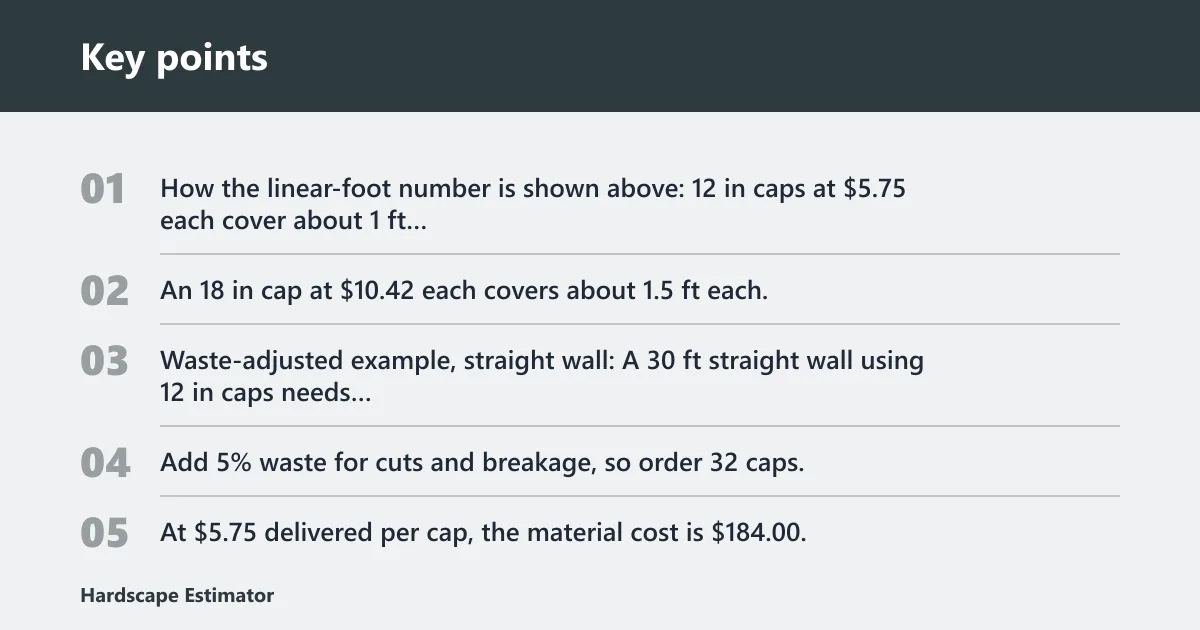
How the linear-foot number is shown above: 12 in caps at $5.75 each cover about 1 ft each, so the material cost is $5.75 per linear foot before waste and adhesive. An 18 in cap at $10.42 each covers about 1.5 ft each, so the material cost is about $6.95 per linear foot.
Waste-adjusted example, straight wall: A 30 ft straight wall using 12 in caps needs about 30 caps before waste. Add 5% waste for cuts and breakage, so order 32 caps. At $5.75 delivered per cap, the material cost is $184.00, or about $6.13 per linear foot after waste.
Waste-adjusted example, cornered wall: A 30 ft wall with two outside corners and one return may need 10% waste, not 5%, because the corner pieces and field cuts reduce yield. At the same $5.75 delivered per cap, 33 caps cost $189.75. The effective material cost rises to about $6.33 per linear foot.
What changes cap block cost most?
Material type, finish, freight distance, pallet weight, and layout complexity move the price the most. Concrete caps are often the low end, natural stone the high end, and manufactured stone usually sits between them. That pattern is common, but local supply can break it.
Material and finish
Concrete is often the least expensive because it is mass-produced. Natural stone can cost more because of quarrying, sizing, and weight. Manufactured stone may price between the two, especially when the color or texture line is limited.
Freight, pallet weight, and minimums
Delivery often changes the final cost more than the shelf price difference between products. A heavier pallet can trigger higher freight, liftgate service, or residential delivery fees. Small orders are especially exposed because the freight is spread across fewer pieces.
Corners, curves, and extra cuts
Curves and corners usually increase waste. Straight runs use the full face length of each cap. Corners, returns, and radius walls create offcuts and layout gaps, so the effective cost per linear foot rises even when the shelf price does not change.
A common first-timer mistake is comparing two cap quotes only by pallet price. A $280 pallet with high freight can cost more delivered than a $340 pallet with local pickup. The better check is delivered piece cost and delivered linear-foot cost on the same wall layout.
How much do cap blocks cost for a wall?
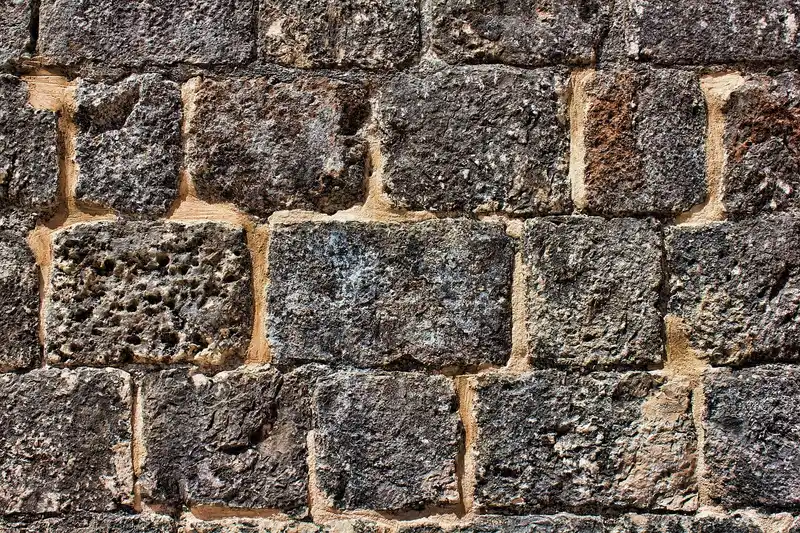
For a wall, the cost starts with wall length, then adds waste, freight, and adhesive. A straight wall is the easiest case. Corners, returns, and curves need more pieces per foot of wall and usually raise the waste allowance. Material-only cost and installed cost should stay separate.
Straight wall quantity math
Measure wall length in feet. Divide by the cap coverage length in feet. Then add waste. For a 40 ft wall with 12 in caps, the base count is 40 pieces. Add 5% waste, and the order becomes 42 pieces.
Cornered wall and return piece math
For corners and returns, add more waste, usually 8% to 15% depending on layout complexity. The extra pieces cover miters, broken cuts, and unusable offcuts. If the supplier sells corner units, price them separately, then compare that quote against a cut-from-straight-cap option.
Adhesive and installed cost
Adhesive belongs in installed cost, not cap material cost. The adhesive line can be small on a long wall and large on a fire pit or short column cap because the bead waste per project is higher. If a contractor quote includes labor, separate labor from materials before comparing suppliers.
Frequently asked questions
How much do cap blocks cost per linear foot?
After freight and waste, cap blocks often work out to about $10 to $35 per linear foot. Short walls and premium stone push the number up fast. Longer caps can lower the per-foot material cost, but corners and cuts can erase some of that gain.
How many cap blocks come on a pallet?
Pallet counts vary by product line and size, so there is no universal number. One pallet may hold 48 large caps, 60 medium caps, or more than 80 smaller units. Verify the piece count, pallet weight, and coverage range with the supplier before ordering.
What affects cap block price the most?
Material type, size, finish, freight, and order size affect price the most. Concrete is often less expensive than natural stone, but freight or a short-load charge can flip the result on a small job. Corners and curves also raise the effective cost by increasing waste.
Do cap blocks cost more for curves and corners?
Yes. Curves and corners usually need more cuts, more waste, and sometimes special corner units. A straight wall may need 5% waste, while a cornered or curved wall may need 10% or more. That extra allowance increases the effective cost per linear foot.