How Many Cap Blocks Are on a Pallet?
Cap blocks are usually sold by pallet. A pallet often holds about 40 to 60 pieces, but the exact count depends on block size, manufacturer packaging, and whether the quote is for full or partial pallets. Guess wrong, and you can come up short on caps or pay for packaging and freight you did not need. This guide shows how to read a cut sheet, calculate pallet yield, and spot bad pricing.
Why cap block pallet counts range from 40 to 60
There is no single pallet count for cap blocks. A practical working range is about 40 to 60 pieces per pallet, though the actual number can vary with cap length, cap width, stack pattern, pallet height, and weight limits. The supplier cut sheet or quote is the only reliable source for the exact count.
Why pallet counts vary by manufacturer
Cap blocks are top-course finish units, and they are often matched to a specific wall system profile. The same-looking cap can ship in different counts from different suppliers because the packaging is built around that product’s dimensions and load rules. Some suppliers quote full pallets only. Others allow partial pallets.
The count also changes when the cap length changes. Shorter caps usually fit more pieces per layer, while longer caps reduce the layer count and may hit height or weight limits sooner.
What to check on a supplier quote
- Pieces per pallet
- Whether the price is for a full pallet or partial pallet
- Cap dimensions in inches
- Freight, packaging, and order minimums
- Any note about mixed pallets or split courses
A supplier quote should state the product count and the shipped count separately when they differ. Those are not always the same thing.
What changes pallet yield?
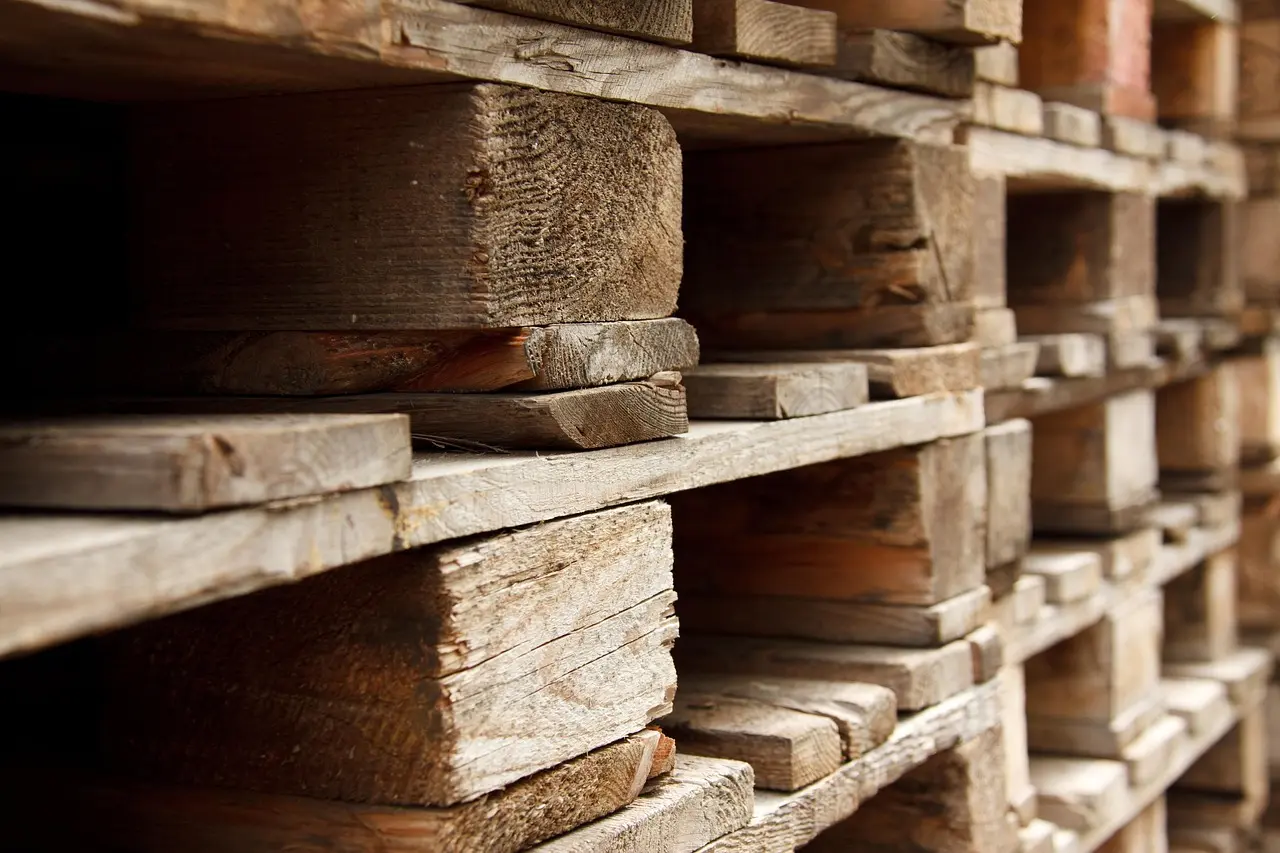
Pallet yield changes with cap size, stack pattern, and shipping limits. A longer cap takes more pallet space per piece. A heavier cap may hit the pallet’s weight limit before it hits the height limit. The result is fewer pieces per pallet even when the layer math looks simple.
Cap length and face size
Cap length is the main input for estimating how many pieces fit in a pallet and how many pieces cover a wall. A 12-inch cap covers less wall length per piece than an 18-inch cap, but it often fits more pieces in a layer. That is why length drives both coverage and pallet yield.
Stack pattern and course count
Some pallets are stacked in full courses, while others mix full and partial courses to stay within height and stability limits. A pallet calculator can use tier count and height count to estimate cases per pallet. Fulfill’s pallet calculator uses TI and HI to compute cases per pallet, and the example load height shown is 56 inches with pallet included.
The example load weight shown is 1,640 pounds with pallet included. The calculator notes that weight would allow more layers than height in the example. That is the key point for cap blocks too: a pallet can be limited by height before it is limited by weight.
Pallet height, weight, and packaging limits
Pallet loading limits can cap the loaded quantity even when the piece math says more will fit. Height limit, weight limit, and space utilization all matter. If the top course would push the pallet too tall, the supplier may stop at a lower count or move to a partial pallet price.
Say your quote says 48 caps on a pallet, but the cap is a heavy 18-inch unit and the same supplier ships a lighter 12-inch cap at 60 pieces. The difference is not random. The larger unit uses more space and can reach the loading limit sooner.
How many cap blocks do you need?
Start with wall length in linear feet. Then convert the cap length into pieces per foot, add the corners and returns, and add a separate waste allowance. Wall length is the starting point, but it is not the whole estimate because cuts and layout changes can add pieces.
Measure wall length in linear feet
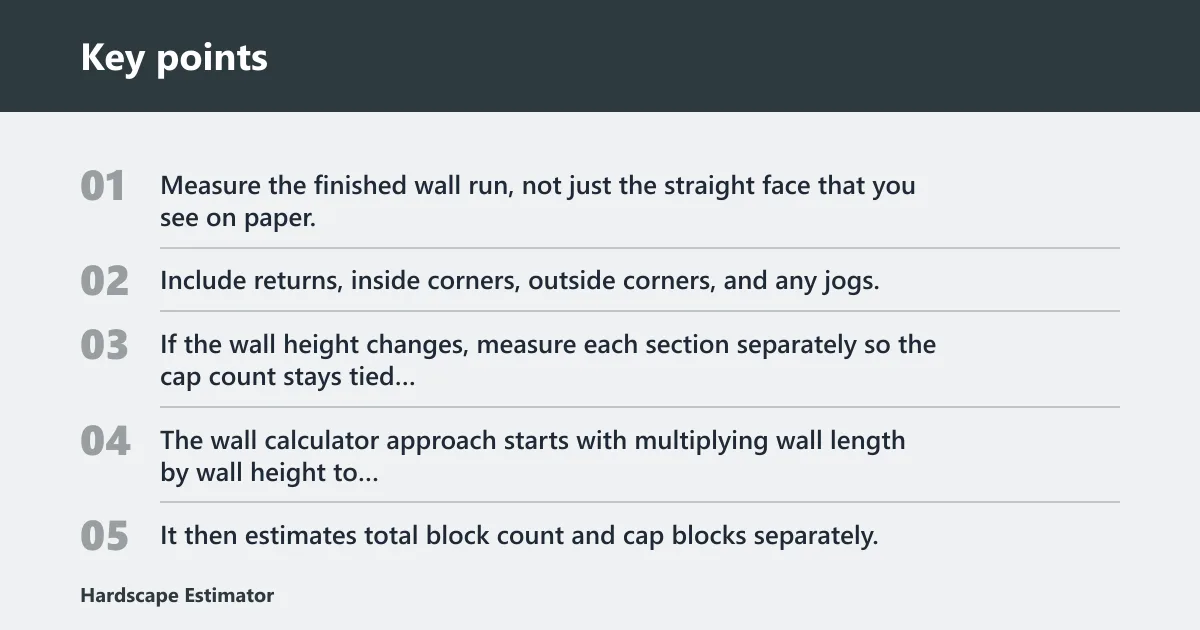
Measure the finished wall run, not just the straight face that you see on paper. Include returns, inside corners, outside corners, and any jogs. If the wall height changes, measure each section separately so the cap count stays tied to the actual layout.
The wall calculator approach starts with multiplying wall length by wall height to estimate wall area. It then estimates total block count and cap blocks separately. Caps should be added separately from the main block count.
Convert cap length to pieces per foot
Use this simple formula:
Pieces per linear foot = 12 ÷ cap length in inches
If the cap is 12 inches long, you need 1 piece per linear foot. If the cap is 18 inches long, you need 0.67 pieces per linear foot.
Add waste for cuts, corners, and returns
Add 5% to 10% for cuts and waste. Keep that allowance separate from the base cap count so you can see the wall coverage and the extra material for layout changes. Corners and returns are the usual reasons the cap count moves up.
Suppose a 32-foot wall uses 16-inch caps. The base count is 32 × 0.75 = 24 pieces. Add about 10% for cuts and returns, and the order becomes 26.4, which rounds to 27 pieces. That is still a separate waste line, not part of the base wall count.
Cap block yield table
Read this table by cap length and width. The piece count is an estimate, not a universal pallet claim. Use the partial-pallet notes before ordering, especially if your supplier sells caps by full pallet only or rounds up to the next load tier.
| Cap length | Cap width | Estimated pieces per layer | Typical layers per pallet | Estimated pieces per pallet | Notes for partial pallets |
|---|---|---|---|---|---|
| 12 in | 4 in | 8 | 6 | 48 | Short caps often fit well in full layers, but a partial pallet may still price as a full load. |
| 16 in | 4 in | 6 | 6 | 36 | Good for smaller wall runs; ask whether the supplier can ship a split layer without regrading the order. |
| 18 in | 6 in | 5 | 6 | 30 | Longer caps usually reduce pieces per layer and may hit height or weight limits sooner. |
| 24 in | 12 in | 4 | 4 | 16 | Large-format caps often ship in lower counts per pallet because the footprint is larger and the stack is shorter. |
Use this table as a planning tool, not a substitute for the cut sheet. A supplier may pack more or fewer pieces depending on weight, pallet style, and the way the cap profile nests.
How to read a pallet quote
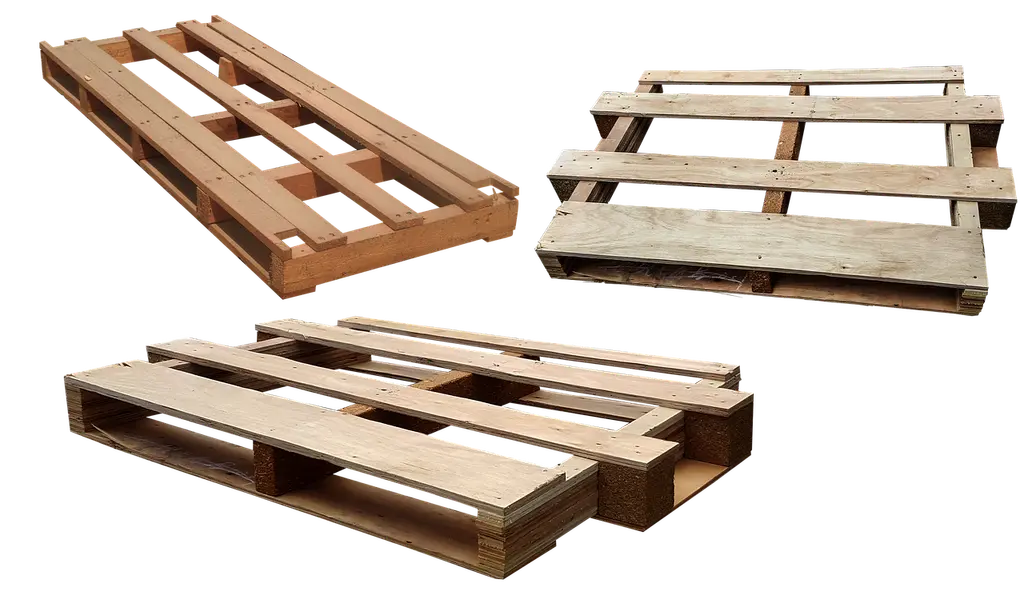
Separate full-pallet pricing from partial-pallet pricing first. Then check freight, packaging, and minimum order terms. A quote can look cheap until the pallet fee and shipping are added, or until you find out the supplier is charging full-pallet pricing for a partial pickup.
Full pallet versus partial pallet
A full pallet usually means the supplier is selling the stated load count at the stated pallet price. A partial pallet may be priced by piece, by tier, or by a minimum load charge. If the quote does not say which one it is, ask before ordering.
Convert the quote into wall coverage
Use this second check before you buy:
| Quote detail | Conversion step | What it tells you |
|---|---|---|
| Pieces per pallet | Multiply pieces by cap length in feet | Total linear feet covered by one pallet |
| Wall length in feet | Divide wall length by cap length in feet | Base number of caps needed |
| Waste allowance | Add 5% to 10% | Extra pieces for cuts and returns |
Example: if a pallet has 48 pieces of 12-inch cap, that pallet covers 48 linear feet before waste. If the wall is 43 feet long, one pallet may cover the job, but corners and returns can still push the order above 48 pieces. That is where the waste allowance matters.
Check freight and order minimums
Freight can change the real cost more than the piece price. A partial pallet may look efficient on paper, then become expensive once the shipping charge is added. If the supplier has a minimum order quantity, the final count may need to be rounded up.
How many Allan Block caps are on a pallet?
Allan Block caps do not have one universal pallet count. The number depends on the exact cap profile, the supplier, and the packing method shown on the cut sheet or quote. For that reason, the right answer is always supplier-specific, not brand-wide.
Why system caps still vary by supplier
Even when a cap is matched to a wall system, the pallet yield can change with cap dimensions, stack height, and load pattern. Two suppliers can sell the same system name and still pack different counts per pallet. That is normal when pallet loading limits differ.
Where to find the cut sheet line item
Look for the line that lists piece count, pallet count, or layers per pallet. If the quote shows only the total square footage or the wall coverage, ask for the pallet count before pickup. A receiving check is easier when the bill of lading matches the cut sheet.
When to ask for a mixed or partial pallet count
Ask for a mixed or partial pallet count when your takeoff lands just below a full pallet, or when you need only a few extra caps for returns and corners. That can keep you from overbuying a full load, but only if the supplier confirms the partial price in writing.
A common first-timer mistake is ordering caps as if they were standard wall blocks. Caps are separate line items. The wall may need one count, while the cap system needs another count based on length, packaging, and the final layout.
Frequently asked questions
How many cap blocks are on a pallet?
Most cap pallets land somewhere around 40 to 60 pieces, but the real count depends on cap size, stack pattern, and loading limits. Always verify the exact number on the supplier cut sheet or quote, because the same product line can ship in different pallet counts.
How many blocks come in a pallet?
That depends on whether you mean wall blocks or cap blocks. For cap blocks, the piece count varies by size and packaging. For wall blocks, the pallet count is set by the block face area, the system design, and the supplier’s loading limits. Never assume the same count for both.
How many cap blocks do I need for my wall?
Measure the wall length in linear feet, divide by the cap length in feet, then add 5% to 10% for cuts, corners, and returns. Keep that waste separate from the base count. A wall calculator can estimate total block count and cap blocks, but the final cap order still needs a supplier check.
How do I estimate cap block quantities from wall length?
Use wall length as the starting point, then convert cap length to pieces per foot. For example, a 16-inch cap works out to 0.75 pieces per linear foot. Multiply by total wall length, then add waste for layout changes. That gives a practical ordering number.
Does block size change how many fit on a pallet?
Yes. Longer or heavier caps usually reduce the number of pieces that fit per layer and can lower the total pallet count. Shorter caps often allow more pieces per layer. Pallet height, weight, and stacking pattern can limit the load before the math does.