Does Rolling Grass Seed Help?
Yes. Rolling grass seed helps only when the seedbed is loose enough to take light pressure and hold seed against soil. On soft, wet, or clay-heavy ground, it can hurt germination by packing the surface too tightly. Bad timing can leave seed dry on top, move it in runoff, or lock roots into a dense seedbed. This guide explains when to roll, when to skip it, and when straw or peat moss fits better.
How lawn rollers work and why light pressure matters
Yes, when the goal is firmer seed-to-soil contact. A lawn roller helps seed settle into the soil, presses seed gently into the surface, and cuts down on air pockets under the seed. That can keep seed from shifting and help it take up moisture more evenly, which supports germination.
It is not a substitute for watering, seed depth, or soil prep. Rolling only helps if the seedbed is loose enough for light pressure to work. On ground that is already packed, wet, or slick from rain, the same pass can work against germination.
What a lawn roller actually does
A lawn roller is a smooth cylinder used after seeding to press seed into soil. It comes in push, tow-behind, and 3-point hitch types. Tow-behind versions for residential lots are often sold in common widths such as 36 inches and 48 inches; the wider version adds more coverage per pass. Both tow-behind configurations can be filled with water or sand for ballast.
The job is gentle pressure, not force. Rolling can reduce air pockets and help moisture reach the seed surface faster. Too much pressure does the opposite by tightening the seedbed.
Why pressure must stay light
Light pressure is enough to seat seed. Heavy or repeated rolling can reduce oxygen in the soil, slow root growth, and make roots struggle in hard soil. That risk rises quickly in clay and in any area that already drains poorly.
Think of rolling as a contact tool, not a packing tool. If the roller leaves visible tracks, sinks deeply, or makes the surface shine and smear, it is too heavy for the condition.
Push, tow-behind, and 3-point rollers
- Push roller: best for small areas and touch-up passes.
- Tow-behind roller: useful for larger residential lawns; a 36-inch unit suits smaller lots, while a 48-inch unit covers more ground per pass.
- 3-point hitch roller: more common for larger areas and field work, where a field roller is used to flatten land.
For lawn seed, the type matters less than the weight setting and pass count. Ballast should stay light. Water or sand can be used, but only to the point that the roller presses seed into soil without compacting it.
When should you roll grass seed after spreading it?
Roll soon after spreading seed and light raking, while the surface is still loose. That timing helps seed settle before wind, foot traffic, or runoff moves it. Roll too early and seed can be pushed too deep. Roll too late and seed may dry out or wash away.
Wet ground is the main red flag. If the soil sticks to shoes, smears under a rake, or leaves a sheen of water on the surface, wait. Rolling wet soil is one of the fastest ways to create compaction.
Best timing after seeding and raking
- Spread seed evenly.
- Rake lightly so seed is mixed into the top surface, not buried.
- Roll once, lightly, before the surface dries crusty.
- Water gently after rolling so the seed stays in place.
That sequence matters because rolling works on loose soil. It is less useful after the surface firms up, and it is riskier after rain or heavy irrigation.
When rolling is too early or too late
Too early means the seed can be buried deeper than intended. Too late means the seed may sit exposed, dry out, or move in runoff. The best window is short: after spreading and light raking, before the top layer seals over.
Suppose a 1,000-square-foot patch is seeded on a breezy day and the surface starts drying within an hour. A single light roll can help hold seed in place. If the same area has puddles after a storm, skip the roller entirely and wait for the soil to firm up.
Does roll out grass seed work?
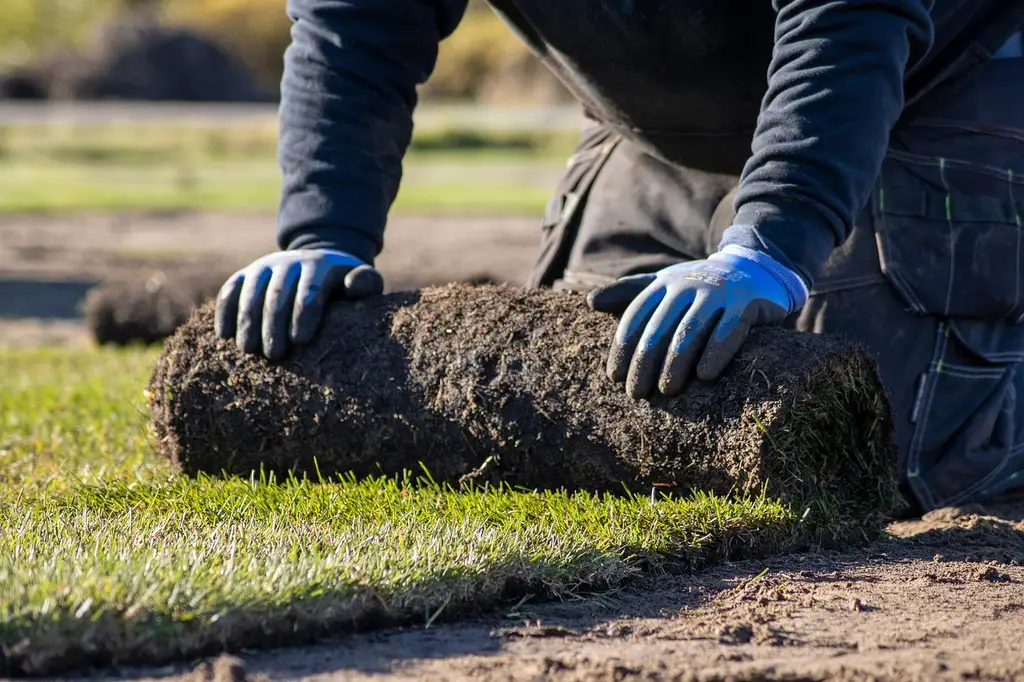
It works best on thin turf and bare soil in different ways. On overseeded turf, rolling helps seed settle into the canopy and touch soil gaps. On bare soil, rolling helps seed press into the top layer and lowers the chance that seed shifts, dries out, or gets washed away.
If the seed is already raked in and the top half-inch is loose and moist, rolling may still help. If the surface is fine-textured, level, and already holding seed well, rake-in alone may be enough.
Overseeding thin turf versus bare soil
Overseeding thin turf usually needs less rolling than bare soil. Existing grass blades and thatch can hold some seed in place, so the goal is contact, not burial. Bare soil often needs more careful seating because there is no cover to slow movement or protect the seed from drying.
That difference is why the same roller pass can be helpful in one spot and unnecessary in another. A lawn with patchy turf may need only a light pass over the bare patches.
When rolling helps seed stay put
Rolling helps most when the top layer is loose, the seed is small, and the area is likely to dry or shed seed. It also helps after light raking, when seed is near the surface but not yet anchored. In that case, the roller adds contact without changing seed depth much.
Rolling is less useful if the seedbed has already crusted or if the site slopes hard enough that runoff is the bigger problem. In those cases, straw or peat moss may control movement better than a roller.
When rake-in alone is enough
If the soil is soft, level, and only lightly disturbed, raking seed in may be enough. That is often true for loose loam and for small overseeding jobs. The key is whether the seed already touches soil, not whether the surface looks neat.
A common first-timer mistake is rolling again after raking because the surface still looks fluffy. If the seed is already seated and the soil is moist, extra passes add more risk than benefit.
Roller fill, passes, and soil type
Soil type should drive the roller setting. Clay should be rolled lightly. Sandy or loose soil can tolerate more movement, but only enough to seat seed. Loam usually sits between those two and often needs the least dramatic setting change.
| Soil type | Recommended pass count | Roller fill level | Red-flag conditions |
|---|---|---|---|
| Clay | 1 light pass | Light ballast or partly filled | Wet soil, shiny surface, puddling, already compacted ground |
| Loam | 1 light pass, or none if seed is already seated | Light ballast only | Recent rain, soft topsoil, runoff risk on slopes |
| Sandy | 1 pass, sometimes a second only if needed to hold seed | Light to moderate ballast | Loose, dry, shifting surface; seed blowing or washing away |
Clay soil
Clay soil should be rolled lightly, or skipped if it is damp. Clay loses pore space fast, so a heavy roller can create a sealed surface that limits air and water. That can slow germination and make roots fight through hard soil.
If clay already feels sticky or shows footprints that hold shape, do not roll it. Seed can still germinate without the extra pressure if watering is steady and the seed is lightly covered another way.
Loam soil
Loam is the easiest soil to judge because it often needs only enough pressure to seat seed. One light pass is usually enough for loam soil. If the seed was raked in well and the surface is moist but not wet, rolling may be optional.
Loam also gives the best balance between contact and drainage, so it is the least likely to suffer from a single light pass.
Sandy soil
Sandy soil may tolerate more rolling than clay, but that does not mean heavy rolling is smart. Sandy soil drains quickly and can lose seed position to wind or watering. Light ballast can help seed stay put without packing the surface too tightly.
On very loose sand, a second light pass may help if the seed keeps moving. Even then, stop as soon as the seed is seated.
Should you roll after seeding checklist
Use this checklist to decide between rolling once lightly, skipping it, or switching to another cover method. Answer each question yes or no. The last line gives the outcome.
| # | Yes/no check | What it means |
|---|---|---|
| 1 | Was the seed just spread? | Yes favors a light roll soon after seeding. |
| 2 | Was the area lightly raked? | Yes means the seed is in a better position for rolling. |
| 3 | Is the soil loose enough to press with a finger? | Yes means contact can improve without much compaction risk. |
| 4 | Is the ground dry enough to crumble, not smear? | Yes is safe; no points toward skipping the roller. |
| 5 | Is the soil not waterlogged from rain or irrigation? | Yes lowers the risk of compaction. |
| 6 | Is the site mostly level, not steep? | Yes makes rolling more predictable. |
| 7 | Is the soil not already compacted clay? | Yes means rolling is less likely to hurt roots. |
| 8 | Is the soil not freshly amended with very loose topsoil? | Yes means the seedbed is less likely to shift under pressure. |
| 9 | Will you use only light ballast? | Yes keeps pressure in the safe range. |
| 10 | Do you need to keep seed from moving before watering? | Yes suggests rolling or another cover method is useful. |
| Outcome: 8 to 10 yes answers = roll once lightly. 5 to 7 yes answers = skip rolling unless the seed is shifting. 0 to 4 yes answers = use an alternative cover method. | ||
Straw or peat moss as an alternative
Straw or peat moss can be a better choice when rolling is risky or when the seedbed needs surface cover more than pressure. These materials help reduce drying and can protect seed on slopes where runoff is a concern. They do not compact soil, which is the main advantage over a roller.
Rolling is better when seed needs contact with the soil itself. Straw or peat moss is better when the surface needs protection, moisture retention, or a little extra hold on a slope. They solve different problems.
Can a lawn roller hurt grass seed?
Yes. A lawn roller can hurt grass seed germination when it is too heavy, used too often, or applied to wet or already compacted soil. The problem is soil compaction: reduced pore space means less air and water move through the seedbed, and roots can struggle in hard soil.
Compaction also raises the chance of pooling and rot. If water sits on the surface after rolling, the soil has probably been pressed too far.
What over-rolling does to roots
Over-rolling pushes the soil particles tighter together. That limits oxygen and slows root growth. Seed may still sprout, but the lawn can stall soon after because roots cannot spread easily.
The risk rises with repeated passes, ballast that is too heavy, and soil that starts out dense. A single light pass is very different from flattening the same area several times.
Problem conditions: rain, slopes, amended topsoil
Do not roll after heavy rain. Do not roll fresh amended topsoil if it is still fluffy and shifting. On slopes, rolling can help seed contact, but only if runoff and erosion are under control; otherwise, straw or peat moss is often safer.
Picture a newly seeded side yard with a 12-inch drop over a short run. If the soil is already moist and loose, a roller may move the seed more than it seats it. In that case, a light cover is the better call.
Cool-season and warm-season timing
Cool-season grass is commonly seeded in fall or early spring, depending on region. Perennial ryegrass, fescues, and bent grass are common cool-season types, and overseeding often happens in those seasonal windows. Warm-season grass is usually planted in spring as soil warms.
Soil temperature is the controlling factor. Soil warms more slowly than air, so seed timing should follow soil conditions, not just the calendar. Rolling cannot fix poor temperature or moisture for germination.
Frequently asked questions
Does rolling grass seed help?
Yes, if the roll is light and the soil is loose enough to accept it. Rolling presses seed into soil, reduces air pockets, and helps seed stay in place. It does not replace watering, proper seed depth, or good soil preparation.
Does rolling grass help it grow?
Rolling can help germination when it improves seed-to-soil contact and moisture uptake. It does not make grass grow by itself. Growth still depends on soil temperature, water, and whether the seedbed stays loose enough for roots to spread.
Can a lawn roller hurt grass seed germination?
Yes. Heavy or repeated rolling can reduce oxygen in the soil and make roots struggle in hard soil. Wet soil, compacted clay, slopes, and freshly amended topsoil are the main problem conditions because they raise the chance of compaction or seed movement.
How heavy should a lawn roller be for new seed?
Light is the safer answer. Use only enough ballast to press seed into contact, not enough to flatten the bed. Sandy soil can tolerate a little more than clay, but even there the goal is a single light pass, not a dense pack.