When Is the Best Time to Plant Grass Seed?
A common rule of thumb is to plant cool-season grass seed in late summer to early fall when soil stays near 50 to 65°F, and to seed warm-season grass in late spring after soil reaches about 65 to 75°F and hard frost is no longer likely. Seeding at the wrong time can mean poor germination, thin turf, more weeds, and extra reseeding cost. This guide shows how to choose the window by grass type, soil temperature, region, and frost timing.
This guide is part of our Grass seed guide: how much, when, and how to use it series.
Cool-season versus warm-season planting windows
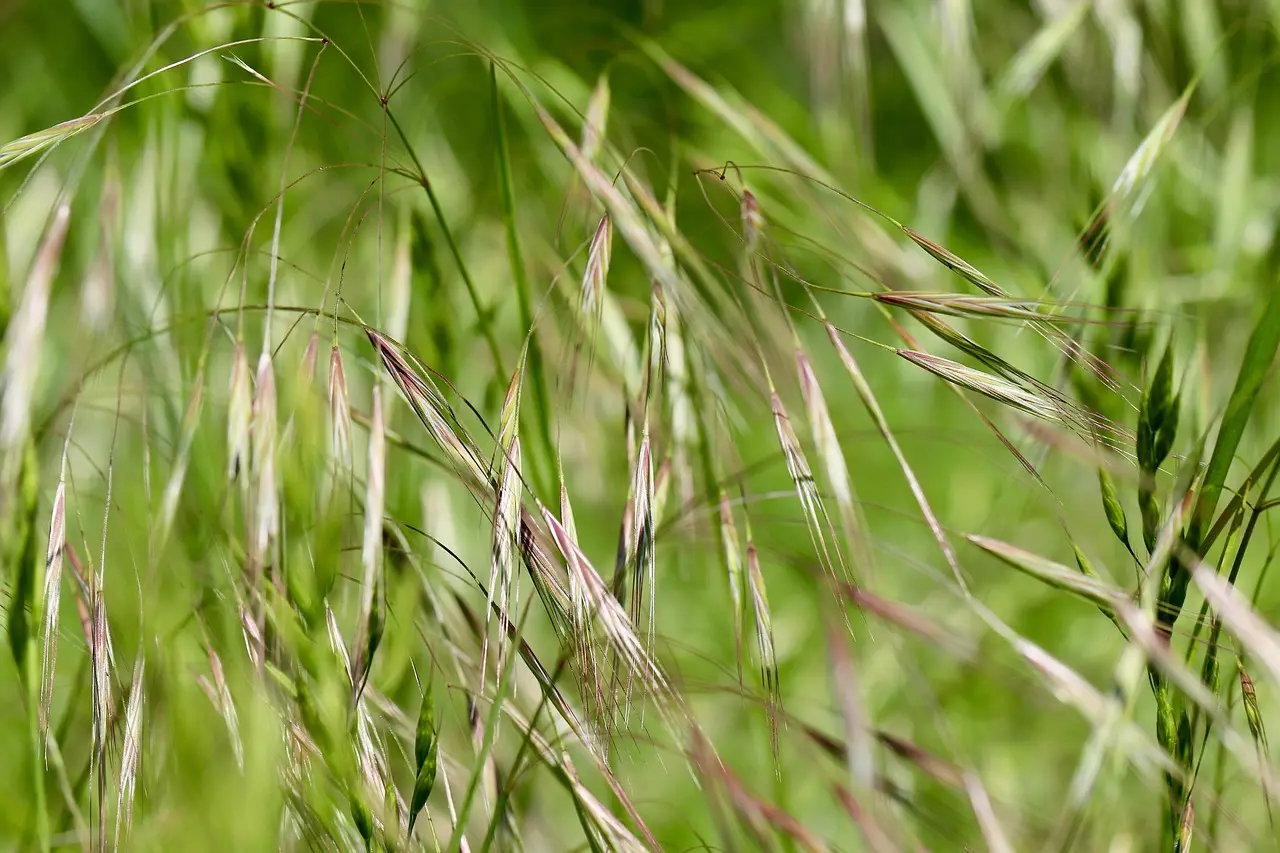
The best time depends on grass type first, then on soil temperature and frost risk. Cool-season grasses do best in late summer to early fall. Warm-season grasses do best in late spring or early summer. Soil temperature matters more than the calendar date, because seed germinates when the ground reaches the right range, not when the month changes.
For cool-season lawns, the target is soil at 50 to 65 degrees F. For warm-season lawns, the trigger is soil at 65 degrees F or higher. If the soil is outside those ranges, the seed may sprout slowly, sit too long, or fail after a weather swing.
Cool-season grasses: fall window and soil temperature target
Cool-season grass seed belongs in late summer to early fall. Common examples include fescue, Kentucky bluegrass, and perennial ryegrass. The soil target is 50 to 65 degrees F, and that window lines up with strong germination, lower heat stress, and less pressure from summer weeds.
That is why many guides point to early fall as the safest default. One common window is late August to mid-October, but the right week still depends on your soil and your first frost date.
Warm-season grasses: late spring to early summer window
Warm-season grass seed belongs in late spring or early summer. Common examples include bermuda, zoysia, centipede, and St. Augustine. The soil needs to be 65 degrees F or higher, and many guides push the planting window into late spring through early summer for that reason.
If you seed warm-season grass too early, cold soil slows germination. If you seed too late, summer heat can make watering harder and establishment less reliable.
Why soil temperature beats the calendar
The calendar gives a rough season. Soil temperature tells you whether seed can actually germinate. A yard in shade, a windy slope, or a cold spring pocket can lag behind a nearby lawn by several degrees. USDA plant hardiness zone can help narrow timing by region, but it is not the only factor because local microclimates also matter.
A soil thermometer is the simplest way to confirm the trigger. Air temperature can look mild while soil still sits too cold for fast germination, or the reverse can happen after a warm spell.
Grass seed timing checklist
This checklist turns the timing decision into a simple go or wait check. Use the grass type first, then compare soil temperature, region, and weather risk. If any one item says wait, the safer choice is usually to wait.
| Grass type | Soil temperature trigger | Seed now / wait |
|---|---|---|
| Cool-season grasses: fescue, Kentucky bluegrass, perennial ryegrass | 50 to 65 degrees F | Seed now if soil is in range and hard frost is not close; wait if soil is hotter, colder, or drought-stressed |
| Warm-season grasses: bermuda, zoysia, centipede, St. Augustine | 65 degrees F or higher | Seed now if soil is warm and frost risk is low; wait if soil is cool or fall dormancy is near |
Should you seed now or wait?
Seed now if your grass type matches the season, your soil temperature is in range, and the next week does not bring a hard frost, a heat wave, or a long dry spell. Wait if the soil is still too cold, the forecast turns severe, or the lawn is heading into dormancy. Timing matters because new lawn seeding depends on consistent moisture after sowing.
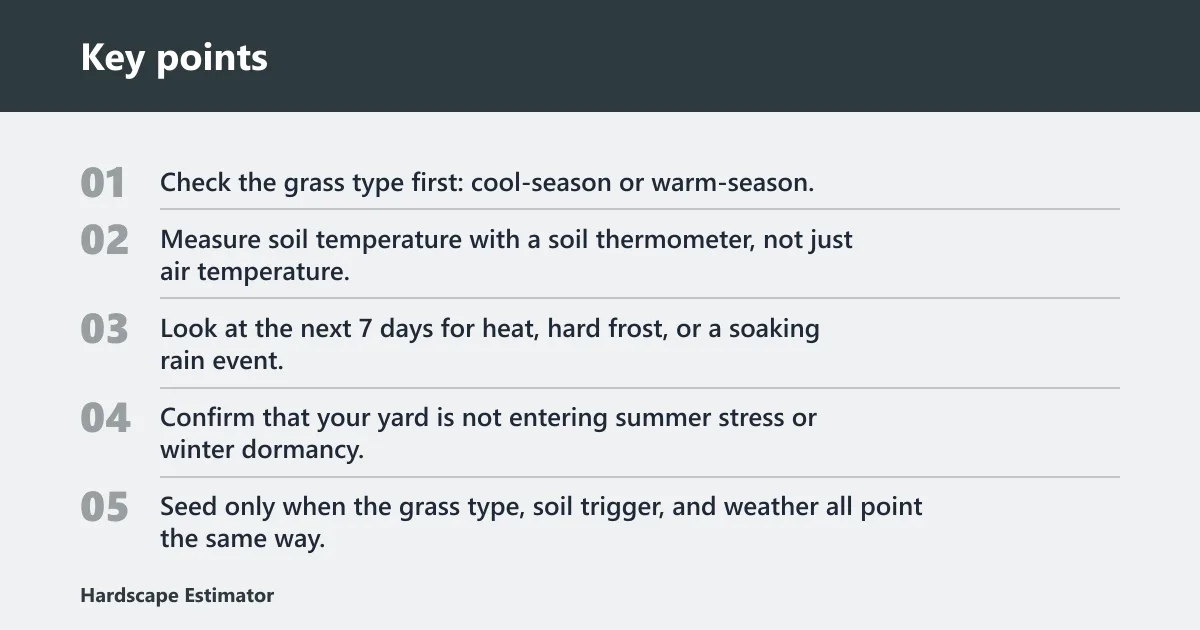
A common first-timer mistake is seeding by the calendar after a warm afternoon. The air feels right, but the soil below the surface may still be several degrees too cool. That can leave seed sitting too long, which raises the chance of rot, bird loss, or a weak stand.
- Check the grass type first: cool-season or warm-season.
- Measure soil temperature with a soil thermometer, not just air temperature.
- Look at the next 7 days for heat, hard frost, or a soaking rain event.
- Confirm that your yard is not entering summer stress or winter dormancy.
- Seed only when the grass type, soil trigger, and weather all point the same way.
Say your backyard in a transition zone has thin fescue in early September. The soil reads 58 degrees F, and the seven-day forecast stays mild. That is a seed-now signal for a cool-season repair. The same yard in late June would usually be a wait, because heat increases watering burden and establishment risk.
Suppose a warm-season lawn in a southern yard is bare in May. If the soil has reached 65 degrees F and the forecast shows no frost risk, seeding can start. If the same yard is still cold after a cool spring, waiting a week or two is often safer than forcing a weak start.
Check the seven-day weather and frost risk
Use the next 7 days as a safety check, not as the main timing rule. A warm spell after seeding can dry the surface too fast. A hard frost can damage young seedlings, especially cool-season grass planted too late in fall. A storm can help with moisture, but only if it does not wash seed away.
First frost date helps set the fall seeding cutoff. It does not replace soil temperature, but it helps you judge how much time seedlings have left before cold weather slows growth. That matters most for cool-season lawns trying to finish establishment before winter.
Check for heat or dormancy problems
Heat and dormancy are the two biggest timing problems. Summer heat can push newly seeded lawns into water stress before roots are ready. Winter dormancy can leave warm-season seed too cold to germinate. If the lawn is already under stress from weather, seeding usually waits.
Why fall works for cool-season lawns
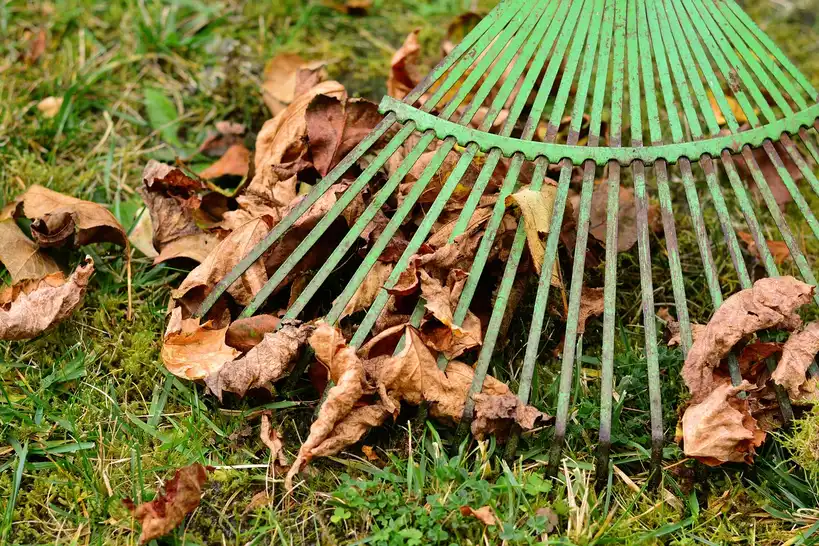
Fall is the best time for cool-season grasses because the soil is still warm enough for germination, but air temperatures are cooler and moisture loss is lower. That gives seedlings a better start with less irrigation pressure. The common cool-season grasses are fescue, Kentucky bluegrass, and perennial ryegrass.
For these grasses, the practical window is late summer to early fall. A lot of guidance points to early fall, including late August to mid-October, with northern lawns often centered from mid-August to mid-September. The exact cutoff depends on your first frost date and how fast nights cool down.
How first frost date sets the deadline
First frost date matters because cool-season seedlings need time to root before hard cold stops growth. If you seed too close to frost, the lawn may emerge but not mature enough to survive winter well. That risk rises in northern climates and in exposed yards that cool quickly.
The simple rule is to seed early enough that the lawn has several weeks of active growth before the first hard freeze. Soil temperature still leads the decision, but frost date tells you whether the calendar is running out.
Why seedling moisture needs are lower in fall
Fall usually lowers the watering burden for new lawn seeding. Cooler air and shorter days reduce surface drying, so moisture stays more even after sowing. That does not remove the need to water, but it makes consistent watering easier than in summer heat.
When new seed dries out in hot weather, germination can stall or fail. When it stays too wet in cold soil, it can sit too long before sprouting. Fall tends to avoid both extremes for cool-season lawns.
Why warm-season lawns need later planting
Warm-season grasses need later planting because they germinate best when the soil is warm enough to wake the seed quickly. Common examples include bermuda, zoysia, centipede, and St. Augustine. The planting window is late spring or early summer, once soil reaches at least 65 degrees F.
Cold soil slows germination and can leave seed exposed too long. That is the main reason warm-season seed often fails when planted too early in spring. It needs heat to get moving and enough time to establish before the next cold season.
Why cold soil slows germination
When soil is too cool, seeds may absorb moisture but sprout slowly. Slow germination means a longer period of vulnerability to crusting, uneven moisture, and disease. For warm-season grasses, that delay can make the lawn look patchy even if the seed is still viable.
The guide numbers are simple: cool-season grass germinates best at 50 to 65°F, while warm-season grass should be planted when soil temperatures are 65 to 70°F or warmer. Those thresholds are more useful than a calendar month.
Why late spring and early summer fit establishment
Late spring and early summer give warm-season lawns the heat they need and enough growing time before dormancy returns. Southern states often fit this pattern best, with planting from late April through June. That timing aligns with warm soils and active growth.
Planting warm-season grass too late can leave little time to establish before cooler weather slows it down. The lawn may emerge, but it will enter dormancy before it is strong enough.
How region changes the window
Region changes the timing because climate, elevation, and frost dates shift the window. USDA plant hardiness zone helps narrow the schedule, but local weather still matters. A shaded yard in one zone can act colder than an open yard in another.
| Region | Typical timing | Practical note |
|---|---|---|
| Northern lawns | Mid-August to mid-September | Best fit for cool-season grass before frost arrives |
| Transition-zone lawns | September through mid-October | Choose grass type first because both calendars can work |
| Southern lawns | Late April through June | Best fit for warm-season grass once soils are warm |
Northern lawns
Northern lawns usually favor cool-season grass and an earlier fall seed window. Michigan is a good example of where mid-August to mid-September often fits, because the goal is to finish seeding before hard cold closes the window. That timing is still controlled by soil temperature and first frost date.
For Michigan lawns, the answer is usually cool-season in late summer to early fall. In a cool year, the soil may be ready later than expected. In a warm year, frost risk may still pull the deadline forward.
Transition-zone lawns
Transition-zone lawns need grass-type-first decisions because both cool-season and warm-season calendars can apply. States like Virginia, Missouri, and Kansas often have mixed timing. September through mid-October can work for cool-season seed, while warm-season seed follows a different schedule in late spring or early summer.
Shaded yards in a transition zone may act more like a northern lawn. Full-sun yards may heat up quickly and behave more like a southern lawn. That is why the grass type and site conditions matter more than the state line.
Southern lawns
Southern lawns usually favor warm-season grasses and a later spring seeding window. A practical target is late April through June, once soil stays warm enough for germination. If a cool-season lawn needs overseeding in the South, the window changes again and should be judged by grass type and local climate.
For Colorado, the answer depends heavily on elevation, exposure, and the grass type chosen. Some sites stay cool longer, which can shift the timing away from the broad state pattern. That is one place where the soil thermometer is more useful than a statewide calendar.
When is the best time to plant grass seed before or after rain?
Light rain after seeding can help if it keeps the seedbed evenly moist and does not move the seed. Heavy rain before seeding can make the surface muddy and harder to prepare. The best choice is usually to seed when rain is not severe, then water lightly and consistently to hold moisture near the seed.
If a soaking storm is coming, wait until after it passes and the soil can be worked without clumping. If the forecast calls for gentle rain, seeding just ahead of it can reduce the first watering burden. The key is moisture without washout.
Frequently asked questions
What is the best time to plant grass seed?
The best time is late summer to early fall for cool-season grasses and late spring to early summer for warm-season grasses. Soil temperature matters more than the calendar date. Use 50 to 65 degrees F for cool-season seed and 65 degrees F or higher for warm-season seed, then confirm frost risk.
Is it better to plant grass seed in the spring or fall?
Fall is usually better for cool-season grass because temperatures are milder and moisture is easier to manage. Spring can work if fall was missed, but it often brings more weed pressure and more watering. For warm-season grass, spring and early summer are the better seasons.
What month should I plant grass seed?
The month depends on grass type and region, so there is no single best month. Northern lawns often fit mid-August to mid-September. Transition-zone lawns may fit September through mid-October. Southern lawns often fit late April through June for warm-season grasses.
When is the best time to plant grass seed in the fall?
The best fall timing is when cool-season soil stays in the 50 to 65 degrees F range and the first frost date is still far enough away. Many lawns do well from late August to mid-October, but northern yards may need the earlier part of that window.
When is the best time to plant grass seed in Michigan?
Michigan usually fits a cool-season fall schedule, often from mid-August to mid-September. Soil temperature should still be in the 50 to 65 degrees F range, and the first frost date should not be too close. A soil thermometer is the best way to confirm the week to seed.
When is the best time to plant grass seed in Ohio?
Ohio often fits the transition-zone pattern, so grass type matters first. Cool-season seed is usually best in early fall, while warm-season grass belongs later in spring or early summer. Check the soil temperature and local frost timing instead of relying on the state calendar alone.