When Is the Best Time to Level a Lawn?
Warm-season lawns are usually leveled best in late spring to early summer. Aim for soil that is moist but not soggy. Pick the wrong window and the turf may thin out, seed may fail, and low spots can stay exposed longer. This guide explains the timing rule, soil conditions, and grass-specific recovery window.
Best time by grass type
The safest timing depends on grass type. Cool-season grasses usually recover best in early fall or spring. Warm-season grasses usually recover best in late spring to early summer. Soil temperature matters more than the calendar because it tells you whether roots and shoots can grow fast enough after leveling.
Cool-season grasses
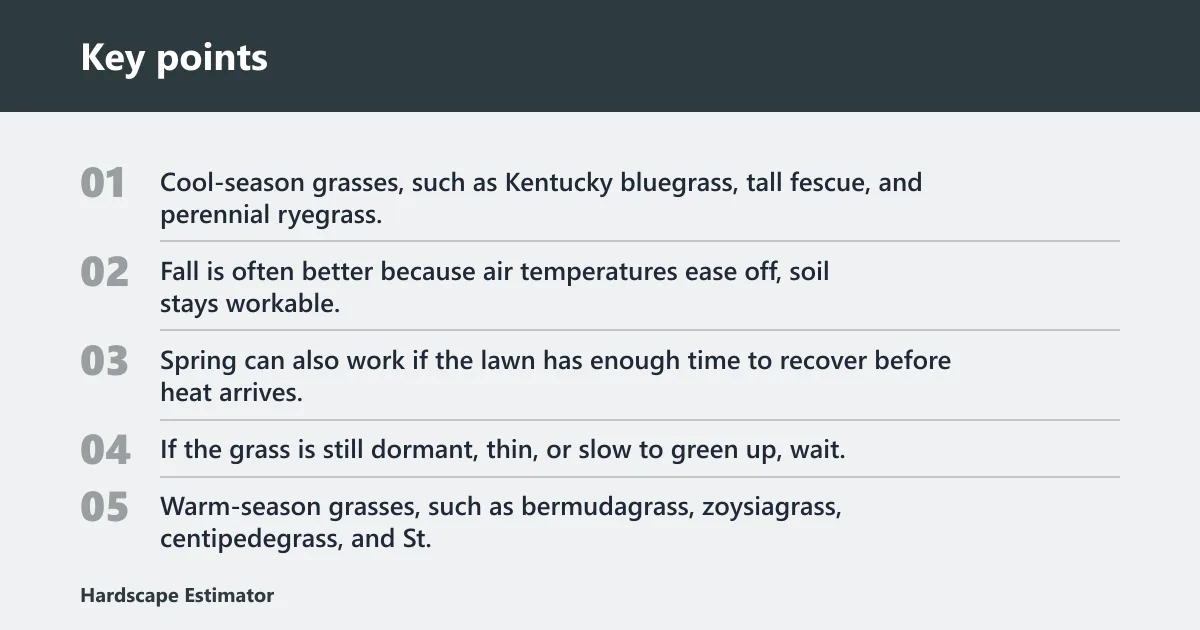
Cool-season grasses, such as Kentucky bluegrass, tall fescue, and perennial ryegrass, usually handle leveling best in early fall, with spring as the second choice. Fall is often better because air temperatures ease off, soil stays workable, and root growth stays active after summer stress.
Spring can also work if the lawn has enough time to recover before heat arrives. The key is active growth. If the grass is still dormant, thin, or slow to green up, wait.
Warm-season grasses
Warm-season grasses, such as bermudagrass, zoysiagrass, centipedegrass, and St. Augustinegrass, usually recover best in late spring through early summer. These grasses depend on warm soil for strong growth, so leveling too early in the year can slow repair and leave the surface open longer than it should be.
For these lawns, a warm, growing period is more important than the month name on a calendar. If nights are still cool and the lawn is only partly active, leveling is easier to delay.
Why soil temperature matters more than the month
Soil temperature is the recovery signal. Grass grows from the roots and crowns below the surface, and those tissues respond to soil warmth, moisture, and oxygen. A mild day in the wrong season can still be a poor leveling day if the soil is too cold, too wet, or too dry.
As a practical rule, time the work when the lawn is already growing well enough to fill in minor disturbance within days, not weeks. That recovery window is the real target.
Lawn leveling timing table
Use the table as a go/no-go filter. The best answer is not just “spring” or “fall.” It is spring or fall, with the right grass type, the right soil condition, and enough recovery time ahead.
| Grass type | Season window | Soil condition | Recent lawn stress | Recommendation |
|---|---|---|---|---|
| Cool-season | Early fall | Moist, friable, not sticky | No drought, no frost, no heavy traffic damage | Go |
| Cool-season | Spring | Moist, workable, warming soil | Recovered from winter; not waterlogged | Go, if growth is active |
| Warm-season | Late spring to early summer | Warm, moist, not saturated | Not under heat stress or drought stress | Go |
| Warm-season | Mid-summer heat | Dry or hot soil | Heat stress or irrigation limits | No-go |
| Any grass | Winter or frozen ground | Frozen, icy, or saturated soil | Dormant turf, frost, or thaw cycles | No-go |
| Any grass | After seeding | Seedbed needs contact and steady moisture | Recent seed may be buried by heavy topdressing | Go only with light leveling |
How to read the go/no-go signals
If the grass is growing actively, the soil is moist but not wet, and the lawn is not already stressed, leveling is usually a reasonable job. If any one of those pieces fails, the timing gets weaker. If two fail, wait.
Say your cool-season lawn has low spots after a wet spring, but the ground still feels spongy underfoot. That is a poor day to spread topdressing. The same lawn a week later, after the surface firms up, may be ready.
Quick decision rules for same-day planning
- Check whether the grass is growing actively.
- Press a screwdriver or trowel into the soil to judge moisture.
- Look for stress from heat, drought, frost, or disease.
- A common rule of thumb is to confirm that the lawn can recover within the next 2 to 3 weeks.
- Proceed only if the soil is workable, not wet or crusted.
What soil conditions are safe?
Soil should be moist, not saturated, and not powder-dry. Moist soil accepts topdressing more evenly and lets roots keep growing. Wet soil smears under a rake or wheelbarrow. Dry soil makes it harder to spread material into low spots and can slow recovery after the work.
Moist vs. saturated soil
Moist soil holds together lightly when squeezed and then breaks apart. Saturated soil glistens, feels soft, and may leave footprints or shallow ruts. For leveling, saturated ground is a no-go because it increases compaction, rutting, and surface smearing.
Dry soil is also a problem. It makes topdressing harder to blend into the turf and can force more watering later, which is not ideal when the lawn is already under stress.
Why frozen, wet, or drought-stressed soil is a no-go
Frozen soil blocks recovery because roots are inactive and the surface can break unevenly. Waterlogged soil limits oxygen around the roots. Drought-stressed soil is already conserving moisture, so adding disturbance can thin the turf further.
A common first-timer mistake is to level right after a soaking rain because the yard looks soft and easy to work. That soft surface often turns into tracks and compacted patches instead of a cleaner grade.
How recent rain changes the timing
Recent rain is helpful only if the soil drains soon after. A light rain can make the top few inches workable the next day. Heavy rain that leaves puddles or shiny mud means the lawn needs more drying time before any leveling begins.
If rain is forecast within a day or two, it may be better to wait. Fresh topdressing needs a stable surface, not repeated splashback or pooling.
Should you level before or after overseeding?
In many cases, level before overseeding or do both in the same window with a light topdressing layer. Seed needs contact with soil, moisture, and warmth. If the leveling layer is too thick, it can bury seed and weaken germination. If the lawn is already seeded, wait until the new grass is established enough to tolerate light disturbance.
When leveling and overseeding can happen together
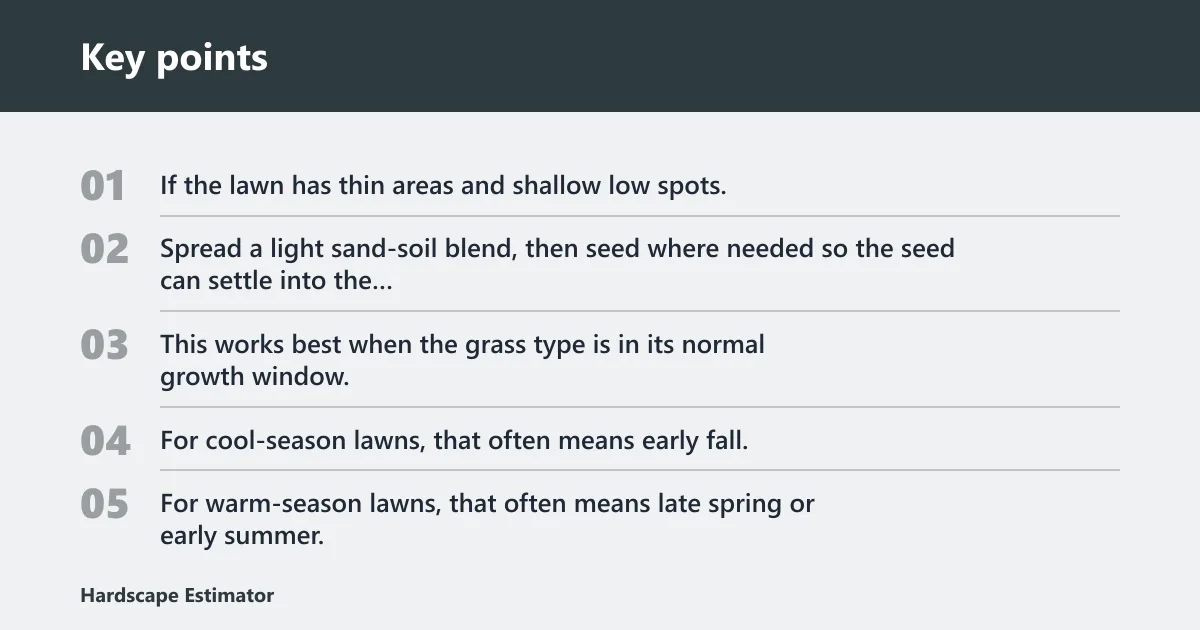
If the lawn has thin areas and shallow low spots, leveling and overseeding often pair well. Spread a light sand-soil blend, then seed where needed so the seed can settle into the top layer. This works best when the grass type is in its normal growth window.
For cool-season lawns, that often means early fall. For warm-season lawns, that often means late spring or early summer, when soil warmth supports germination and recovery.
Seed-to-soil contact and topdressing depth
Topdressing should stay light. A common rule is to add just enough to smooth the dip without burying the grass canopy. Thick layers block seed-to-soil contact and can smother new shoots. The goal is gradual correction, not a heavy cover layer.
The mix should match the existing soil as closely as practical. A sand-soil blend is common, but the texture should suit the site. A lawn levelling rake helps spread material evenly across the turf and avoid clumps in one low area.
When to wait for better recovery conditions
Wait if the lawn was recently seeded and the grass has not yet filled in. Wait if the area is under heat stress, drought stress, or frost stress. Wait if the topsoil is still loose enough that foot traffic or a rake will pull seedlings out.
A lawn seeded about 10 days ago may still be too young for full surface leveling, especially if the new blades are only about 1 to 2 in tall. That lawn usually needs more time before leveling. A light seed cover may still be fine, but a full surface correction is better delayed.
How should you prep the lawn that week?
Prep is simple: mow a little lower than usual, clear debris, check thatch, and water at the right time so the soil is ready but not soaked. Good prep makes the topdressing easier to spread and reduces the chance of tearing turf during the work.
Mowing height before leveling
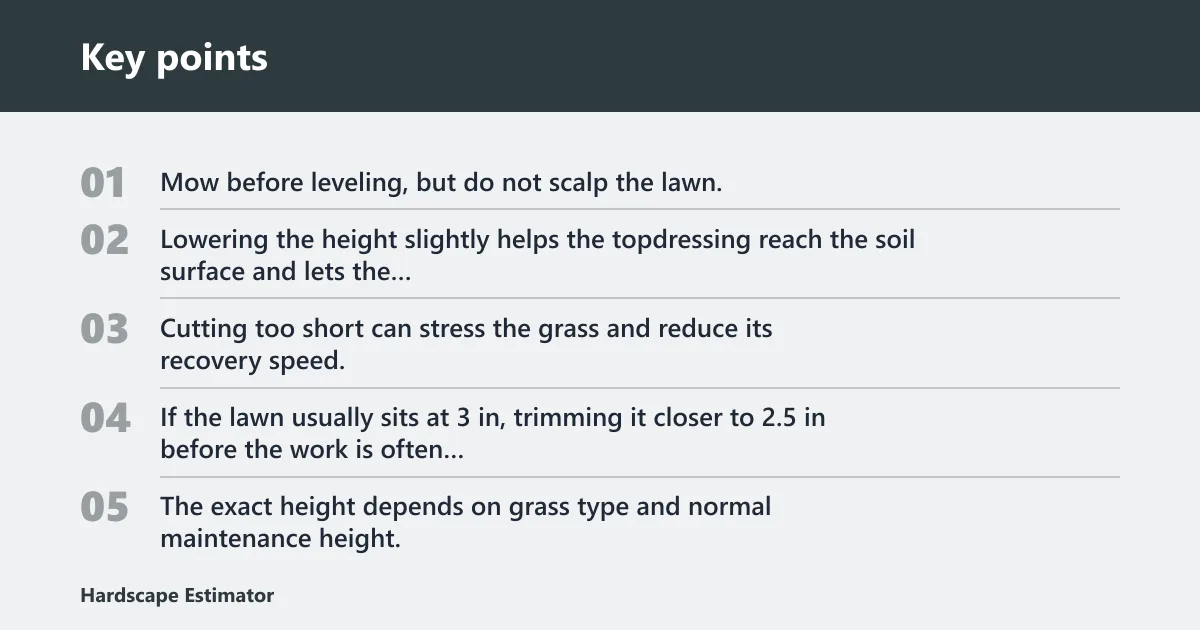
Mow before leveling, but do not scalp the lawn. Lowering the height slightly helps the topdressing reach the soil surface and lets the rake move material more evenly. Cutting too short can stress the grass and reduce its recovery speed.
If the lawn usually sits at 3 in, trimming it closer to 2.5 in before the work is often enough. The exact height depends on grass type and normal maintenance height, but the rule is the same: slightly lower, still healthy.
Thatch and surface cleanup
Thatch changes prep because a thick layer blocks material from reaching the soil. If the thatch is thin, light leveling may still work. If the thatch is deep, the site may need dethatching or another prep step before topdressing, or the new material can sit on top instead of settling where it is needed.
Remove sticks, leaves, and loose debris first. Clean contact points help the soil blend with the topdressing and improve seed-to-soil contact where overseeding is part of the plan.
Watering the day before and after
Water the day before if the soil is dry, but stop short of saturation. The target is a moist root zone, not a muddy one. After leveling, water lightly enough to settle the material and keep the surface from drying out too fast.
What time is best to water lawn? Early morning is usually best because it reduces evaporation and gives the turf time to dry during the day. After leveling, frequency often matters more than volume. Short, regular watering helps recovery without waterlogging the area.
Can you level in summer or winter?
Yes, but only in limited cases. Summer can work for warm-season grass if the lawn is actively growing and not heat-stressed. Winter is usually a poor choice for any lawn because recovery slows, frozen ground resists working, and dormant turf cannot repair quickly.
Heat, drought, and recovery limits in summer
Summer leveling is safest for warm-season turf during moderate heat, not during a heat wave. Cool-season lawns often struggle in summer because growth slows as temperatures rise. If the lawn is already wilting, watering more after leveling may not be enough to offset the stress.
For summer timing, look at the soil and the leaves. If the soil is dry and the turf looks curled or dull, wait. If the lawn is green, growing, and the soil stays evenly moist, a light leveling can still be reasonable.
Why winter and frozen ground are poor choices
Winter and frost periods are poor leveling windows because grass is dormant or nearly dormant, and recovery is limited. Frozen soil should be avoided entirely. It does not accept topdressing well, and thawing afterward can leave the surface uneven again.
Even when the ground is only partly frozen, wheelbarrows, rakes, and foot traffic can compact the surface. That slows spring recovery and can leave a larger repair job later.
Exceptions for small fixes versus full leveling
Small spot repairs can be handled more flexibly than a full-yard leveling job. A shallow dip in a healthy lawn may be corrected with a very light topdressing at a better time in the same growing season. Large grade changes should still wait for the proper recovery window.
If the area is bare, thin, or recently seeded, keep the correction light and stage the work around growth. That usually means fixing the surface first, then overseeding or patching only where needed.
Frequently asked questions
When is the best time to level a lawn?
The best time to level a lawn is when the grass is actively growing and the soil is moist but not saturated. For cool-season lawns, that is usually early fall or spring. For warm-season lawns, it is usually late spring to early summer. Soil temperature matters more than the calendar.
When to level a lawn
Level a lawn when it can recover quickly from minor disturbance. That means no frozen ground, no standing water, and no active drought stress. If the lawn is growing steadily and the soil is workable, the job is usually safer and the results are easier to maintain.
What time is best to water lawn
Early morning is usually the best time to water a lawn. That gives the water time to soak in before heat builds and leaves the surface with less overnight moisture. After leveling, use light, steady watering so the topdressing settles without turning the area soggy.
Can you level a lawn in summer without damaging it?
Yes, but only if the grass type and weather fit the job. Warm-season lawns can usually handle light leveling in early summer when they are growing strongly. Avoid summer leveling during heat stress, drought stress, or when the soil is already dry and hard.
Is spring or fall better for lawn leveling?
For cool-season grass, fall is often better because the lawn is recovering from summer and still has active root growth. For warm-season grass, late spring and early summer are usually better than fall. So the better season depends on the grass type.
How soon after seeding should you level a lawn?
Wait until the new grass is established enough to handle light disturbance. If seedlings are very young, a leveling pass can bury them or pull them loose. When the area needs both seeding and leveling, it is usually better to do a light leveling first, then seed, then water carefully.
Should you level a lawn before or after overseeding?
Most of the time, level first and overseed after, or do both in the same light pass. That sequence helps seed settle into the corrected surface. If topdressing is too thick, it can bury seed, so the material layer should stay light and the seed should remain near the surface.
Can you level a lawn when the soil is wet?
Only if the soil is just moist, not wet or saturated. Wet soil ruts easily, smears under tools, and can compact under foot traffic. If footprints stay filled with water or the surface feels muddy, wait for it to dry before leveling.
What soil temperature is best for lawn recovery after leveling?
The best soil temperature is the one that keeps the grass actively growing. Exact numbers vary by grass type, but the practical target is simple: soil warm enough for steady root and shoot growth, yet not so hot that the lawn is under stress. Recovery matters more than the reading alone.
How do you time leveling around drought, heat, or frost?
Do not level during active drought, peak heat stress, or frost. Cool-season lawns recover best in mild fall or spring weather. Warm-season lawns can take light leveling in warm growth periods, but only if the soil stays moist and the turf is not already struggling.