What Size Wheelbarrow Do I Need for Landscaping Projects?
For many landscaping tasks, a 6 to 8 cubic foot wheelbarrow is often the best fit; choose about 4 to 5 cu ft for narrow paths or heavier materials, and use 10 cu ft only when access is wide and loads stay manageable. Pick a tray that is too large, and steering, tipping, and safe filling all get harder. This guide matches wheelbarrow size to material, path width, haul distance, and safe load weight.
What size wheelbarrow do I need?
Start with the material you move most. For soil, mulch, compost, leaves, and light cleanup, a 6 cubic foot wheelbarrow is the usual default for most yard work and gardening. Then check load weight, gate width, and how rough the path is before moving up to 8 or 10 cu ft.
Capacity is measured in cubic feet, but that number alone does not tell you how hard the load will be to move. A full tray of mulch feels very different from a full tray of wet soil or stone. The right size is the one that fits the material and the route.
Why 6 cu ft is the usual default
A 6 cu ft barrow sits in the middle. It is large enough for common landscaping loads, yet small enough to steer around beds, trees, and turns. That is why it is the standard pick for many homeowners.
It also keeps the load easier to control on uneven ground. Smaller tubs reduce strain on steep paths. Larger tubs move more material per trip, but they are harder to control when full.
Start with the material, then the path
- Identify the main material: mulch, soil, compost, gravel, stone, or debris.
- Check the heaviest likely load, not the lightest one.
- Measure the narrowest gate or side-yard pinch point.
- Decide whether you need maneuverability or stability more.
- Pick the smallest size that still keeps the work practical.
Wheelbarrow sizes for landscaping materials
Different materials load a tray very differently. Loose mulch fills volume before weight becomes a problem. Soil and compost sit in the middle. Gravel, stone, and wet debris get heavy fast, so the usable fill is often lower than the tray size suggests.
Mulch and leaves
Mulch and leaves are light, so volume matters more than load weight. A 6 cu ft barrow is a strong all-around choice for spreading mulch beds and collecting yard waste. A 4 cu ft model works for narrow beds, short runs, and smaller cleanup jobs.
Topsoil and compost
Topsoil and compost are denser than mulch. A 6 cu ft barrow usually stays practical, while an 8 cu ft barrow can cut trips if the route is short and open. On slopes or rough lawns, many DIY users find the smaller load easier to keep level.
Gravel, stone, and debris
Gravel, stone, and broken debris are where weight starts to matter first. For these materials, a smaller fill often works better than a full tray. A 4 or 6 cu ft barrow is usually easier to control than a larger tub that becomes awkward before it is full by volume.
Say your job is moving pea gravel from the driveway to a backyard border through a 36 in gate. A 6 cu ft wheelbarrow may still be the right size, but only with partial loads. A full tray can become too heavy before the volume is used up.
Wheelbarrow capacity vs load weight
Cubic feet measure space. Pounds measure safe handling. Those are different limits, and dense materials can hit the load rating before the tray looks full. Standard home wheelbarrows typically range from 200 to 400 pounds of material, so the safe load depends on what is inside.
How cubic feet differ from pounds
A 6 cu ft wheelbarrow holds roughly 400 pounds of water, and a 10 cu ft wheelbarrow can carry roughly 800 pounds of concrete. Those figures show why volume is only half the picture. Water, concrete, soil, and mulch do not weigh the same per cubic foot.
One cubic yard equals 27 cubic feet. That matters when you are comparing bulk delivery to barrow loads. A yard of material is far more than one tray, so the trip count rises fast when the load stays within safe weight limits.
When smaller loads are the safer choice
Dense material reaches the limit first. Wet soil, gravel, and stone should often be loaded below the brim even if the tray looks half empty. A lighter partial load is often better than a full tray that is hard to dump or too heavy to control.
A common first-timer mistake is filling a large barrow by volume alone because the tray still has open space. With gravel, that open space may already be enough weight for the route, especially on a slope or a rough side yard.
Wheelbarrow size fit-check guide
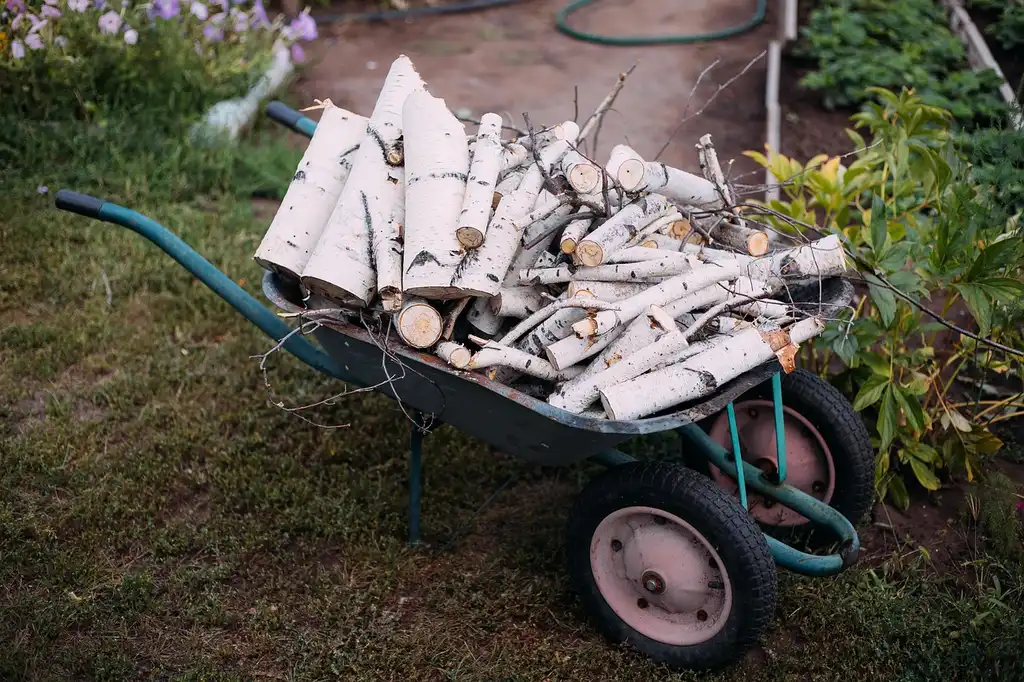
Fit is more than capacity. A wheelbarrow that looks ideal on paper can fail at the gate, the side yard, or a slope. Measure the narrowest path first, then confirm that the tub width and wheel layout still leave room to turn and dump.
Gate and path width
How wide is a wheelbarrow for standard garden gates? The answer depends on the model, but the useful check is simple: leave enough clearance on both sides for steering through the narrowest point. If the path is tight, a smaller tray or a narrower cart is usually easier to use.
Side yards often matter more than front paths. A barrow that clears the gate may still be too wide for the route to the work area. That is why access width can rule out a large size even when the load itself would fit.
Uneven ground and slopes
Uneven ground makes a big barrow feel larger. A full 8 or 10 cu ft tray can shift weight suddenly on ruts, wet grass, or grades. If the route includes a slope, a smaller load and better balance often matter more than maximum capacity.
When a larger tray becomes hard to use
Large trays reduce trips, but they also raise the center of weight and make dumping less tidy. Overfilling a 10 cu ft barrow can cause tipping at the wrong moment, especially when the handle is lifted to empty into a pile or hopper. Bigger is not always easier.
Single wheel or dual wheel?
Single-wheel barrows often turn more easily. Dual-wheel models often add stability. For narrow paths and bed work, a single wheel usually handles better. For heavy, flat loads on firmer ground, two wheels can make the barrow feel steadier and easier to balance.
Maneuverability vs stability
A single-wheel barrow is better for tight turns, edging around shrubs, and tipping into precise spots. A dual-wheel cart resists side-to-side wobble, which helps when the load is heavy or the ground is uneven. The tradeoff is steering room.
Best choice for narrow paths
If your route includes a narrow gate, a tight side yard, or curved beds, choose single wheel unless the load is very heavy and the path is open enough to compensate. Narrow routes reward quick steering more than extra stability.
Best choice for heavy, flat loads
For gravel staging, block moving, or hauling on flat ground, dual wheels can be a better fit. A two-wheel cart keeps the load more upright while you walk. The Rubbermaid yard cart features two wheels, which is the kind of setup many users prefer for steadier transport.
Wheelbarrow sizing decision table
This table matches the task to a practical size, a likely load weight range, and a simple access check. Use the narrowest gate or path in the route, not the widest opening.
| Landscaping job | Recommended capacity | Likely load weight range | Fit check for gate/path width | Single wheel? | Dual wheel? |
|---|---|---|---|---|---|
| Mulch spreading | 6 to 8 cu ft | Light to moderate | Yes if the barrow clears the narrowest gate with room to steer | Yes | Yes, if the path is open and the route is flat |
| Topsoil moving | 6 cu ft | Moderate | Yes for standard garden access; check slopes before moving up in size | Yes | Yes for short, flat runs |
| Compost handling | 6 cu ft | Moderate | Yes if the path is not narrow or uneven | Yes | Yes, but not the first choice for tight beds |
| Gravel staging | 4 to 6 cu ft | Heavy | Maybe; smaller loads are safer if the gate or side yard is tight | Yes | Yes on flat ground |
| Stone hauling | 4 to 6 cu ft | Very heavy | No if the route is steep or narrow enough to force overfilling | Sometimes | Often better for short, stable runs |
| Yard waste and debris | 6 to 8 cu ft | Light to moderate | Yes if branches and clippings do not snag at the gate | Yes | Yes |
| Warning: dense material by volume alone | Do not fill to the brim | May reach weight limit before the tray looks full | No if you cannot keep the load controlled through the narrowest point | Use caution | Use caution |
Should I buy a 4, 6, or 8 cubic foot wheelbarrow?
Choose 4 cu ft for light gardening and small flower beds. Choose 6 cu ft for the widest range of yard work. Choose 8 cu ft when the route is open, the load is moderate, and reducing trips matters more than tight steering. For many homeowners, 6 cu ft remains the sweet spot.
Tray material and wheel type matter too
Steel trays are durable, but they can rust and often weigh more. Plastic or poly trays resist rust and are lighter, which helps on longer pushes. Wood can work for some utility uses, but it is less common for regular landscaping and may need more care.
Pneumatic tires roll easier over rough ground. Flat-free tires cut down on maintenance, but they can feel firmer on uneven surfaces. If the route is long or bumpy, tire choice can matter almost as much as tray size.
When a 4-wheel cart is better
For very heavy, low-speed hauling on relatively level ground, a 4-wheel cart can be better than a traditional wheelbarrow. It carries load more like a small wagon and helps with dumping control, but it is less nimble in narrow beds and turns.
The WORX Aerocart is described as an 8-in-1 all-purpose wheelbarrow, which shows how some tools blur the line between barrow and cart. That can help when one tool has to cover many yard tasks, but the access check still matters.
How many trips does one cubic yard take in a wheelbarrow?
One cubic yard equals 27 cubic feet. Divide 27 by the barrow capacity to estimate the minimum number of trips if the tray were filled to its rated volume. In practice, safe load weight and material type often mean more trips than the math suggests.
Here is the basic calculation:
- 4 cu ft barrow: 27 ÷ 4 = 6.75 trips, so plan on 7 trips minimum.
- 6 cu ft barrow: 27 ÷ 6 = 4.5 trips, so plan on 5 trips minimum.
- 8 cu ft barrow: 27 ÷ 8 = 3.375 trips, so plan on 4 trips minimum.
- 10 cu ft barrow: 27 ÷ 10 = 2.7 trips, so plan on 3 trips minimum.
Those are volume math only. For gravel, stone, or wet soil, the safer number is often higher because the tray should not be filled to the limit every time.
What weight can a standard wheelbarrow hold?
Standard home wheelbarrows typically range from 200 to 400 pounds of material. That range is broad because load rating changes with tray shape, frame strength, wheel setup, and the material being moved. Dense loads reach the weight limit before the tray is full by volume.
Those numbers are not a promise for every load; they show how fast weight can rise with dense material.
Can I use a wheelbarrow for mixing concrete?
Yes, but only if the load stays within the barrow’s capacity and the task is small enough to control. A 10 cu ft wheelbarrow can carry roughly 800 pounds of concrete, which shows that concrete quickly becomes a weight-first task. Do not load by volume alone.
For mixing, a wheelbarrow should remain stable, easy to scrape, and easy to dump without strain. A smaller controlled batch is usually safer than trying to fill a tray because the space is there. If the mix is large or the route is rough, a mixer or larger handling setup is the better choice.
Frequently asked questions
What size wheelbarrow do I need for landscaping projects?
For most landscaping projects, 6 to 8 cu ft works well. Use 6 cu ft for general yard work, soil, mulch, and cleanup. Move down to 4 cu ft for narrow beds or heavy material, and move up only if the route is wide enough and the load stays manageable.
Is a 6 cubic foot wheelbarrow big enough for mulch and soil?
Yes. A 6 cubic foot wheelbarrow is the right size for most yard work and gardening, and it is usually large enough for mulch and soil. It gives a practical balance of capacity, control, and ease of dumping on common backyard paths.
What wheelbarrow size is best for gravel and stone?
For gravel and stone, smaller is usually safer. A 4 to 6 cu ft wheelbarrow is often easier to control because weight becomes the limit before volume does. If the path is narrow or sloped, partial loads are usually the smarter choice.
How wide is a wheelbarrow for standard garden gates?
There is no single width that fits every model, so measure the wheelbarrow before buying. Standard garden gates and side-yard routes can rule out a large tub even if the capacity is right. Leave enough room to steer, not just squeeze through.
Do I need a single-wheel or two-wheel wheelbarrow for landscaping?
Choose single wheel if you need tight steering, narrow-path control, or frequent turning into beds. Choose two wheels if you want more stability on flat ground with heavier loads. The right choice depends more on the route than on the tray size alone.