Why Does Bagged Mulch Smell Bad, and Is It Safe to Use?
Bagged mulch smells bad because trapped moisture and low oxygen can trigger anaerobic decomposition, which is why extension programs often describe sour mulch as a storage problem rather than a product defect. If the bag is swollen, wet, moldy, or the mulch stays hot after opening, it is usually best not to use it. This guide explains when airing it out can help and when discard is the safer call.
Why bagged mulch develops a sour odor
Bagged mulch usually smells bad because moisture gets trapped inside a sealed plastic bag and the material starts breaking down without enough airflow. University horticulture guidance commonly links sour, acidic, or vinegar-like odors to oxygen-poor decomposition. A mild earthy smell can be normal; strong sourness, heat, slime, or widespread mold is a different situation.
What trapped moisture does in sealed bags
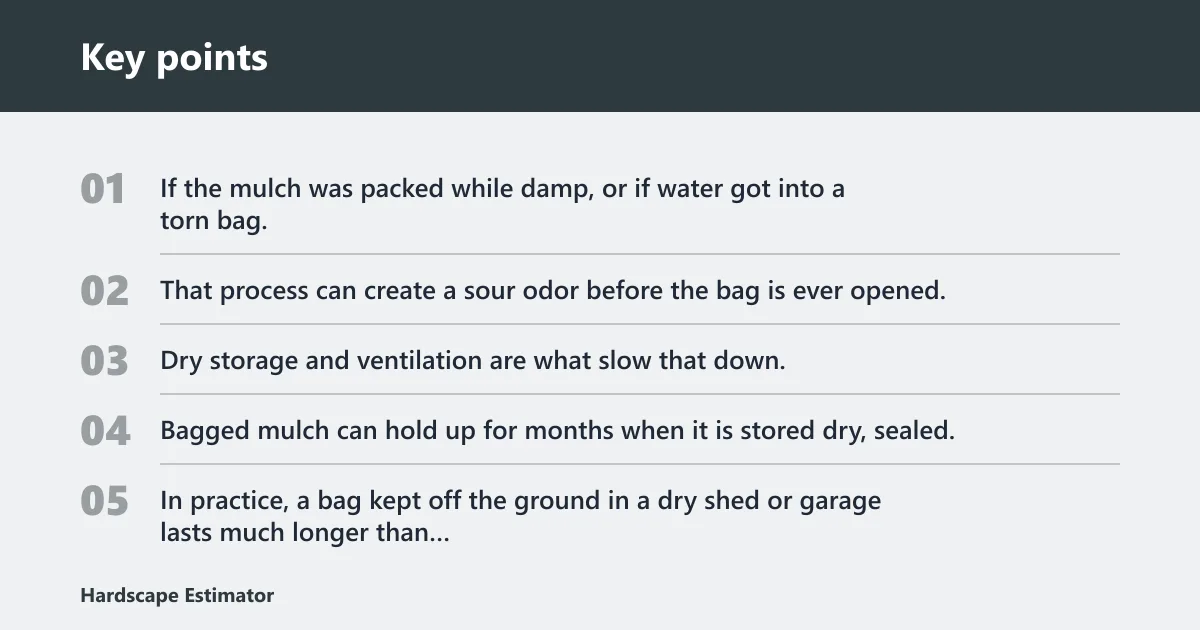
Plastic bags slow drying. If the mulch was packed while damp, or if water got into a torn bag, microbes can keep working inside the pile. That process can create a sour odor before the bag is ever opened. Dry storage and ventilation are what slow that down, which is why extension and state gardening guidance stress keeping mulch dry, shaded, and off damp ground.
Bagged mulch can hold up for months when it is stored dry, sealed, and protected from moisture, but storage conditions matter more than a simple date estimate. In practice, a bag kept off the ground in a dry shed or garage lasts much longer than one left in sun, puddles, or a humid stack. Sun, standing water, and poor airflow shorten the usable life fast.
Why some smell is normal and some is not
Organic mulch decomposition can produce a vinegar-like smell, and white hair-like strands may be mycelia, which are common in wood products as fungi begin breaking down the fibers. Their presence alone does not mean the bag is unsafe. The question is whether the mulch still looks and behaves like composting plant material, or like spoiled material.
Say a 3-cubic-foot bag smells faintly sour when opened, but the mulch is loose, dry on the surface, and the white strands are scattered. That can still be salvageable after airing. If the same bag is wet through, clumped, and hot, the smell is a warning sign, not just a normal compost scent.
Is smelly bagged mulch safe to use in my garden?
A smelly bag is not automatically unsafe. If the odor is only sour and the mulch has no slime, pests, chemical smell, or heavy rot, it may be usable after airing out. Do not use mulch that smells chemical, feels slimy, stays hot, or shows broad mold growth through the bag. Extension guidance on mulch handling generally treats persistent rot signs as a discard threshold, not a cosmetic issue.
Use it, air it, or toss it
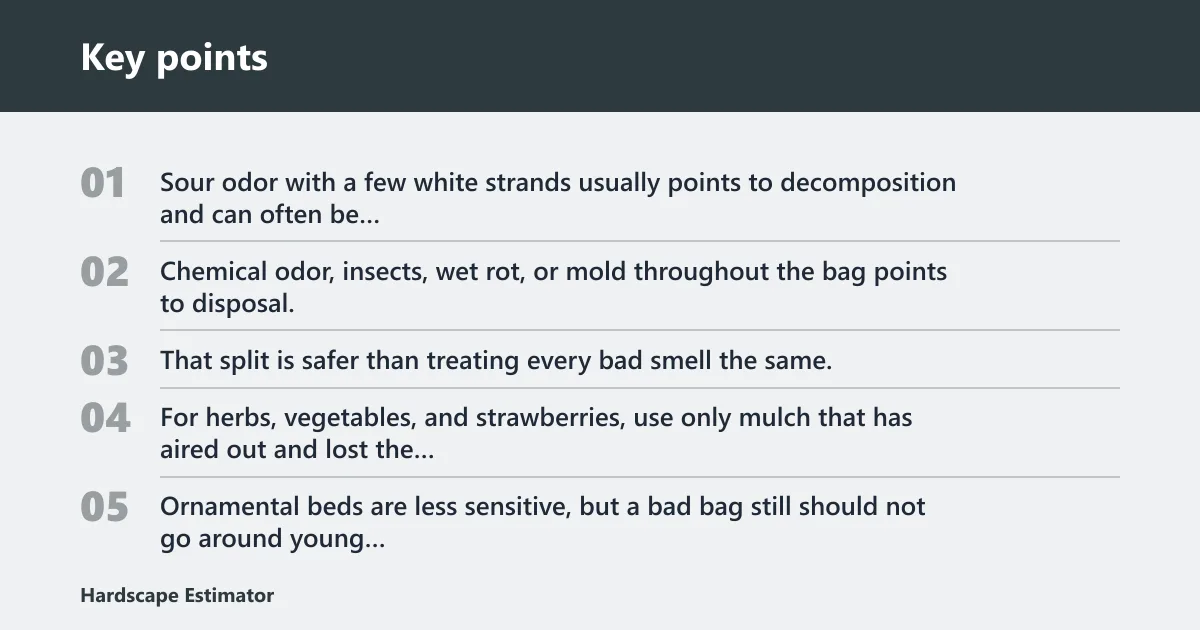
Start with the odor and the visible signs. Sour odor with a few white strands usually points to decomposition and can often be aired out. Chemical odor, insects, wet rot, or mold throughout the bag points to disposal. That split is safer than treating every bad smell the same.
Edible beds versus ornamental beds
Edible beds deserve the strictest call. For herbs, vegetables, and strawberries, use only mulch that has aired out and lost the smell, with no slime, pests, or chemical odor. Ornamental beds are less sensitive, but a bad bag still should not go around young plants, children, or pets if contamination is present.
For raised beds and food gardens, the safer choice is to use only mulch that has aired out and lost the smell, or to replace it with fresh product. Around patios, play areas, and pet runs, a strong odor or visible contamination is enough reason to toss the bag.
When gloves and a mask make sense
Gloves are commonly recommended when handling bad mulch, and a mask is commonly recommended if the bag is dusty, moldy, or has a strong odor. That is less about panic and more about avoiding irritation while you inspect, spread, or discard the material. Keep skin contact and dust inhalation low.
What does bad mulch in a bag look like?
Bad mulch often shows more than one sign at once. The bag may be swollen, the contents may feel wet and matted, and the odor may be strongly acidic or like vinegar. Widespread mold in the bag is a strong sign the batch has gone beyond normal aging. White fuzz alone is not enough to call it spoiled.
White mycelia and fuzzy growth
White hair-like strands can be mycelia, and that growth is often beneficial fungus working on dead organic matter. The key is context. Light white strands on dry, woody pieces are different from thick fuzzy growth covering wet clumps, especially if the bag smells sharp or stays warm after opening.
Wet clumps, slime, and heat
Wet clumps and slime are stronger warning signs than a little white fuzz. If the mulch sticks together in heavy masses, feels slick, or gives off heat after the bag is opened, the material is active in the wrong way. That is a poor choice for planting beds and a poor storage sign.
Pests and contamination signs
Bad mulch can attract insects and pests. If you find larvae, beetles, rodent activity, or other contamination inside the bag, do not spread it. Chemical odor is also a stop sign. Mulch should smell earthy or lightly sour, not like cleaners, fuel, or paint.
Picture a 2-cubic-foot bag stored in a shed corner against a damp wall. The top layer looks gray-white with fuzz, but the middle is wet and warm and the smell is sharp. That bag should not be treated as a normal aging product. It is a discard case.
How long can bagged mulch last?
Unused bagged mulch may last several months if it is dry and protected, and in very dry, sealed storage it can keep much longer. Practical storage life depends on moisture, airflow, temperature, and whether the bag stays intact. A shaded, dry shelf is very different from a wet floor or open driveway.
Dry storage and ventilation effects
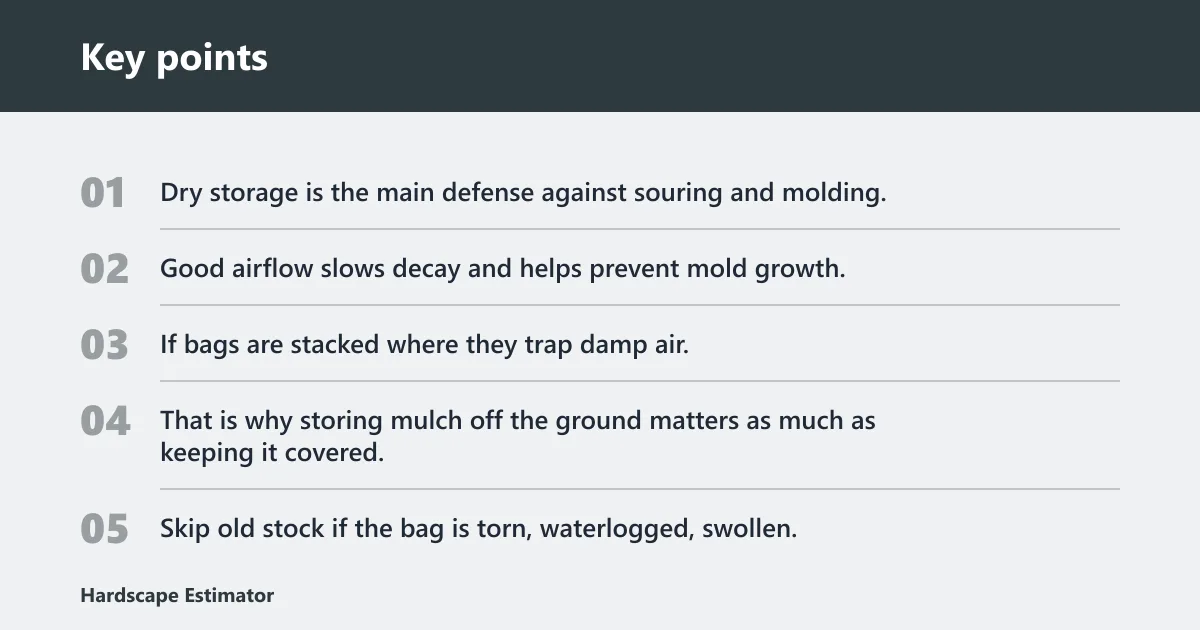
Dry storage is the main defense against souring and molding. Good airflow slows decay and helps prevent mold growth. If bags are stacked where they trap damp air, the mulch can spoil even before the bag is opened. That is why storing mulch off the ground matters as much as keeping it covered.
When to skip old stock
Skip old stock if the bag is torn, waterlogged, swollen, or already giving off a strong odor before opening. The age of the bag matters less than its storage history. A bag that stayed dry may still be fine months later, while a bag that got wet can go bad much sooner.
Old mulch is best used promptly. The longer it sits in poor storage, the more likely it is to sour, mold, or attract pests. If the bag is borderline, inspect it before buying and plan to use it soon after opening.
Smell-to-safety decision table
| Odor type | Visible signs | Likely cause | Use it? | Corrective action |
|---|---|---|---|---|
| Mild earthy smell | Dry, loose mulch; little or no fuzz | Normal organic material | Yes | Use as normal |
| Sour or vinegar-like | May be damp; small white strands possible | Decomposition from trapped moisture and low oxygen | Maybe | Airing out on a tarp may help |
| Strong acidic smell throughout the bag | Wet clumps; warmth; mold may be present | Advanced souring or anaerobic rot | No, if heavy or persistent | Discard if the smell does not fade |
| Moldy or musty odor | Mold throughout the bag | Moist storage and mold growth | Usually no | Dispose unless only a small area is affected and it dries out fully |
| Chemical smell | Discoloration, odd residue, or pest contamination | Contamination, not normal decay | No | Discard immediately |
| Rotten, sewage-like, or pungent odor | Slime, heavy wet clumps, insects, or heat | Severe wet rot and contamination | No | Discard and clean the storage area |
How do you fix smelly mulch?
If the mulch is only sour and not contaminated, spread it out with a rake on a tarp so it can dry and aerate. A thin layer about 2–3 inches thick is the target for airing. Recheck the bag or pile after about 1–2 weeks. If the smell remains strong, throw it out.
Spread it, dry it, and check again
Choose a dry, open spot with airflow. Dump the mulch onto a tarp, break up clumps, and rake it into a 2–3 inch layer. Turn it once or twice during the drying period if weather allows. The goal is to let oxygen reach the material and let trapped moisture escape.
When to dispose of it instead
Do not try to rescue mulch that shows widespread mold throughout the bag, chemical odor, slime, or pest contamination. Do not keep airing it if it stays hot or wet after spreading. If it still smells bad after 1–2 weeks, the safer choice is to discard it.
Should I throw away moldy bagged mulch?
Yes, if mold is widespread, the smell is strong, or the mulch is wet and slimy, it should be thrown away. A small amount of white mycelia on otherwise dry mulch is different and may be acceptable after airing. The decision turns on spread, moisture, and odor intensity.
Checklist for edible beds, ornamental beds, and storage cleanup
- Edible beds: use only mulch that has aired out, smells normal, and shows no slime, pests, or chemical odor. If the smell lingers after airing, discard it instead of risking a food bed.
- Ornamental beds: small amounts of white mycelia may be acceptable if the mulch dries and the odor fades. If the mulch is still wet, warm, or sharply sour, discard it.
- Storage cleanup: remove wet or torn bags, dry the floor or shelf, store bags off the ground, and improve ventilation before storing more mulch. If bags were sun-baked, swollen, or waterlogged, sort them first and do not stack them back into the same damp area.
Do not bury the problem under a fresh layer. If the mulch is bad, adding more mulch on top does not fix the source of the smell. Clean storage matters for the next bag too.
Do I need to remove old mulch before adding new mulch?
Usually, no. Old mulch can stay in place if it is decomposing normally and the layer is not too thick. Extension guidance commonly recommends a total mulch depth of about 2–4 inches. Too thin can allow weeds through. Too thick can block water from reaching the soil.
How much mulch to apply in beds
A moderate layer works best. Spread new mulch to maintain about 2–4 inches total depth, not a deep blanket. If the bed already has enough mulch, top it off lightly instead of burying the soil surface. That keeps water movement and root access more reliable.
When old mulch should come out
Remove old mulch if it has become a sour, slimy mat, if pests are present, or if it has compacted so tightly that water does not reach the soil. Old mulch does not need routine full removal, but damaged material should not stay in the bed just to save effort.
Frequently asked questions
Why does bagged mulch smell sour or like vinegar?
Sour or vinegar-like smell usually comes from decomposition inside a sealed bag. Moisture and low oxygen let organic material break down in a way that produces sharp odors. If the mulch is only sour and otherwise dry, it may still be usable after airing out. Strong rot is a different case.
Can old bagged mulch still be used next season?
Yes, if it was stored dry and protected. Bagged mulch may remain usable for months in normal storage and much longer in dry, sealed conditions. If the bag was wet, torn, sun-baked, or left in poor airflow, do not assume it is still good next season.
How do I fix mulch that smells bad?
Spread it out on a tarp with a rake so it can dry and aerate in a layer about 2–3 inches thick. Recheck it after 1–2 weeks. If the smell fades, it may be usable. If it remains sour, moldy, or wet, throw it away.
Why does bagged mulch get moldy in storage?
Bagged mulch gets moldy when moisture and poor airflow allow fungal growth inside the plastic bag. Dry storage helps prevent molding and souring. Bags stored on damp ground, in hot sheds, or in tightly packed stacks are much more likely to go bad.
How long can bagged mulch last in a bag?
Unused bagged mulch may last for months if it stays dry and protected. The practical limit depends more on moisture and ventilation than on the calendar. If a bag smells off before opening, inspect it before using it.