How Long Does Bagged Mulch Last in Storage?
Bagged mulch often lasts about 6 to 12 months in storage if the bags stay sealed, dry, and out of direct sun. Once bags are torn, wet, or moldy, use it soon or discard it. If it is stored poorly, it can clump, grow mold, attract insects, and lose color before you spread it. This guide covers shelf life by mulch type, spoilage signs, and how to tell what is still usable.
Bagged mulch storage table
Dry storage matters more than the label on the bag. A sealed bag of hardwood, bark, cypress, or dyed mulch can often hold for months or longer if it stays off wet ground and out of standing moisture. Damp storage changes the answer fast.
| Mulch condition | Likely cause | Safe action | Keep/discard rule |
|---|---|---|---|
| Dry unopened bags | Stored in a protected, dry area with airflow | Keep sealed and off the floor on a pallet or dry surface | Keep |
| Opened bags with light odor | Bag was reopened and exposed to some air, but not soaked | Reseal if possible, or spread out briefly to air dry | Keep if odor fades after aeration |
| Mildly musty bags | Limited moisture and poor airflow inside the stack | Empty onto a tarp or dry surface and let it dry | Keep if it dries and the smell stays light |
| Sour-smelling bags | Active decay from damp, sealed storage | Test a small amount after aeration only | Discard if the smell remains strong |
| Moldy bags | Moisture, warmth, and poor ventilation | Handle with gloves and mask; do not mix into clean mulch | Discard if mold is heavy or widespread |
| Wet clumped bags | Water intrusion or storage on damp ground | Open only if you plan to dry and inspect it | Discard if clumps stay wet or sour |
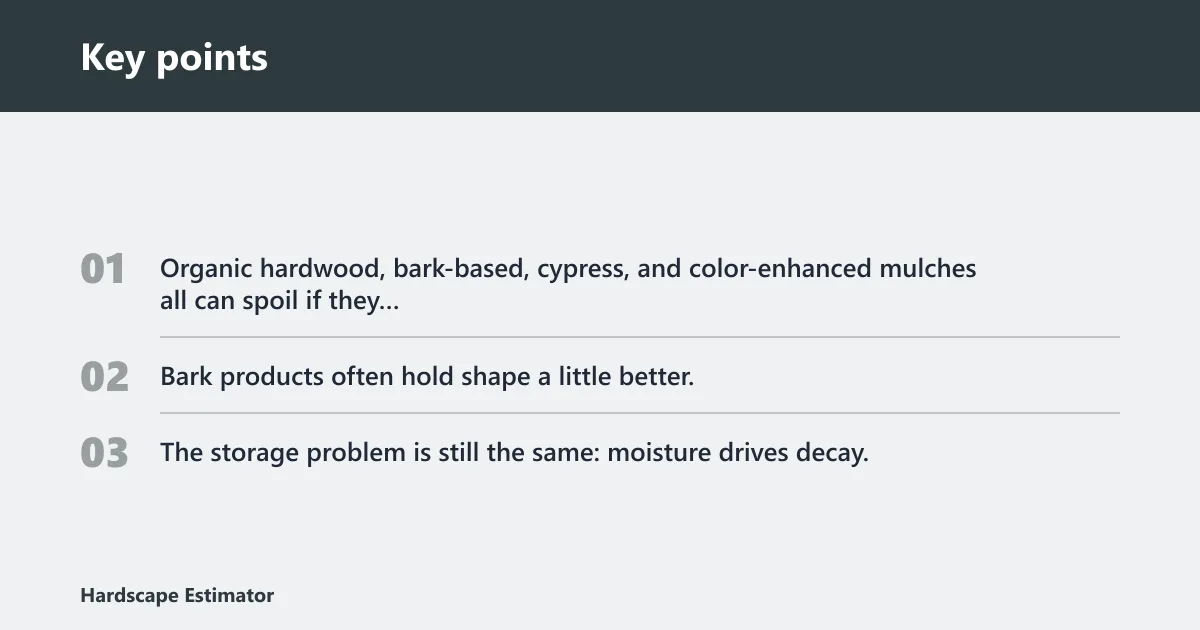
Organic hardwood, bark-based, cypress, and color-enhanced mulches all can spoil if they sit wet. Bark products often hold shape a little better, while dyed mulch may lose color faster if it gets damp. The storage problem is still the same: moisture drives decay.
How long does bagged mulch last?
Bagged mulch can last indefinitely with dry, sealed storage. A common estimate is about 3-6 months if it is dry and protected, but that range can stretch much longer when the bags stay intact, out of sun, and away from wet ground. Opened bags have a shorter useful life.
Unopened bags in dry storage
Unopened bags are the easiest to keep. If they stay sealed, dry, and ventilated, the mulch can remain usable for months or longer. The bag itself is part of the protection, but many plastic bags have holes, so storage location still matters.
Opened bags stored again
Once a bag is opened, the clock speeds up. If the mulch is dry and the bag is closed again, it may still hold for a while, but exposed material picks up moisture and odors faster. Bagged mulch that was reopened should be checked before use, not assumed safe.
What changes the time span
Moisture is the main spoilage driver. Airflow matters too, because moving air slows decay and helps keep mold and fungus from taking hold. Tight stacks, wet floors, and sealed wet bags shorten shelf life fast, while dry storage on a pallet or tarp can stretch it well beyond one season.
A common first-timer mistake is storing about six leftover bags directly on a damp garage slab. The bottom bags can absorb moisture through the floor, then the whole stack starts to smell off before spring. Put the stack on a pallet or other dry surface first.
What makes mulch go bad?
Mulch goes bad when moisture stays trapped in it. Damp, sealed, or poorly ventilated storage can lead to molding, souring, and pests. Heat can speed that process, but wet storage is the main trigger. Dry mulch ages slowly; wet mulch starts changing quickly.
Moisture as the main cause
Stored mulch should stay out of damp areas. If water gets in, organic material starts breaking down faster and can develop the acidic, vinegar-like odor that often signals spoilage. Wet mulch also clumps, which keeps the inside damp even after the outside dries.
Poor airflow and tight stacking
Airflow helps prevent mold and fungus. If bags are packed tightly in a corner with no space around them, the center of the stack stays damp longer. Stack bags so air can move around them, and do not block the holes that are already in the bags.
Warmth, dampness, and pests
Warm, moist mulch is more attractive to insects and other pests than dry mulch. That risk rises when bags sit outside on bare ground or under a leaky cover. Proper storage helps keep pests away before you use the material.
How do you know mulch has gone bad?
Bad mulch usually gives off a sour or vinegar smell, shows wet clumps, or has heavy mold growth. White fuzzy material is not always a problem by itself, because it may be mycelia, but heavy growth plus odor points to spoilage. Persistent dampness is the clearest warning sign.
Sour or vinegar smell
An acidic, sour, or vinegar smell means the mulch has started to break down in a way that is no longer normal storage. If the smell is faint and disappears after aeration, the mulch may still be salvageable. If the odor stays strong, discard it.
White fuzzy growth and mycelia
White fuzzy material may be mycelia, which can appear in decomposing organic matter. Small patches are not always enough to condemn the mulch. Heavy white growth, especially with a sour smell or damp clumps, is a sign that spoilage has progressed.
Wet clumps and dark staining
Wet clumps mean the mulch has held moisture too long. Dark staining can point to prolonged wet storage or water intrusion. If the clumps stay sticky after spreading the mulch out, it is safer to discard the load than spread questionable material around a bed.
Insects or rodents around the bags
Bug activity or signs of rodents near the stack suggest the storage area is too damp, too open, or both. The mulch may still be usable, but the storage setup needs to change. Check the bags before use and discard any material that also smells bad or feels wet.
How should you store leftover bags?
Store leftover bags in a protected, dry area with airflow. A garage, shed, or covered outdoor spot can all work if the bags stay off wet ground and away from leaks. A pallet, tarp, or weed barrier fabric helps isolate the mulch from moisture.
Garage storage setup
A garage is usually the easiest dry storage location. Set the bags on a pallet or other dry surface, not directly on concrete that can sweat or wick moisture. Leave a little air space around the stack so the bags do not trap humidity.
Shed storage setup
A shed works if the floor stays dry and the roof does not leak. Put the bags in a dry corner away from any wall that gets wet. Do not stack them so tightly that airflow stops at the center of the pile.
Outdoor stack setup
Outdoor storage is the riskiest, but it can work for short periods if the stack is covered and lifted off the ground. Use a large tarp under the bags or a garden tarp / weed barrier fabric under a bulk-style pile. Add a cover on top, but leave room for some airflow.
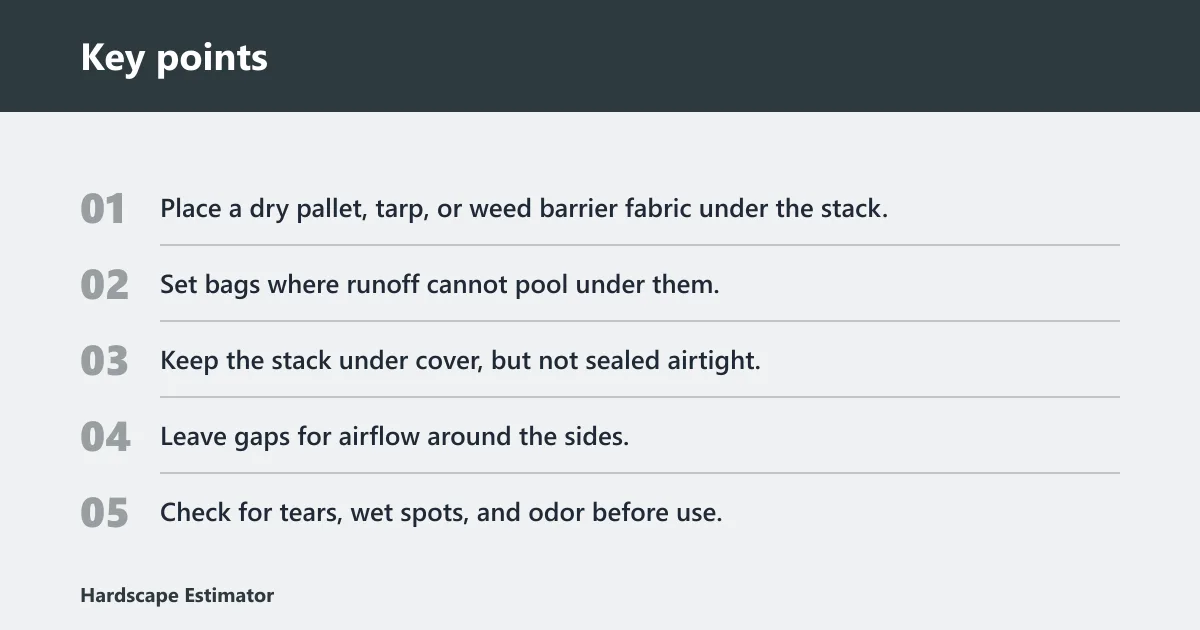
- Place a dry pallet, tarp, or weed barrier fabric under the stack.
- Set bags where runoff cannot pool under them.
- Keep the stack under cover, but not sealed airtight.
- Leave gaps for airflow around the sides.
- Check for tears, wet spots, and odor before use.
Suppose you have about eight 2-cubic-foot bags left after spring planting. If they stay in a dry shed on a pallet, they can often wait until the next season. If the same bags sit on wet ground under a closed tarp, storage life can drop to only a few weeks before odor and clumping show up.
Can you use old mulch?
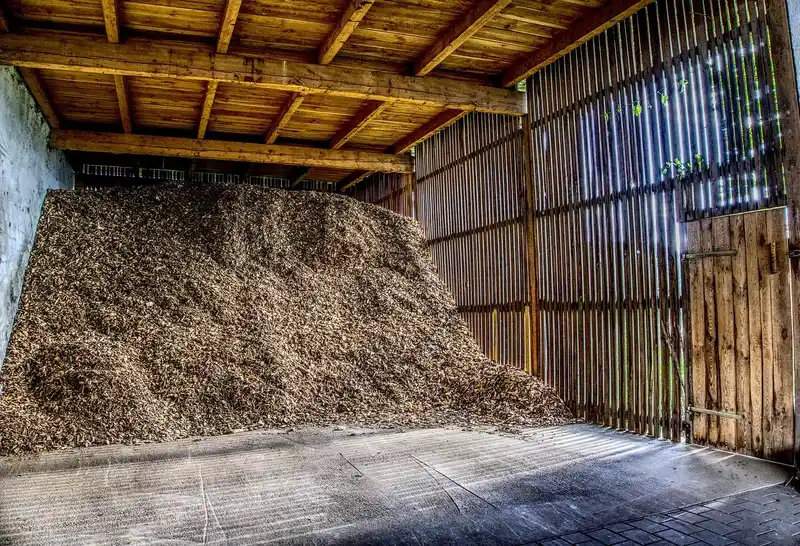
Old bags can be used if storage was proper. Age alone is not the issue. The real test is condition: dry mulch with little odor is often fine, while heavy mold, strong sour smell, or wet clumps are not worth keeping. Use judgment based on what the bag looks and smells like.
When to spread it out and dry it
Spread mulch out if the smell is light and the material is only slightly damp. Use a tarp or dry surface, and let it aerate before deciding. This works best when the mulch has mild mustiness but no heavy mold, no strong odor, and no pest activity.
When to compost it
Mulch that is stale but not rotten may be better as compost feedstock than as bed cover. If it is only slightly broken down and still free of heavy mold or pests, it can move into a compost pile instead of a finished bed. Keep it separate from clean mulch.
When to discard it
Discard mulch if the odor stays sour after aeration, the mold is heavy, or the bags are wet and clumped through the center. The same rule applies if you see insect nesting or other pest signs. That material is past the point of safe reuse in a finished bed.
Choose your buying volume with storage in mind. If you only have a dry garage space for a few weeks, keep less inventory on hand. If you can store bags off the floor in a shed or garage for months, buying extra for next season is more realistic.
Frequently asked questions
How long does mulch last in storage?
Bagged mulch can last months or longer when it stays dry, sealed, and off wet ground. One estimate puts dry, protected storage at about 3-6 months, but proper storage can stretch that much farther. Moisture, not age, is what usually cuts the time short.
How long does mulch stay good for if it is still in the bag?
If the bag stays sealed and dry, mulch can stay good for a long time. Plastic bags may have holes, so the storage area still matters. A protected garage or shed usually does better than an outdoor stack exposed to runoff, leaks, and ground moisture.
How long is mulch good for before it goes bad?
There is no single fixed date. Dry mulch can remain usable for months or longer, while wet mulch can go bad quickly. The shortest path to spoilage is a damp, sealed bag with little airflow. Check smell, clumping, and mold before use.
How to store bagged mulch over winter
Keep it in a garage or shed if possible, on a pallet or other dry surface. If it must stay outside, put a large tarp under the stack and cover the top while leaving some airflow. Do not leave bags on bare soil or against a wet wall.
Can you use old bags of mulch?
Yes, if they were stored properly. Old bags that are still dry and only lightly musty can often be used after aeration. If the mulch smells sour, has heavy mold, or stays wet and clumped, discard it instead of spreading it in the bed.
How do you know if bagged mulch has gone bad?
Look for a strong sour or vinegar smell, heavy mold, wet clumps, dark staining, and pest activity. White fuzzy growth may be mycelia, so light patches alone are not always a problem. The combination of odor, dampness, and heavy growth is the real warning.
Why does bagged mulch smell sour or like vinegar?
That smell usually means the mulch is breaking down under damp, low-airflow conditions. The odor is a warning sign of spoilage, especially when it does not fade after the mulch airs out. Dry mulch should not hold that strong acidic smell.
What should you do with bagged mulch that smells bad?
Open the bag, spread the material out on a tarp or dry surface, and let air move through it. If the smell fades and the mulch dries without heavy mold, it may still be usable. If the odor stays strong, it is safer to discard it.
How much mulch is in a bag?
Bag size varies by brand and product, so check the label before you buy or store leftovers. Common retail bags are sold by cubic feet, not by weight alone. Storage planning should use the actual bag volume, because larger bags take more dry space and airflow.
Is bagged mulch better than bulk for storage?
For leftovers, yes. Bagged mulch is easier to store than a loose bulk pile because the bags help limit exposure to rain and ground moisture. Bulk piles can also be protected with a tarp or weed barrier fabric, but they need more careful covering and airflow control.
How long does mulch last?
When it stays dry, bagged mulch can last months or longer. When it gets wet, storage life drops fast. The shortest answer is that moisture controls the clock: dry bags can wait, damp bags need inspection, and sour or moldy bags should be discarded.
How long does mulch stay good?
Stored properly, mulch can stay good through the next season and sometimes longer. The main limits are moisture, airflow, and whether the bag stays intact. If it smells normal, feels dry, and shows no heavy mold or clumping, it is usually still worth keeping.