How Often Should I Water New Grass Seed?
Water new grass seed lightly 2 to 4 times a day at first, about enough to keep the top 1/2 inch of soil evenly moist, then cut back after germination and water deeper less often as roots grow. Miss the timing, and seed can wash away or dry out before it sprouts. This guide gives a stage-by-stage watering schedule by weather, grass type, and sprinkler output.
What you’ll need
- A sprinkler or hose nozzle that can produce a gentle mist or soft oscillating spray
- A tuna can, rain gauge, or similar straight-sided container for output checks
- A small trowel or screwdriver to check the top inch of soil
- A timer or phone clock for repeatable run times
- Seeded soil that you can inspect in several spots, especially edges and high spots
Seed watering schedule table
Use the table below as the base schedule. Bare seed dries faster than overseeding because there is no old turf canopy to shade the surface, so bare areas usually need the tighter end of the range. Overseeded lawns can often stay on the lower end if the existing grass already slows evaporation.
| Growth stage | Weather condition | Soil target | Estimated frequency | Minutes per session |
|---|---|---|---|---|
| Before germination | Cool, calm, or partly shaded | Top 1 inch moist, never soggy | 2 to 3 light sessions per day | 5 to 10 minutes |
| Before germination | Hot, sunny, or windy | Top 1 inch moist, no crusting | Up to 4 light sessions per day | 5 to 15 minutes |
| Right after sprouts appear | Mild weather | Top 1 to 1.5 inches slightly moist | 1 to 2 sessions per day | 10 to 15 minutes |
| After seedlings reach 1 to 2 inches | Normal spring or fall weather | Moist below the surface, not puddled | Every other day, then less often | Long enough to wet deeper, then stop |
| Hot, windy, or very sunny spell | Drying weather | Top inch checked several times daily | Extra short session if surface dries | 5 to 10 minutes, then recheck |
| Rainy spell | Soil stays damp from rainfall | No standing water on the surface | Skip the next session if needed | 0 to 5 minutes only if the top dries |
How often should I water new grass seed?
Water new grass seed 2 to 4 times a day until it germinates, with each session light enough to keep the top 1 to 1.5 inches of soil moist without puddles. Iowa State says two light applications per day are usually sufficient, but up to four may be needed in extreme conditions. Keep that pattern for about three weeks after seeding. (Iastate)
New seed needs frequent light watering because the surface dries fast in sun, wind, and heat. The goal is moisture in the seed zone, not a deep soak. If water pools, runs downhill, or moves seed into lines and low spots, the run time is too long or the pressure is too high.
Before sprouting
Water immediately after seeding, then keep the top layer from drying out. A gentle mist or oscillating spray is the safest choice because hard spray can displace seed and leave bare patches. For many setups, about 5 to 10 minutes is often enough to start, then repeat as needed based on soil dryness.
What to do first
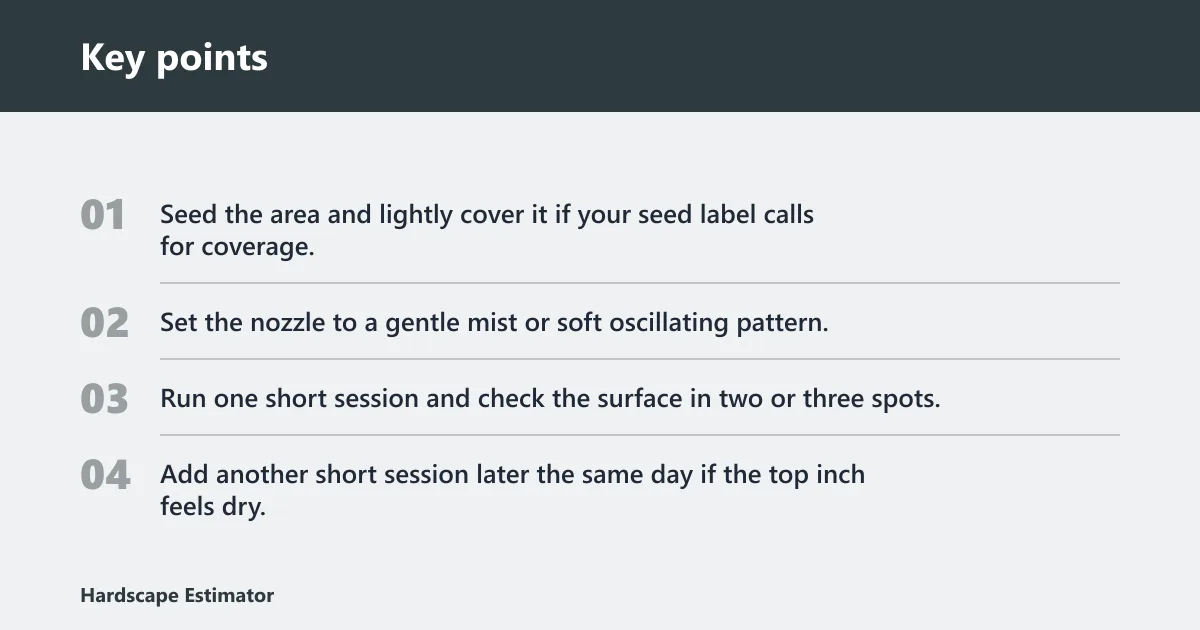
- Seed the area and lightly cover it if your seed label calls for coverage.
- Set the nozzle to a gentle mist or soft oscillating pattern.
- Run one short session and check the surface in two or three spots.
- Add another short session later the same day if the top inch feels dry.
How much should I water new grass seed?
Water enough to moisten the top inch of soil, and keep that layer consistently damp during germination. Nature’s Seed suggests 10 to 15 minutes per watering session, while Eartheasy and LawnStarter both give 5 to 10 minutes as a common range depending on sprinkler or nozzle output. The right number depends on how much water your sprinkler actually puts out.
A simple depth check matters more than the clock. A light session that barely wets the surface may be fine on a cool day, while the same run time can be too much on clay soil or too little on sandy soil. The check should show moist soil, not glossy standing water.
Use a can to measure output
- Place a tuna can or rain gauge in the spray pattern.
- Run the sprinkler for 15 minutes.
- Measure the water depth in the can.
- Divide that depth by 15 to estimate inches per minute.
- Multiply by your target run time to estimate water applied.
Say a 15-minute run fills a tuna can to 1/4 inch. That means the sprinkler applies about 1/60 inch per minute, or 1/6 inch in 10 minutes. If the surface is still dry after that, add another 5 minutes and recheck instead of jumping straight to a long run.
How long should I water new grass seed for?
Run the sprinkler long enough to wet the seed zone without runoff. For many systems, that means 5 to 10 minutes per session at first, with 10 to 15 minutes sometimes needed on a dry, windy day. If water starts to move across the soil surface, split the run into shorter blocks with a pause in between.
High pressure is a common cause of washout. A soft spray gives the soil time to absorb water. On sloped ground, or on bare seed with no mulch, short repeated sessions work better than one long cycle because the water stays where the seed is.
Split the run when runoff starts
- Start with 5 minutes.
- Wait 10 to 20 minutes so the water can soak in.
- Check for dryness at the top inch.
- Add another 5 minutes only if the surface is drying too fast.
How should weather change the schedule?
Hot weather, wind, and bright sun raise evaporation, so the schedule usually needs more frequent checks and shorter gaps between sessions. Rain should reduce or skip irrigation if the top inch stays moist. The rule is simple: water more often when the surface dries fast, and water less often when natural moisture is already doing the job.
Hot weather
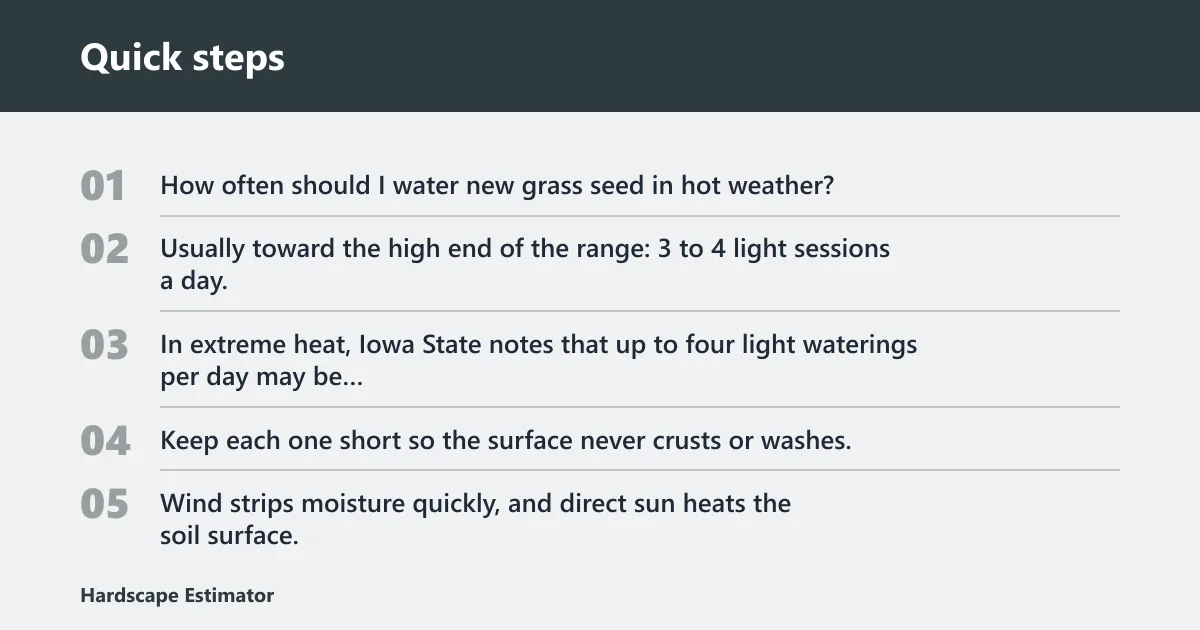
How often should I water new grass seed in hot weather? Usually toward the high end of the range: 3 to 4 light sessions a day, with the soil checked between runs. In extreme heat, Iowa State notes that up to four light waterings per day may be necessary. Keep each one short so the surface never crusts or washes.
Wind and sun
Wind strips moisture quickly, and direct sun heats the soil surface. If the top inch dries out by midday, add a short session rather than a long soak. A common first-timer mistake is waiting until evening and then trying to make up for the dry spell with a heavy run; that often creates runoff instead of better moisture.
Rain and cool spells
Skip a session if recent rain has already kept the top inch moist. In cool, cloudy weather, two light applications per day are usually enough, and the gap between sessions can be longer. If the seedbed still feels damp under the surface, do not water just because the clock says it is time.
How does the schedule change after sprouting?
Once it starts growing, how often should I water new grass seed? Reduce frequency gradually as seedlings reach 1 to 2 inches tall, then move from frequent light watering to fewer, deeper sessions. The surface still should not dry hard, but the goal shifts from seed protection to root growth and stronger establishment.
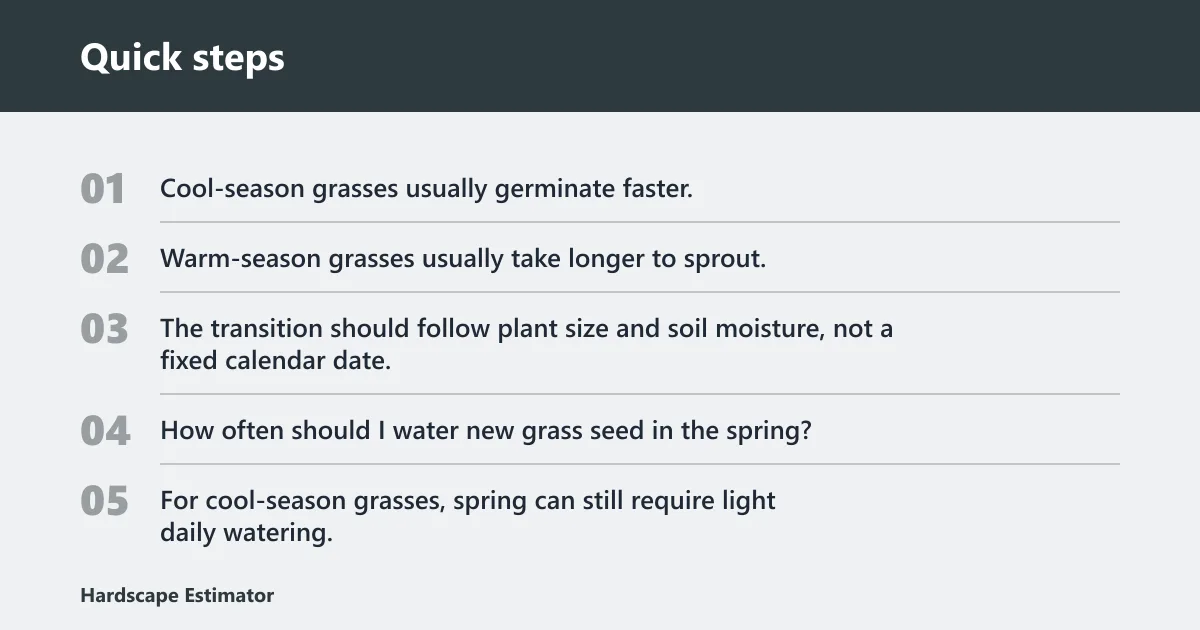
Cool-season grasses usually germinate faster, so they often need a shorter high-frequency watering window. Warm-season grasses usually take longer to sprout, so the early watering window lasts longer and is more sensitive to heat and drying wind. The transition should follow plant size and soil moisture, not a fixed calendar date.
Cool-season grass timing
How often should I water new grass seed in the spring? For cool-season grasses, spring can still require light daily watering, but fall is often better because temperatures are lower and evaporation is slower. How often should I water new grass seed in the fall? Usually 2 to 3 light sessions per day at first, then a gradual reduction once the sprouts are visible.
Warm-season grass timing
Warm-season grasses take longer to emerge, so keep the seed zone evenly moist for a longer stretch before backing off. That usually means more days of frequent light watering, especially during hot weather. Once seedlings are established, warm-season turf becomes more drought tolerant than it was at the seed stage.
Common mistakes
- Letting the surface dry into a crust. Check the top inch before each session, not just once a day.
- Overwatering into puddles. If water shines on the surface or runs downhill, shorten the run time and split the session.
- Using too much pressure. Keep the spray gentle so seed does not move into clumps or bare streaks.
- Using one schedule for every lawn. Bare seed, overseeding, warm-season grass, and cool-season grass do not dry at the same speed.
- Skipping the output check. A tuna can or rain gauge turns “minutes” into a real water depth target.
Suppose a shaded overseeded strip stays damp after two 8-minute runs, while a sunny bare patch dries out by noon. Treat them differently. The shaded section may only need one morning session, while the bare patch may need a brief midday top-up of 5 minutes and a recheck afterward.
Frequently asked questions
How often should I water new grass seedlings?
Once seedlings are up, keep watering daily at first, then reduce as they reach 1 to 2 inches tall. The schedule usually shifts from several short sessions to fewer, deeper ones. That change helps roots move downward instead of staying near the surface.
How long should I water new grass seed with a sprinkler?
Match the sprinkler time to its output. A 15-minute can test gives a practical starting point, then you can scale up or down. If the sprinkler throws water hard enough to move seed or form runoff, shorten the session and split it into two parts.
How often should I water new grass seed in the fall?
Fall usually needs less evaporation control than hot summer weather, so 2 to 3 light waterings per day often work well at the start. Cool evenings and lower sun reduce drying, but the soil still should not crust over. Keep checking the top inch until sprouts appear.
How often should I water new grass seed in hot weather?
Hot weather often pushes the schedule to 3 to 4 light sessions per day, especially on bare seed or windy sites. Use shorter runs and recheck soil moisture more often. If the surface dries before the next session, add a brief top-up rather than a long soak.
How often should I water new grass seed: start with 2?
Start with 2 to 4 light watering sessions per day until germination, then taper off as the grass reaches 1 to 2 inches tall. Keep the soil consistently moist, avoid puddles, and adjust for weather. The safest rule is to let soil moisture and seed stage decide the schedule.