Raised Bed Soil: How Much You Need and What to Use
Raised bed soil needed = inside bed length × inside bed width × finished soil depth; divide cubic feet by 27 for cubic yards, and use a topsoil-based raised-bed mix for beds 8–18 in deep, with compost-heavy blends kept to a smaller share. Miss this and you either pay for extra bulk soil or end up with a bed that drains poorly, settles fast, or dries out too quickly. This guide lays out the exact volume math, bag and bulk conversions, and mix choices by bed depth, crop type, and budget.
Start with the inside growing area, not the outside frame. Once the volume is set, pick the mix based on bed depth, root depth, and whether bags still pencil out or bulk delivery is the better buy.
Calculate exact soil volume
Measure the inside dimensions
Measure the bed’s inside length and inside width. Then measure the planned soil depth, not just the board height. One published raised-bed guide specifically says to measure the inside growing area, not the outside frame.
If the bed is 4 ft by 8 ft outside but the boards are thick, the inside space is smaller. Using the outside dimensions can overstate the order and leave you with extra bags or a bulk pile that is too large.
Convert depth to feet, then calculate cubic feet and cubic yards
The formula is simple:
- Convert soil depth from inches to feet.
- Multiply length × width × depth to get cubic feet.
- Divide cubic feet by 27 to get cubic yards.
- If buying bags, divide by bag size and round up to the next whole bag.
Common depth conversions:
- 6 in = 0.5 ft
- 10 in = 0.833 ft
- 12 in = 1 ft
- 18 in = 1.5 ft
One cubic yard equals 27 cubic feet. That conversion matters because suppliers usually quote bulk soil by the cubic yard, while bags are labeled in cubic feet.
Worked examples for common bed sizes
4×4 bed at 10 inches deep:
4 × 4 × 0.833 = 13.3 cubic feet
13.3 ÷ 27 = 0.49 cubic yards
4×8 bed at 10 inches deep:
4 × 8 × 0.833 = 26.7 cubic feet
26.7 ÷ 27 = 0.99 cubic yards
A 4×8 bed filled 10 inches deep needs about 26.7 cubic feet, which is roughly 0.99 cubic yards.
4×8 bed at 12 inches deep:
4 × 8 × 1 = 32 cubic feet
32 ÷ 27 = 1.19 cubic yards
A 4×8 bed filled 12 inches deep needs 32 cubic feet of soil.
3×6 bed at 12 inches deep:
3 × 6 × 1 = 18 cubic feet
18 ÷ 27 = 0.67 cubic yards
Those numbers cover the base fill only. If the mix is fresh and compost-rich, add a settling allowance before ordering.
How much soil do I need for a raised bed?
Use the inside bed dimensions and multiply inside length × inside width × finished soil depth in feet. Then divide by 27 for cubic yards or by the bag size for bag counts, rounding each result up to the next full bag because soil is sold in whole bags, not partials. For most medium and large beds, the practical buying choice changes once the order is around 1 cubic yard.
Quick formula for any bed size
The formula works for any rectangle:
Cubic feet = inside length (ft) × inside width (ft) × soil depth (ft)
If depth is measured in inches, divide by 12 first. A 10-inch soil depth is 10 ÷ 12 = 0.833 ft. A 12-inch depth is 1 ft exactly.
For bulk orders:
Cubic yards = cubic feet ÷ 27
For bags:
Bag count = cubic feet needed ÷ bag size
Round every bag count up to the next whole bag. For example, 26.7 cu ft ÷ 2 cu ft = 13.35, so buy 14 bags.
How many bags a 4×8 bed needs at 6, 10, and 12 inches
A 4×8 bed is a useful standard example because the arithmetic is clean and the cost and labor gap between bags and bulk shows up fast.
| 4×8 bed depth | Cubic feet needed | 0.75 cu ft bags | 1 cu ft bags | 1.5 cu ft bags | 2 cu ft bags |
|---|---|---|---|---|---|
| 6 in | 16 | 22 | 16 | 11 | 8 |
| 10 in | 26.7 | 36 | 27 | 18 | 14 |
| 12 in | 32 | 43 | 32 | 22 | 16 |
Those counts are before settling allowance. If the bed is new and the mix contains a fair amount of compost, add about 10% more material for first-season settling.
When the total is large enough to switch to bulk
Bagged soil works for small beds, topping off, or sites with no wheelbarrow access. Once the total is near 1 cubic yard, bulk soil is usually the better fit if delivery access is available.
The 4×8 bed at 10 inches is the tipping point. At roughly 0.99 cubic yards, that is already 27 one-cubic-foot bags or 14 two-cubic-foot bags. Moving, opening, and spreading that many bags takes time, and the per-cubic-foot cost is usually higher than bulk.
Suppose a patio gate is too narrow for a skid-steer but wide enough for wheelbarrows. Bulk can still make sense at about 1 cubic yard if the drop spot is close. If the only access is through a house or down stairs, bags may still be the practical choice even when the volume points to bulk.
How deep should raised bed soil be?
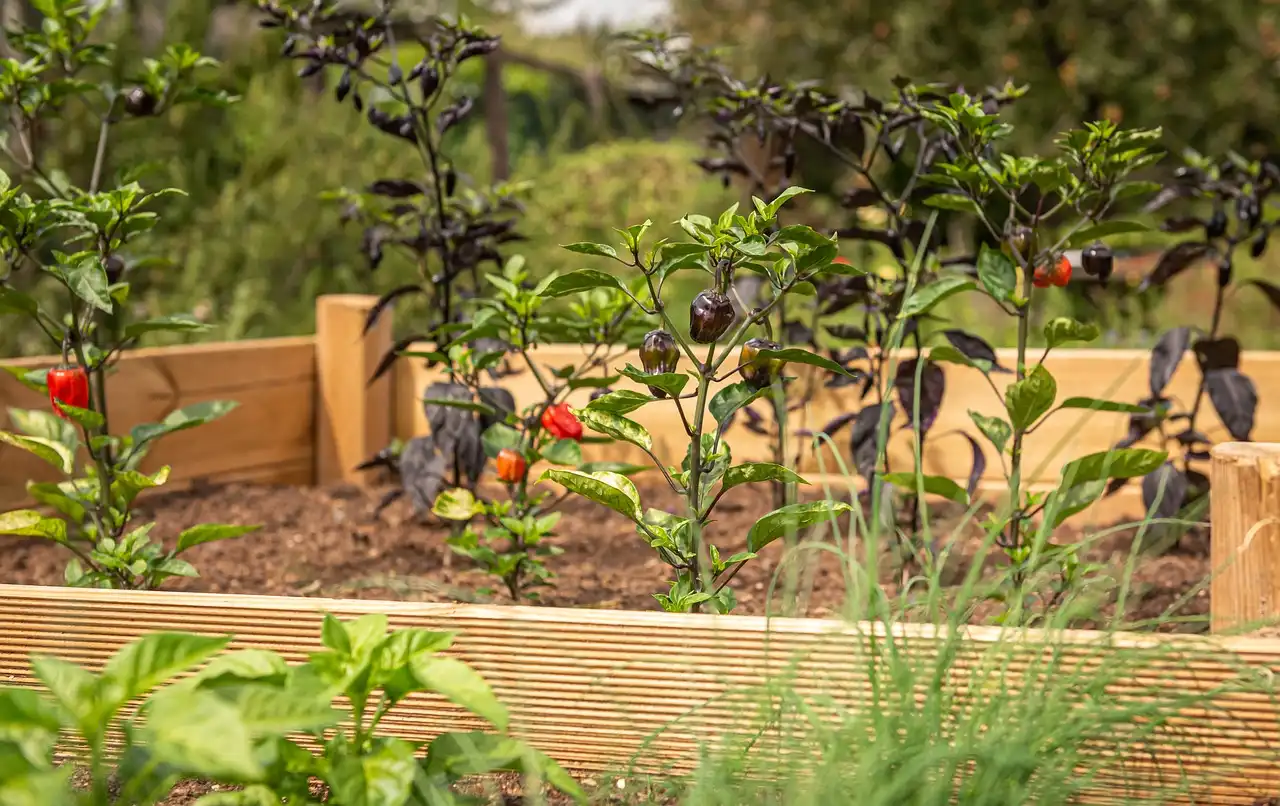
For most vegetables, 10 to 12 inches is the common target because that depth suits most mixed vegetable plantings and is widely recommended in raised-bed guidance. About 8 inches is a practical minimum for many vegetables, 6 inches often works for herbs and shallow roots, and 15 to 18 inches gives deeper-rooted crops more room.
6-inch beds for herbs and shallow-rooted crops
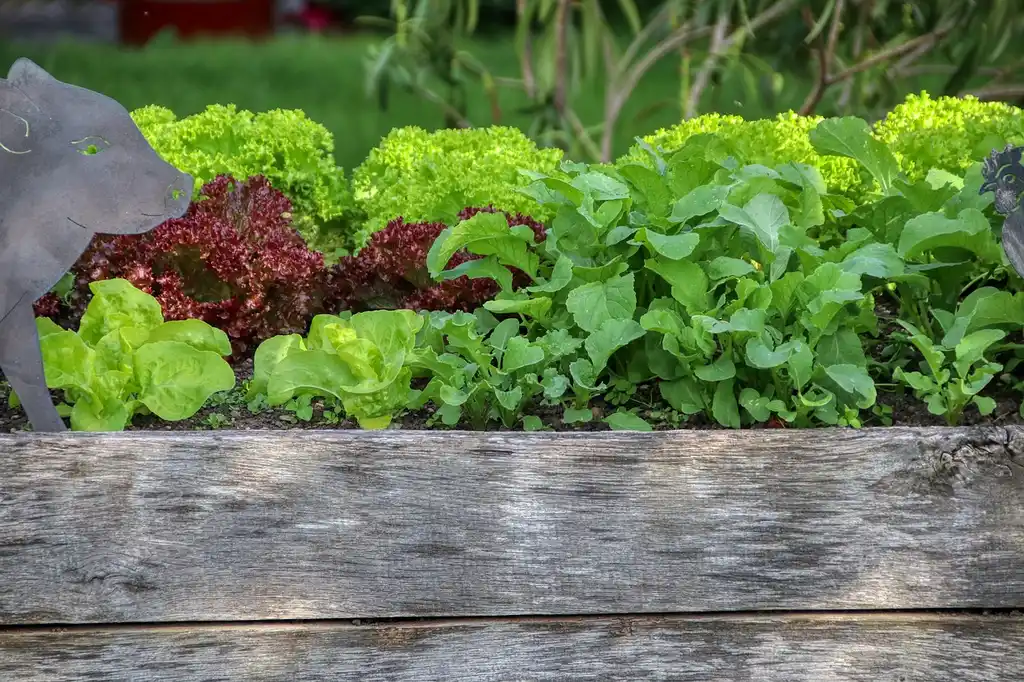
A 6-inch fill suits many herbs, lettuces, baby greens, and other shallow-rooted crops. It also works when a bed sits on good underlying ground and roots can move lower after they reach the base.
It does not leave much buffer against drying. Shallow beds heat faster, dry faster, and leave less room for a forgiving soil mix. That makes structure and moisture balance more important than in a deeper bed.
10 to 12 inches as the standard vegetable depth
For mixed vegetable beds, 10 to 12 inches is the default depth. It gives enough rooting room for tomatoes, peppers, beans, cucumbers, greens, and many kitchen-garden crops without paying to fill extra depth that may never be used.
A 4×8 bed filled 10 inches deep needs about 26.7 cubic feet. At 12 inches, the same bed needs 32 cubic feet. That extra 2 inches adds more than 5 cubic feet, so depth changes are worth pricing before ordering.
15 to 18 inches for larger root zones
Use deeper soil when the crop needs more root run, when the bed sits over poor subsoil, or when better moisture buffering matters. Root crops like carrots and parsnips need more depth.
An 18-inch bed also gives more flexibility for staged filling. The upper portion can be the best planting mix, while the lower portion can be a more economical topsoil-based fill, provided drainage stays open and the lower layer is not heavy clay or debris.
Picture a new 4×8 bed built 18 inches high for carrots and tomatoes over compacted fill soil. Filling all 18 inches with premium bagged container mix costs a lot and settles hard. Filling the full depth with a screened topsoil-based bed mix, then reserving the richest blend for the upper root zone, is usually the more sensible plan.
What soil should I use in a raised bed?
The best raised-bed soil is usually a topsoil-based mix with compost and an aeration ingredient, chosen by bed depth and crop type. Standard vegetable beds do well with a screened mineral base plus moderate compost, shallow beds benefit from a lighter texture, and deep beds should not be filled entirely with premium compost-rich mix.
A practical standard mix
A common raised-bed formula is 60% topsoil, 30% compost, and 10% perlite. That blend works because the topsoil supplies mineral structure, the compost adds organic matter and nutrients, and the perlite keeps the mix more open.
This is a good starting point for 10- to 12-inch beds growing mixed vegetables. It is richer than plain topsoil but less airy and less expensive than container potting mix.
A lower-cost mix for larger beds
For larger fills, the budget version is still topsoil-led. A practical range is about 60% to 70% screened topsoil, 20% to 30% compost, and 10% aeration material.
The aeration portion can be perlite or coarse sand. Perlite is lighter and keeps airflow better. Coarse sand is usually cheaper and easier to source in bulk. Avoid fine sand. Fine sand can pack tightly with compost and make drainage worse instead of better.
Compost should stay in a controlled range. Too much compost can leave a mix overly rich, quick to settle, and less stable through the season. That problem shows up fastest in deep beds filled entirely with high-organic bagged products.
A lighter premium mix with vermiculite
Vermiculite is useful when moisture retention matters and the budget allows it. It helps hold water while still keeping the mix open, which can help in shallow beds, hot exposures, or beds that dry quickly.
The tradeoff is cost. Vermiculite usually raises the price more than perlite or coarse sand, so it makes more sense in smaller beds, seed-starting zones, or premium top layers than in large deep fills.
When a Mel’s Mix style blend makes sense
Mel’s Mix is commonly described as one-third compost, one-third peat moss or coco coir, and one-third vermiculite. It is a light, workable planting blend and can perform well in smaller beds where hand watering and close crop spacing are common.
It is less attractive for large deep beds because vermiculite adds cost and the mix has no mineral soil component. For an herb bed, salad bed, or compact kitchen bed, it can be a reasonable premium option. For a large 12- or 18-inch bed, a topsoil-based mix is usually more economical and more stable.
Accounting for soil settling when purchasing raised‑bed fill
To prevent a shortfall, first compute the bed’s volume (length × width × depth in feet ÷ 27) to get cubic yards, then add a 10 % settling allowance before rounding up to the nearest bag count or bulk quantity. This extra step ensures the soil stays deep enough for healthy root growth and avoids the dry, shallow mix that can stress plants. The guide also provides ready‑made tables for common bed sizes and explains when bulk purchases become more economical than bagged soil. Use the raised bed soil calculator to nail the numbers quickly.
Raised bed decision table
| Bed depth | Crop type | Common bed size volume | Suggested mix ratio | Fill strategy | Settling allowance | Buying format | Reason |
|---|---|---|---|---|---|---|---|
| 6 in | Herbs, lettuce, baby greens | 4×8 = 16 cu ft | 50% screened topsoil, 30% compost, 20% perlite or coarse sand | Use the same mix through the full depth | Add about 10% | Bags often still practical; bulk if filling several beds | Shallow beds need a lighter texture because they dry quickly and have little root buffer |
| 10 in | Most vegetables | 4×8 = 26.7 cu ft | 60% screened topsoil, 30% compost, 10% perlite | Use full-depth raised-bed mix | Add about 10% | Near 1 cu yd, so bulk often makes sense | This depth is the common default and balances rooting space, drainage, and cost |
| 12 in | Mixed vegetables, larger plants | 4×8 = 32 cu ft | 60% screened topsoil, 30% compost, 10% perlite | Use full-depth mix, then top-dress annually | Add about 10% | Bulk usually more practical than bags | Enough depth for most crops without paying for unnecessary extra fill |
| 18 in | Deep-rooted crops, poor subsoil, extra moisture buffer | 4×8 = 48 cu ft | Lower 2/3: 70% screened topsoil, 20% compost, 10% coarse sand or perlite; upper 1/3: 60/30/10 raised-bed mix | Stage the fill instead of using premium mix from bottom to top | Add about 10% | Bulk strongly preferred | Deeper beds use a lot of volume, so staged filling controls cost and limits excess compost |
Can I use topsoil in a raised bed?
Yes, but topsoil should usually be one part of a raised-bed mix rather than the whole fill. Topsoil provides mineral structure and helps hold moisture and nutrients, yet topsoil alone often compacts in raised beds, especially if it is unscreened or already heavy with silt and clay.
Why topsoil helps and why screened matters
Purchased topsoil is not the same as digging native yard soil into a bed. Good screened topsoil is processed to remove larger clods, rocks, and debris, which makes blending and leveling easier.
Unscreened topsoil can work in rough grading, but it is harder to spread evenly and more likely to contain chunks that create uneven planting conditions. For raised beds, screened topsoil is usually worth the upgrade because the bed is a planting space, not a rough fill zone.
Why topsoil alone is usually too dense
Topsoil by itself often lacks the pore space that raised beds need. Once watered repeatedly, plain topsoil can settle, crust, and reduce airflow around roots. That is why compost and an aeration ingredient belong in the blend.
A common first-timer mistake is buying a “topsoil” truckload and dumping it straight into a 12-inch bed. It looks full on day one, then drops after watering and grows denser over time. The fix is simple: blend the topsoil before filling, or top-dress and fork in compost and aeration material before planting.
How raised bed soil differs from potting soil
Raised-bed soil is built for a larger soil mass with some mineral structure. Potting soil is built for containers, where very light texture matters more and the total volume is smaller.
That difference affects both performance and cost. Potting mixes are usually too light and too expensive for full-bed fills. They can dry fast in a large bed, and using them from bottom to top in a 10- or 12-inch bed is rarely the best value.
Bulk or bags: which should you buy?
Buy bags for small volumes, touch-up work, or hard-to-access sites. Buy bulk when the order is around 1 cubic yard or more and delivery access is reasonable. The volume math sets the amount, but access, unloading space, and how far the soil must be moved decide whether bulk is actually easier.
Bag size conversions
Common retail sizes include 0.75 cu ft, 1 cu ft, 1.5 cu ft, and 2 cu ft bags. Use the same cubic-foot total and divide by the bag size, then round up.
Examples:
- 13.3 cu ft for a 4×4 bed at 10 inches = 18 bags at 0.75 cu ft, 14 bags at 1 cu ft, 9 bags at 1.5 cu ft, or 7 bags at 2 cu ft
- 18 cu ft for a 3×6 bed at 12 inches = 24 bags at 0.75 cu ft, 18 bags at 1 cu ft, 12 bags at 1.5 cu ft, or 9 bags at 2 cu ft
A simple bulk threshold
A useful rule is this: once the project is near 27 cubic feet, start pricing bulk first. That is 1 cubic yard, and it is where bag counts become cumbersome fast.
Bulk is usually cheaper per cubic foot, but it comes with delivery timing, a drop location, and the need to move the pile. Bags cost more per unit but are cleaner, easier to stage, and easier to carry through a fence gate or side yard.
Turn the volume into a shopping list
For a 4×8 bed at 10 inches, the base volume is 26.7 cubic feet. With a 10% settling allowance, the order target becomes about 29.4 cubic feet.
That translates to:
- 30 one-cubic-foot bags
- 20 bags at 1.5 cubic feet
- 15 bags at 2 cubic feet
- About 1.1 cubic yards bulk
Say your plan is two 4×8 beds at 12 inches. Base volume is 64 cubic feet. Adding about 10% puts the target near 70.4 cubic feet, or about 2.6 cubic yards. That is firmly in bulk territory for most sites.
Should I fill the bed to the top?
Usually yes, or very close to it, because fresh mixes settle. A common planning allowance is about 10% extra for first-season settling, especially in mixes with compost. Fill near the rim, water the bed, then expect to top off later with compost rather than leaving the bed noticeably low from the start.
How much extra to buy for settling
The easiest approach is to buy about 10% more than the calculated base volume. That covers early compaction and leaves enough material to level low spots after watering.
Examples:
- 16 cubic feet becomes about 17.6 cubic feet
- 26.7 cubic feet becomes about 29.4 cubic feet
- 32 cubic feet becomes about 35.2 cubic feet
If ordering bags, round up from the adjusted total, not the base total. If ordering bulk, most suppliers sell by fractions of a cubic yard, so the adjusted figure is easier to match.
When to top off with compost
After the first watering cycle and the first few weeks of growth, the surface may drop enough to notice. That is the right time to top off with compost rather than dumping in straight topsoil.
An annual compost top-dressing of about 1 to 2 inches is a common maintenance practice for raised vegetable beds. It restores organic matter near the root zone and gradually corrects the normal settling that follows the first fill.
Frequently asked questions
What is the difference between raised bed soil and potting soil?
Raised-bed soil contains more mineral structure, usually from screened topsoil, so it holds shape better across a larger planting area. Potting soil is lighter and made for containers, where drainage and low weight matter more. For full-bed fills, potting soil is usually too light and too expensive.
How many bags of soil do I need for a 4×8 raised bed?
It depends on depth and bag size. At 12 inches, a 4×8 bed needs 32 cubic feet. That equals 32 one-cubic-foot bags, 22 bags at 1.5 cubic feet, or 16 bags at 2 cubic feet before adding any settling allowance. Round each bag count up to the next whole bag and consider about 10% extra.
What is the best mix for raised bed soil?
The best mix depends on depth, crop type, and budget. For most vegetable beds, a practical standard is 60% screened topsoil, 30% compost, and 10% perlite. Shallow beds can use a lighter blend, while deep beds should usually use staged filling instead of premium mix from bottom to top.