Ready Mix Truck Calculator: Loads, Spacing, Cost
A ready mix truck calculator turns pour volume into truck loads by dividing cubic yards by the truck’s usable capacity, then rounds up and adds a small contingency for waste and grade changes. Get it wrong, and you risk a short order, extra dispatch fees, cold joints, or a crew waiting on concrete. We use the load math, spacing plan, and timing checks that help keep small and medium pours dispatch-safe.
What does this ready mix truck calculator do
This calculator turns a pour plan into dispatch numbers: adjusted volume, effective truck capacity, load count, spacing, and cycle time. It starts with the nominal truck size, then applies fill factor, waste allowance, access limits, and timing so the result is usable on site, not only correct on paper.
It uses truck-safe math, not just volume math
The baseline load size here is a common 6 m³ mixer truck. The calculator then applies a fill factor between 0 and 1 to reflect partial loading, and it adds overage before loads are counted. That matters because a full nominal truck is not always a usable truck.
The worksheet also includes loading, travel, discharge, return, and buffer time in cycle time. That lets the result answer a practical question: can the next truck arrive soon enough to keep placement moving?
It adds waste before dispatch math
Waste allowance is added before load count, not after. The default recommendation is 10%, with a common range of 3–10% depending on site variability, leakage risk, priming, and finishing allowance. That keeps the order from landing short when formwork, base prep, or edge conditions vary.
📊 The truck width is stated as 2.5 metres. Source: Concretecalculator.
How does a ready mix truck work?
A ready mix truck carries plant-batched concrete in a rotating drum, then delivers it to the pour while the drum keeps the mix agitated. In the UK, ready mixed concrete is batched to BS 8500, and placement should be completed within 90 minutes or 300 drum revolutions, whichever comes first.
Plant batching and drum rotation
Ready mix concrete is mixed at the plant, loaded into the drum, and kept in motion during delivery. The drum rotation helps maintain workability until discharge. That delivery workflow is why truck timing and order size matter on every pour.
Loading, travel, discharge, and return
The delivery cycle has five parts: loading time, travel time, discharge time, return time, and buffer or delay time. The calculator treats those as one cycle because each part affects how soon the next truck can reach the site and whether the pour stays continuous.
Why delivery timing matters on pours
Concrete is sensitive to delays. If the next load arrives too late, the crew may face a cold joint or a standby delay. If it arrives too early, the truck may wait on site while the mix ages. Both problems raise risk and cost.
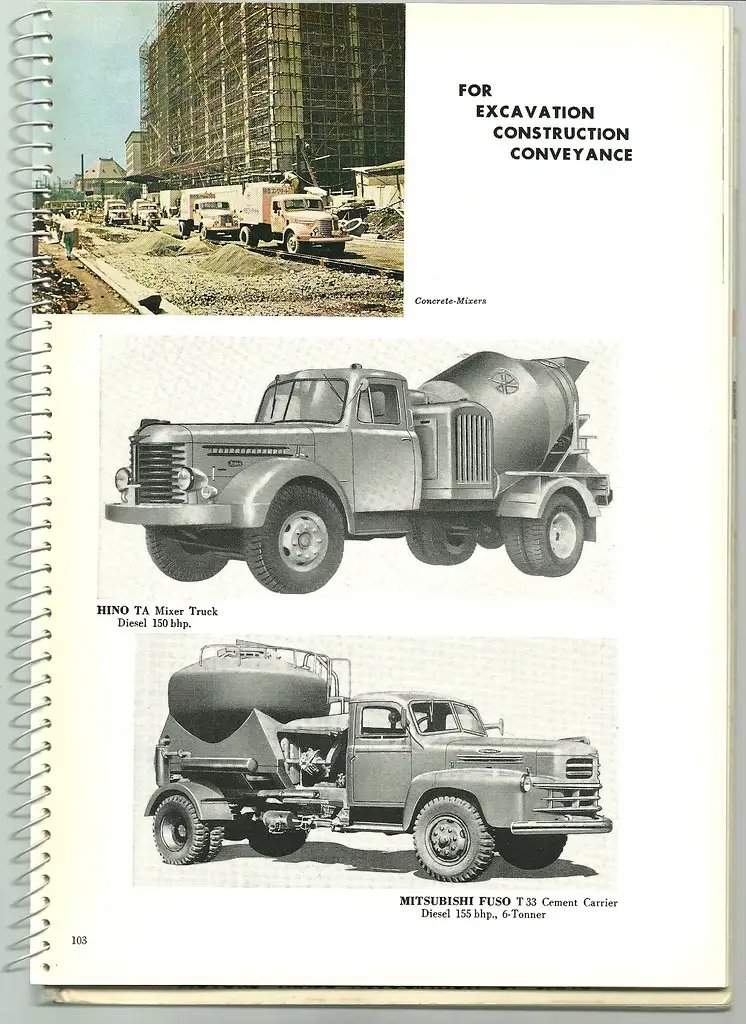
How much concrete is in a ready mix truck?
A ready mix truck is commonly treated as a 6 m³ truck for baseline planning, but usable capacity is lower once fill factor, legal payload, access limits, and route restrictions are considered. A fully loaded ready mix truck is said to weigh up to 32 tonnes, so weight limits can affect how much can be dispatched.
Nominal capacity versus effective capacity
Nominal capacity is the truck’s stated drum size. Effective capacity is what can actually be delivered after partial loading, site constraints, and legal payload limits are considered. On the calculator, effective capacity equals nominal capacity multiplied by fill factor, then adjusted for the site.
| Planning term | Meaning | Why it matters |
|---|---|---|
| Nominal capacity | Stated drum size | Starting point only |
| Effective capacity | Usable load after fill factor and site limits | Drives load count |
| Fill factor | Value between 0 and 1 | Handles partial loading |
| Waste allowance | Added before load math | Covers overage and variability |
Why fill factor changes usable volume
The fill factor accounts for trucks that cannot or should not leave the plant full. Access width, driveway geometry, route restrictions, and payload weight can all reduce usable load. For a residential hardscape job, a smaller practical load can be safer than a nominal full load that cannot reach the pour.
How fully loaded weight and access limit the order
The truck is stated as 8-9 metres long, 2.5 metres wide, with a chute extension reaching roughly 3 metres from the back. Those dimensions affect where the truck can stop, swing, and discharge. If the access lane is tight, the order may need to be split into partial loads or placed with a pump.
How many ready mix truck loads do I need?
Truck loads are found by converting the total pour volume to the same unit as the truck capacity, adding waste first, then dividing by effective capacity and rounding up. The calculator uses 1 yd³ = 0.764554857984 m³ for unit conversion, so either unit can be planned consistently.
Volume conversion in yd³ and m³
Use this sequence: convert the project volume if needed, add waste, then divide by effective truck capacity. If the pour is given in yd³, multiply by 0.764554857984 to get m³. If the pour is given in m³, that value can be used directly.
Load count formula with a worked example
Formula: Adjusted volume = total volume × (1 + waste allowance). Then loads required = adjusted volume ÷ effective capacity, rounded up. If a slab needs 8 m³ and the waste allowance is 10%, adjusted volume is 8.8 m³. At 5.4 m³ effective capacity, the result is 1.63 loads, so order 2 loads.
- Measure the pour volume in m³ or yd³.
- Convert units if needed.
- Add waste before load math.
- Apply fill factor to the truck capacity.
- Divide adjusted volume by effective capacity.
- Round up and check timing between loads.
How do truck spacing and cycle time affect delivery?
Truck spacing should match the pour rate, not just the load count. Cycle time covers loading, travel, discharge, return, and buffer time, and the calculator uses that total to set the arrival interval. If the interval is too wide, the crew waits; if it is too tight, the site can overload the placing team.
Setting first-truck arrival and follow-up spacing
The first truck should arrive when the crew is ready to place. After that, the spacing should keep the pour continuous without flooding the site. The calculator defines trucks required as the cycle time divided by the arrival interval, which makes spacing part of the order plan.
When to add a buffer for delays
Add a buffer when the route is uncertain, access is shared with other trades, or discharge will be slow. Buffer time absorbs minor delays before they become a stop-start pour. That matters most on small pours, where one late truck can create a large timing gap.
When is a standard ready mix truck the wrong choice?
A standard ready mix truck is the wrong choice when the pour is too small for the minimum order, when access is too tight for the truck dimensions, or when cycle time makes continuous placement unlikely. In those cases, a pump, second plant, or volumetric mixer may be safer and cheaper overall.
Small pours near minimum order thresholds
Many large suppliers have a minimum order of 3m³. Smaller independent suppliers may go down to 1m³ with a short-load charge of £50-100. For a 2 to 3 m³ pour, the order can sit right on the threshold, so short-load fees and waste allowance need to be checked before dispatch.
Pumped pours and access constraints
If the truck cannot reach discharge position safely, a pump may be needed. That adds cost, but it can reduce standstill risk and protect the pour window. When route limits or site access reduce usable load, the better option may be a smaller load with a pump instead of forcing a full truck into a poor setup.
When a second plant, pump, or volumetric mixer may be safer
If cycle time is too long for the target pour rate, a second plant may be closer to the site. If the job is highly variable, a volumetric mixer can reduce over-ordering. The decision point is simple: choose the method that keeps delivery inside the placement window at the lowest total risk.
Dispatch worksheet with three worked scenarios
This worksheet shows adjusted volume, effective capacity, loads, spacing, cycle time, and a short-load or standby risk note. The numbers below use the calculator’s baseline assumptions: 6 m³ truck, 10% waste allowance, and fill factor set where the scenario needs it.
| Scenario | Ordered volume | Adjusted volume | Effective capacity | Loads | Spacing | Cycle time | Risk note |
|---|---|---|---|---|---|---|---|
| Small pour | 2.4 m³ | 2.64 m³ | 2.1 m³ | 2 | Not critical; one load may cover most of the pour | 95 min | Short-load risk if supplier minimum is 3m³ |
| Medium slab | 9.0 m³ | 9.9 m³ | 5.4 m³ | 2 | About 90-100 min if first truck is on time | 100 min | Standby risk if discharge runs long |
| Pumped pour | 15.0 m³ | 16.5 m³ | 4.8 m³ | 4 | About 40-50 min to hold the pump fed | 80 min | Backup truck advised if route delay exceeds buffer |
Small pour: 2 to 3 m³ with short-load risk
Example: 2.4 m³ × 1.10 = 2.64 m³ adjusted volume. If the effective capacity is 2.1 m³ after partial loading, 2.64 ÷ 2.1 = 1.26 loads, so round up to 2 loads. That is workable, but the order may trigger a short-load fee if the supplier minimum is 3m³.
Medium slab pour with spacing and standby check
Example: 9.0 m³ × 1.10 = 9.9 m³. At 5.4 m³ effective capacity, 9.9 ÷ 5.4 = 1.83, so order 2 loads. If cycle time is 100 minutes total and discharge takes most of that window, truck spacing must keep the pour moving while avoiding a waiting truck on site.
Pumped pour with cycle time and backup truck note
Example: 15.0 m³ × 1.10 = 16.5 m³. If the pump setup allows 4.8 m³ effective capacity per truck, then 16.5 ÷ 4.8 = 3.44, so order 4 loads. Because the pour depends on pump feed and tighter spacing, a backup truck is worth checking if the route or return leg is unstable.
What access is needed for a ready mix truck?
A ready mix truck needs enough width, length, turning room, and discharge access to reach the pour without blocking the route. The standard truck is described as 8-9 metres long and 2.5 metres wide, with a chute extension reaching roughly 3 metres from the back. Those dimensions set the site envelope.
Truck length, turning room, and driveway limits
Long, narrow driveways can cut effective capacity because the truck may need a smaller load to stay within axle and turning limits. If the route includes tight bends, overhead obstructions, or restricted kerb access, a smaller dispatch may be safer than a nominal full load.
Route restrictions and legal payload effects
Fully loaded weight matters because a truck may be limited by route rules before the drum is full. That is why the calculator separates nominal size from effective capacity. The usable load can drop when legal payload, bridge limits, or local access rules tighten the route.
Placement setup and crew coordination
Before dispatch, the crew should clear the discharge area, confirm the pour line, and check where the chute or pump will land the mix. Delivery timing should match the crew’s readiness, not only the supplier’s availability. That is how standby time stays low and placement stays continuous.
How much does ready mix cost?
Ready mix cost depends on load size, minimum order rules, short-load charges, standby time, and extra truck cycles. A basic estimate should include concrete price, delivery, any short-load fee, and waiting time. Small orders are often more expensive per cubic metre because fixed dispatch costs are spread across fewer loads.
Truck-hour and delivery-cost estimate
A practical estimate is: total delivery cost = material cost + short-load charge + standby cost + extra-load cost. If a project needs one additional truck because capacity or access reduced the effective load, the cost rises fast. Waiting time also matters because a truck held on site can add billed time even when no concrete is being placed.
Load-size economics that change the price
Minimum order thresholds, short-load fees, and standby charges can make a 2.5 m³ order cost more per cubic metre than a 6 m³ or 9 m³ order. That is why the calculator checks load count and dispatch spacing before price estimates are trusted. The cheapest quote can turn costly if the pour window is too tight.
Frequently asked questions
What fill factor should I use for a ready mix truck?
Use a fill factor between 0 and 1 to reflect partial loading. A smaller factor is safer where access is tight, routes are restricted, or the supplier cannot legally send a full truck. The right value is the one that matches the site, not the drum label.
How do I calculate ready mix truck capacity with waste?
Start with total pour volume, add 5% to 10% waste, then divide by effective truck capacity. The calculator recommends 10% by default. For example, 8 m³ becomes 8.8 m³ with waste, and that figure is what should be used to determine truck loads.