What Is the Best Landscape Edging to Keep Grass Out?
Steel or aluminum edging is usually the best choice for keeping grass out. Set it about 4 to 6 in. deep and keep the top flush with grade; use pavers or concrete when you need a wider, rigid barrier. Weak edging lets grass creep over the top, push underneath, or thread through gaps, turning a clean edge into weekly trimming. This guide compares metal, plastic, vinyl, wood, stone, and paver edging by the failure mode that lets grass win.
This guide is part of our Landscape edging: types, costs, and how to choose series.
What makes a border hold up
Edging stops grass by blocking roots, rhizomes, and surface runners from crossing into the bed. The weak point depends on the material and the install: grass may grow over the top edge, slide under a shallow border, or move through joints and gaps.
That is why depth alone is not the whole answer. Trench depth is how deep you dig. Barrier depth is how much material sits in the soil. Base depth is the sand or gravel below the edging. Those are different numbers, and mixing them up leads to edges that look fine on day one but fail after a season.
Grass pressure also matters. A clump-forming turf is easier to contain than a lawn with aggressive spreading roots or rhizomes. Seed-spreading weeds and grasses do not need the same underground barrier as a rhizome-heavy lawn. If the lawn is already pushing into beds, a shallow no-dig strip is usually too light.
Which edging stops grass best?
The best edging depends on how the lawn pushes against it. For low-pressure lawns, flexible edging can be enough. For medium pressure, a deeper rigid border is safer. For high-pressure lawns, metal or a hardscape border usually holds up better than thin plastic alone, especially where mowing and soil movement are constant.
Best choice for low-pressure lawns
For beds with light grass pressure and careful maintenance, plastic or vinyl edging can work if it is set cleanly and staked well. It is budget-friendly and bends easily around curves, but it is not the strongest choice where roots are aggressive or the soil shifts a lot.
Best choice for medium-pressure lawns
Metal edging is the strongest all-around choice for medium pressure because it gives a clean line, resists overtop creep when set correctly, and handles fairly even terrain well. Paver edging is the next step up when the border also needs a wider, more rigid face and some curve support.
Best choice for high-pressure lawns
For high-pressure lawns, choose a deeper rigid border such as pavers, concrete units, or a well-built stone edge with a proper base. These options resist undercutting and movement better than no-dig edging, especially where roots are dense, soil heaves, or the mower repeatedly brushes the edge.
Metal edging for clean borders
Metal lawn edging is often the simplest and most subtle border. Family Handyman describes it as about 4 inches deep, with the top edge set about 1/2 inch above soil. That low profile helps keep grass from spilling over while still giving the mower a clear line.
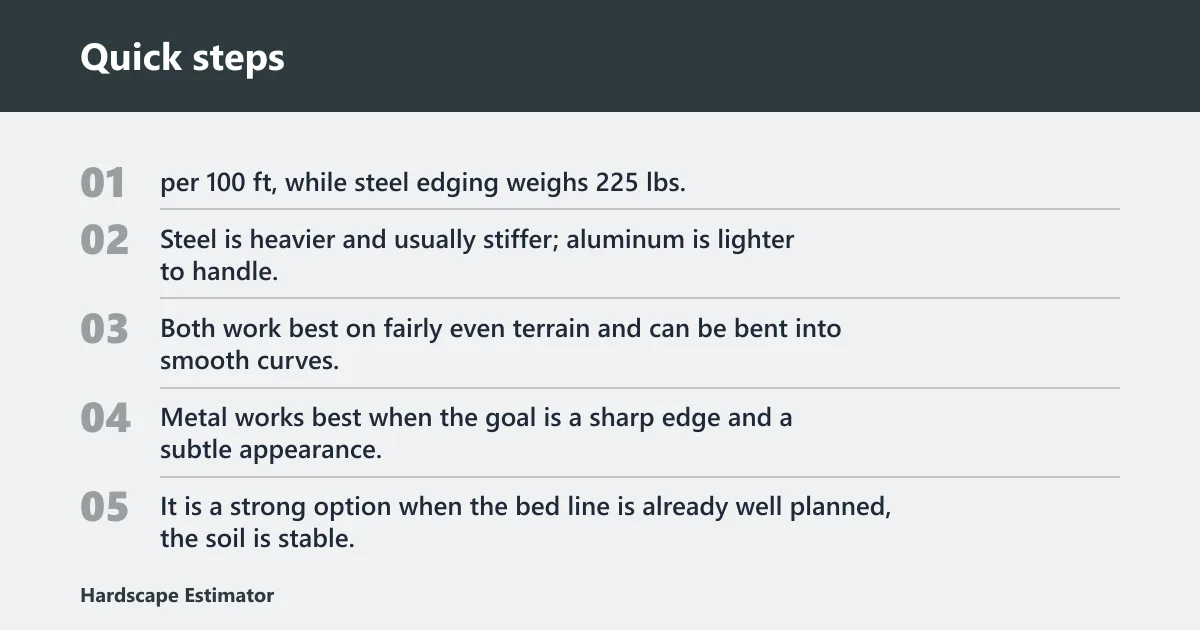
Aluminum edging weighs about 41 lbs. per 100 ft, while steel edging weighs 225 lbs. per 100 ft. Steel is heavier and usually stiffer; aluminum is lighter to handle. Both work best on fairly even terrain and can be bent into smooth curves.
Where metal performs well
Metal works best when the goal is a sharp edge and a subtle appearance. It is a strong option when the bed line is already well planned, the soil is stable, and mowing habits are disciplined. It also helps where grass likes to creep over a shallow, fuzzy border.
Say your front bed runs 30 ft along a level sidewalk and the lawn edge gets trimmed every week. Metal edging is a good fit because it can stay neat, stay low, and guide the mower without adding much visual bulk.
Where metal falls short
Metal can lose ground when the soil moves a lot, the border has tight grade changes, or the installer leaves the top too low. If the upper edge sinks below the turf line, grass will simply roll over it. If the trench is loose, roots can work under the strip.
Plastic, vinyl, and no-dig edging
Plastic edging is flexible, usually cheap, and good for curves. Vinyl edging is also flexible and plastic-based, but product specs vary by brand. Backyard Boss says vinyl edging should be at least 6 inches wide and use 8-inch plastic stakes every 4 feet; treat those as product guidance, not a universal rule.
These lighter materials are most useful where the bed edge is not under heavy pressure. They are less durable than metal or stone in many settings, especially where frost, foot traffic, or mower contact keeps hitting the same line.
When flexible edging is enough
Flexible edging fits small gardens, gentle curves, and lower-pressure lawns. It is also easier to install around a winding border than rigid materials. Some products are 3.15 to 5 inches high, which can be enough when the goal is to guide mulch and slow light grass creep rather than block a strong rhizome network.
Why stakes and soil movement matter
Flexible edging depends on stakes and stable soil. If the stakes loosen, the border lifts, waves, or leaves gaps at the soil line. That gives grass a path over the top or under the base. In unstable ground, more fastening points matter more than the label on the roll.
Paver, wood, and stone borders
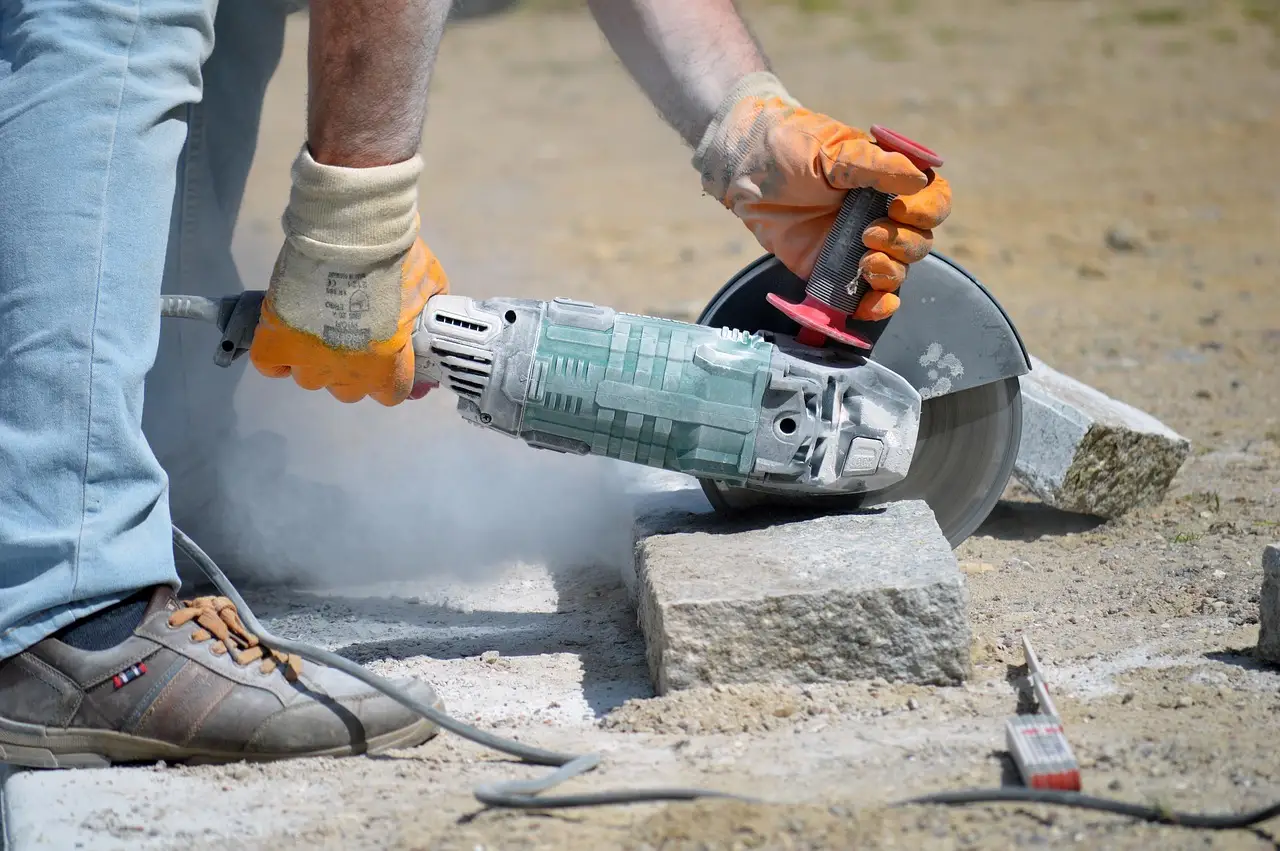
Rigid borders resist grass pressure because they add weight and a wider physical stop. Paver borders are often used for gradual curves and varying slopes, with about a 4-inch trench and about 2 inches of sand. Those numbers describe that style of border, not every hardscape edge.
Wood edging has a classic look and can be built up into a raised bed, but it needs careful material choice near food gardens. Treated wood raises caution around vegetable beds, so decay resistance and intended use both matter. Stone edging can also work well, but its performance depends on the unit size, base prep, and layout.
Why rigid borders resist grass pressure
Rigid borders help most where grass tries to push under a light strip or press through a flexible seam. They are slower to move, harder to curl out of shape, and better at holding a true line when the soil shifts. They still need a sound base, or the border settles unevenly and creates openings.
Picture a backyard with a sloped side yard and a lawn that creeps into the bed after every rain. A paver or stone edge on a compacted base is more likely to stay put there than a thin no-dig strip that rocks back and forth.
Base prep and edge height
A hardscape border needs more than a trench. It needs a level base, careful alignment, and a finished edge height that the mower can see. Pavers often get sand below them, and stone borders often need a tamped base and leveling sand. The goal is a stable line, not just a deeper hole.
Grass control edging table
| Edging type | Overtop creep resistance | Undercutting resistance | Curve-friendliness | Slope performance | Maintenance burden | Best use |
|---|---|---|---|---|---|---|
| Metal edging | High when set above grade | High in stable soil | Good | Good on fairly even terrain | Low | Low to medium pressure lawns |
| Plastic edging | Moderate | Moderate to low | Very good | Fair | Moderate | Budget curves and light grass pressure |
| Vinyl edging | Moderate | Moderate | Very good | Fair | Moderate | Flexible borders with regular upkeep |
| Paver edging | High | High | Good for gradual curves | Good | Low to moderate | Medium to high pressure lawns |
| Wood edging | Moderate | Moderate | Good | Fair | Moderate to high | Decorative borders and raised beds |
| Stone edging | High | High | Good | Good | Low | Long-term rigid borders |
How deep should edging go?
Depth should match the material and the goal. Placing edging about 6 inches deep for weed prevention, while others place metal edging at about 4 inches deep and use paver trenches about 4 inches deep with sand below. The right number depends on the border style, not one universal rule.
Trench depth versus barrier depth
Trench depth is the hole. Barrier depth is the installed material. If a guide says 4 inches deep, that does not mean 4 inches of exposed edge above ground. It means the border sits that far into the soil. The visible height may be only about 1/2 inch above grade for metal or pavers.
When deeper is worth it
Deeper installation is worth it when the lawn has strong spreading roots, the soil moves a lot, or mowing contact is rough. Deep edging can slow grass better, but only if the barrier is stable and continuous. A loose 6-inch strip can fail sooner than a well-set 4-inch metal edge.
How to install edging so grass stays out
Good installation matters as much as the material. Use a hose or spray paint to mark the line, dig a clean trench with a square spade or flat-edged shovel, set the border level, and backfill firmly. Stakes or fasteners matter most on flexible edging and in unstable ground.
Mark the line and dig the trench
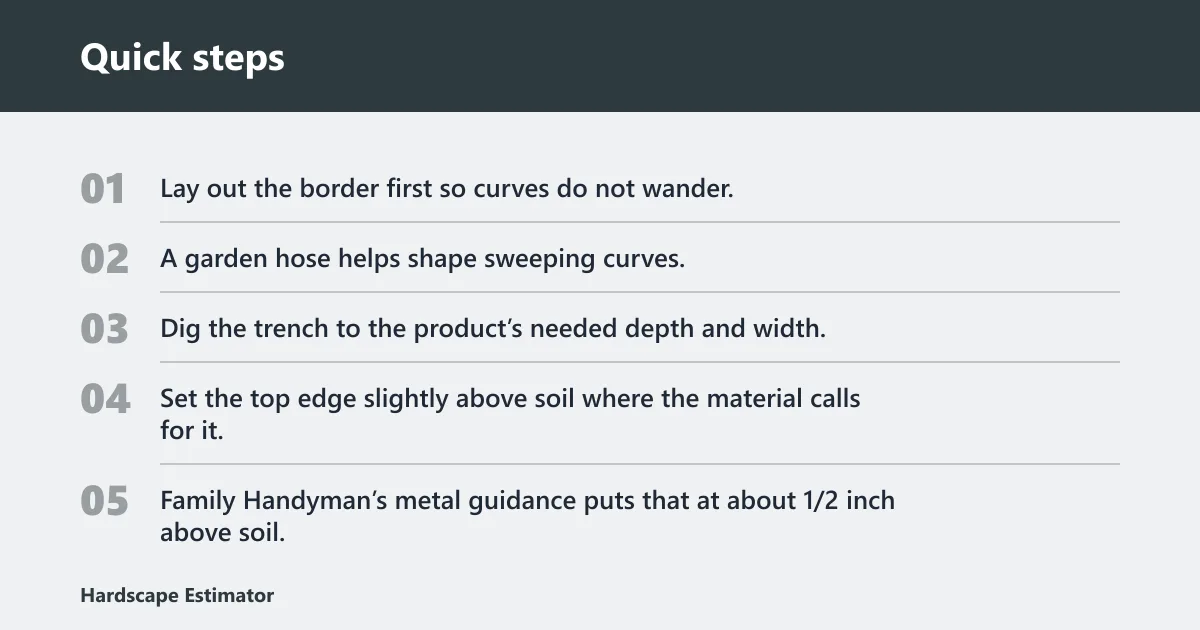
Lay out the border first so curves do not wander. A garden hose helps shape sweeping curves, while spray paint or a string line helps keep straighter runs true. Dig the trench to the product’s needed depth and width, then remove loose soil so the edging sits in firm contact.
Set, level, and backfill
Set the top edge slightly above soil where the material calls for it. Family Handyman’s metal guidance puts that at about 1/2 inch above soil. For pavers, a sand layer helps the units sit level. Backfill in lifts and tamp lightly so roots do not find easy voids.
Keep borders straight on curves and slopes
Curves need gentle layout, not force. Metal can form smooth arcs, and pavers handle gradual curves and varying slopes well. On slopes, a border can walk downhill if the base is weak, so extra care with compaction and alignment matters. A level top line still matters even on a sloped yard.
A common first-timer mistake is leaving the top edge buried under mulch. Grass then grows over the hidden edge in a few weeks, and the border appears to have failed when the real problem was height, not material.
Frequently asked questions
What is the best border to keep grass out?
Steel or aluminum edging is usually the best choice for keeping grass out because it resists overtop creep well, stays subtle, and works in a stable trench. For wider, rigid borders, pavers or stone do better. The best option depends on root pressure, slope, and how often the edge gets hit by a mower.
What to use for edging grass?
Use metal for clean lines, pavers for a rigid border, plastic or vinyl for flexible curves, and stone or wood when the look and structure matter as much as grass control. Match the edging to the lawn’s pressure and your maintenance style. Light lawn pressure does not need the same barrier as a vigorous border.
How to keep edging straight
Mark the run with a string line or hose first, then dig a trench that follows that line without wavering. Set each section to the same height and backfill as you go. Straight edging fails most often when the trench wanders or the fill settles unevenly.
How to keep grass from growing over edging
Keep the top edge slightly above soil where the product calls for it, and trim grass before it leans across the border. If mulch piles up over the edge, pull it back. Over time, a buried edge becomes a bridge for grass, while a visible edge stays a barrier.
How deep should edging be to stop grass roots?
There is no single depth for every border. Metal edging is often about 4 inches deep, while weed-prevention guidance for some borders points to 6 inches. The key is matching depth to the material and the root pressure. Deep alone is not enough if the border shifts or gaps open.
How do I install edging so grass doesn’t creep under it?
Dig a clean trench, compact the base, and seat the edging firmly so there are no voids under it. Use stakes or fasteners where the product calls for them, especially on flexible edging. Backfill tightly on both sides, because loose soil leaves space for roots and runners to move through.