Concrete Slab Calculator: Yardage, Bags, and Base
A concrete slab calculator turns length × width × thickness into cubic yards, then adds 10% waste; we recommend ready-mix for larger pours and bag mix only for small slabs, often under 1 yard. Underordering leaves thin spots, cold joints, and extra delivery costs. This guide shows the slab formula, yard and bag conversions, gravel base, reinforcement, and a ready-mix-versus-bags decision in one workflow.
How the concrete slab calculator works
The calculator starts with slab area, then multiplies by thickness to get volume. It can also add waste, base, reinforcement, and optional forms as separate line items, so the estimate is a takeoff, not just a yardage number.
What you enter
For a rectangular slab, enter length, width, thickness, shape, and waste. For round slabs, enter diameter and thickness. Irregular edges, thickened borders, or sloped pads need extra care because the average thickness changes the final volume.
What the calculator returns
The output should include cubic yards of concrete, bag counts by mix size, gravel base quantity, reinforcement quantities, and a cost breakdown. A useful calculator also shows the formula used, so the reader can check each line before ordering.
How the workflow changes for different shapes
Rectangular slabs use length × width × thickness. Circular slabs use the area of a circle first, then multiply by thickness. For irregular slabs, split the footprint into simple shapes or use an average length and width, then add waste for the cut edges and layout changes.
Residential slabs commonly use 4 inches thick.
How do you calculate concrete for a slab?
Calculate concrete for a slab by multiplying length × width × thickness, after converting thickness from inches to feet. Then divide cubic feet by 27 to convert to cubic yards. For metric users, the same volume can be converted to cubic meters after the cubic-foot step.
Rectangular slab formula
Formula: length × width × thickness = cubic feet. Then cubic feet ÷ 27 = cubic yards. This is the core slab math used by most calculators, including pages that estimate the volume and weight needed to cover a given area.
Example: a 10 ft × 10 ft slab at 4 in thick uses 10 × 10 × 0.333 ft = 33.3 cubic feet. 33.3 ÷ 27 is about 1.2 cubic yards. That matches the common 10 × 10 example shown at 4 inches.
Convert inches to feet before volume math
Thickness must be in feet. A 4-inch slab is 4 ÷ 12 = 0.333 ft. A 6-inch slab is 6 ÷ 12 = 0.5 ft. That conversion matters because the volume changes directly with thickness.
Metric note
If a project is estimated in metric, convert the finished volume to cubic meters after calculating the slab volume. The workflow is the same: area × thickness, then convert the result to the unit used for ordering.
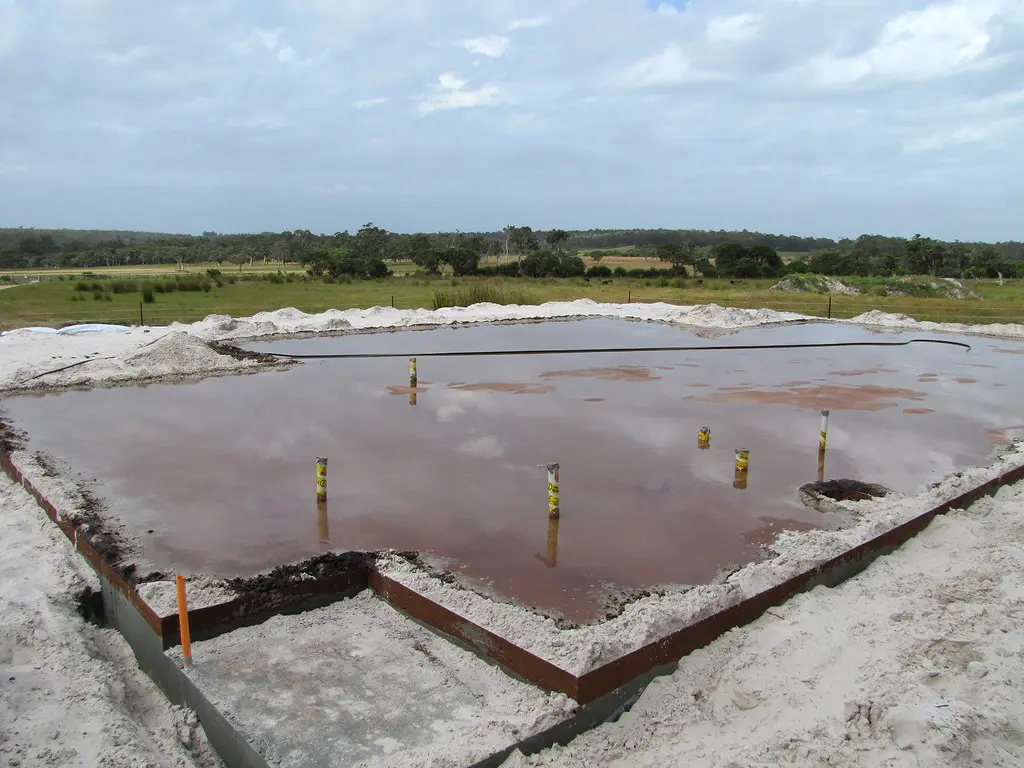
What slab thickness should you use?
Four inches is a common residential default for patios and light-use slabs. Five to six inches is often a practical choice for driveways and garage floors. Six inches or more is often used for RV pads and heavier loads, since thickness affects both concrete volume and load capacity.
Common thickness choices
- 4 in: common for patios, walks, and light residential slabs.
- 5 to 6 in: common for driveways and garage floors.
- 6 in or more: common for RV pads and heavier loading.
A 6-inch slab uses 50% more concrete than a 4-inch slab. That jump should be built into both the takeoff and the budget before the pour is scheduled.
How thickness affects the estimate
Thicker slabs increase the concrete yardage, the bag count, and usually the reinforcement needs. They do not change the footprint area, but they do increase the volume line in a direct, predictable way.
How many bags of concrete do you need?
Bag count comes from cubic yards, then is rounded up to whole bags. The bag size matters. A 40 lb, 60 lb, and 80 lb mix do not yield the same amount of concrete, so the calculator should state the bag size and the yield basis before converting.
Bag yield differences
| Bag size | Yield basis | Use in the worksheet |
|---|---|---|
| 40 lb | Smaller yield than 60 lb or 80 lb bags | Use only when the mix sheet or calculator states the yield |
| 60 lb | Smaller yield than 80 lb bags | Common for small hand-mixed pours |
| 80 lb | Approximately 0.022 cubic yards | Useful for direct yard-to-bag conversion |
For the 80 lb bag, the yield is approximately 0.022 cubic yards. To convert a slab takeoff into bags, divide the required cubic yards by the bag yield, then round up to the next whole bag.
When bags stop making sense
Bag mix is practical for very small slabs, patch work, and isolated pads. Once the pour grows beyond a small fraction of a yard, ready-mix usually becomes the better call because hand mixing time, labor, and short-load risk rise quickly.
The calculator.net page notes that concrete can be purchased in 60- or 80-pound bags or delivered by mixer truck. That is the right fork in the workflow: bags for small pours, truck delivery for larger ones.
Proof asset: slab takeoff worksheet
This worksheet shows the full takeoff in one place. It separates slab concrete from gravel base, reinforcement, waste, and the bag-versus-truck decision, so the order list is easier to check before buying.
Worked example: 10 ft × 12 ft slab at 4 in
- Slab volume: 10 × 12 × 0.333 ft = 39.96 cubic feet. 39.96 ÷ 27 = 1.48 cubic yards.
- 10% waste allowance: 1.48 × 1.10 = 1.63 cubic yards.
- Gravel base: if the base is a separate 4 in compacted layer, its quantity is calculated from the same footprint, then converted to cubic yards or tons by the base depth and local aggregate weight.
- Mesh or rebar: the slab footprint determines the panel size, bar count, and spacing, but not the concrete volume.
- Bag-versus-truck call: 1.63 cubic yards is usually past the point where a mixer truck is the cleaner option than hand-mixing bags.
Worksheet template
| Line item | Calculation | Result |
|---|---|---|
| Concrete volume | Length × width × thickness ÷ 27 | Base slab yardage |
| Waste allowance | Base yardage × 1.10 | 10% default overage |
| Gravel base | Footprint × base depth | Separate subbase quantity |
| Reinforcement | Area covered by mesh or bar layout | Mesh sheets or rebar count |
| Delivery choice | Yardage compared with bag yields | Bag mix or ready-mix truck |
How much gravel goes under a concrete slab?
A compacted crushed-stone base is a separate line item from the concrete slab itself. It helps drainage and can reduce cracking by creating a more stable platform. The calculator should estimate base depth and quantity separately so the slab takeoff is complete.
Base quantity and units
Base can be estimated in cubic yards, then converted to tons using the chosen stone’s density. Some estimate pages include the subbase in the output, but the better workflow is to keep it separate from slab concrete so the order is transparent.
Where base depth changes the estimate
Patios, walks, driveways, garage floors, shed bases, and similar slabs may use different subbase assumptions. A driveway or garage floor often calls for more careful base planning than a small patio because the load and traffic pattern are different.
Reinforcement: mesh or rebar?
Reinforcement changes performance, not volume. Wire mesh, #3 rebar, #4 rebar, and #5 rebar all strengthen the slab differently, but none of them change the cubic yards of concrete needed.
Mesh versus rebar
Wire mesh is often used for lighter slabs and helps hold the concrete together. Rebar is used when more support is needed. Bar size and spacing depend on the load, the slab shape, and the base condition.
Spacing, cover, and edge clearance
Bars need spacing and concrete cover so they stay inside the slab, not on the bottom surface. Edge clearance matters too, especially at slab borders and thickened areas. The reinforcement layout should be planned before ordering concrete so the slab thickness still matches the takeoff.
Where reinforcement matters most
It matters most on driveways, garage floors, RV pads, and slabs with heavier loading. It also matters when slabs are larger, when the subgrade is inconsistent, or when the footprint has corners and cutouts that create stress points.
How much concrete slab calculator
A how much concrete slab calculator should answer the question in cubic yards, then show the bag count and waste allowance. It should also separate base, reinforcement, and delivery choice, because the final project cost depends on more than concrete alone.
Cost estimate structure
Concrete cost should be broken into line items: ready-mix material, gravel base, reinforcement, waste, forms, and finish work where relevant. Regional pricing varies, so the repeatable method is the line-item structure, not a single flat number.
Ready-mix versus bags
Use ready-mix when the slab is large enough that hand-mixing bags becomes inefficient or risky. Use bags only for small pours where the total yardage is low enough to manage before the mix starts to set. Short-load risk grows when a small pour is barely over bag territory.
How to square a concrete slab calculator
To square a slab calculator, enter the footprint so it matches the actual shape before estimating volume. That means checking whether the slab is truly rectangular, truly circular, or an irregular shape that needs to be split into simpler sections.
Rectangles and circles
Rectangular slabs use length and width. Round slabs use diameter and thickness. CalculatorSoup includes square slab, round slab, wall, footer, column, tube, steps, and curb-and-gutter modes, which shows why shape selection matters before the math starts.
Irregular edges and thickened borders
For irregular footprints, estimate the main field first, then add separate sections for thickened edges or pads. Sloped slabs need an average thickness, and that average should be stated in the worksheet so the takeoff is easy to audit.
Frequently asked questions
how thick should a concrete slab be
Four inches is a common residential thickness for patios and light slabs. Five to six inches is more typical for driveways and garage floors. Six inches or more is often used for RV pads and heavier loads because the added thickness increases both concrete volume and load capacity.
how to calculate concrete for slab
Multiply length × width × thickness after converting thickness to feet. Divide cubic feet by 27 to get cubic yards. If the slab is round or irregular, calculate the area first, then multiply by thickness and add a waste allowance for cuts, spillage, and subgrade variation.
how many bags of concrete do I need for a slab
Find the slab’s cubic yards first, then divide by the bag yield. An 80-pound bag yields approximately 0.022 cubic yards, while 40 lb and 60 lb bags yield less. Round up to whole bags, and switch to ready-mix when the quantity becomes too large for a hand mix.
how much gravel under concrete slab calculator
Estimate gravel as a separate subbase layer under the slab. Multiply the slab footprint by the chosen base depth, then convert to cubic yards or tons. A compacted crushed-stone base helps drainage and can reduce cracking, but it does not change the slab’s concrete volume.
should I order concrete by the yard or use bags
Order by the yard when the slab is large enough that bag mixing becomes slow or risky. Use bags only for small slabs, patches, or short pours where the yardage is low. The cleaner decision rule is to compare the total cubic yards against the bag yield and the expected delivery size.
how do you calculate concrete slab
Use length × width × thickness, with thickness in feet, then divide by 27 to convert cubic feet to cubic yards. Add 5% to 10% waste, with 10% as a safe default for many calculators. Then add gravel base, reinforcement, and delivery choice as separate lines.