Rubber Mulch Calculator: How Much You Need for 2 to 6 in
A common formula is area in sq ft × depth in inches ÷ 324 to estimate cubic yards of rubber mulch; many people use roughly 2 in for decorative beds, 3 in for tree rings, and 6 in for playgrounds. If the depth or unit is wrong, the order can come up short, cost more than needed, or miss the intended surface depth. We separate landscaping, tree rings, and playgrounds, then convert the result into bags, cubic feet, cubic yards, and pallet counts.
How much rubber mulch do I need?
Start with square footage, then choose the depth that fits the job. Rubber mulch is sold and specified by area and depth, so the same space can need very different amounts at 2 in, 3 in, or 6 in. The quickest path is area × depth, then convert that volume into the order format.
Start with square footage
For a rectangle, multiply length by width. A 12 ft by 8 ft bed is about 96 sq ft. If the area is not rectangular, break it into smaller rectangles and add them together. That keeps the math clean and avoids guessing at curved or broken edges.
Choose the right depth for the job
Decorative beds usually use a thinner layer than playground surfacing. Tree rings often sit between those two use cases. Playground depth is the most sensitive, because the order size changes fast when depth increases. A 6 in layer needs about three times the volume of a 2 in layer over the same area.
Convert area and depth into volume
Use cubic feet or cubic yards after the area is known. The conversion path is straightforward: square feet × depth in feet = cubic feet, then divide by 27 for cubic yards. A calculator can accept total area or dimensions inputs, and depth can be entered in inches, cm, feet, meters, or yards.
How to calculate rubber mulch for square feet
Use length × width for rectangular spaces, then split irregular spaces into smaller rectangles before you add the pieces together. That method gives a reliable square footage total, which is the core input for a rubber mulch calculator. Add a waste allowance only when the edges are irregular, there are tight borders, or the order is pallet-based.
Length × width for rectangular spaces
A 10 ft by 10 ft area equals 100 sq ft. At 2 in depth, that is 100 × 2 ÷ 324 = 0.617 cubic yards. The same area at 4 in depth is double that volume. Depth changes the order size quickly, so the calculator should always pair area with depth before converting to bags or pallets.
How to split irregular areas into smaller rectangles
For an L-shape, measure each leg as a rectangle and add the areas. For a bed with a notch, subtract the missing rectangle. This approach avoids overstating or understating the footprint. Curves, cut-ins, and border gaps should be treated as separate pieces rather than estimated as one easy shape.
When to add a waste allowance
Add a small allowance when edges are uneven, borders are open, or the material must be trimmed around obstacles. This matters more for rubber mulch than for a perfect square because the material is often finished to a visual edge. Waste allowance also helps when the order must be rounded to a full bag count or pallet.
What depth should rubber mulch be?
Depth depends on use case. Decorative beds are usually lighter, tree rings are often intermediate, and playground surfaces are typically deeper. A general mulch layer of 2 to 4 inches is described as beneficial, and that range helps keep the layer from being too thick or too thin for basic use.
Decorative beds and tree rings
Decorative beds often land near 2 in. Tree rings commonly use a slightly deeper layer so the area looks filled and stays covered around the root zone. A ring is a special case because it is circular, not rectangular, so the shape changes the area math even when the depth stays modest.
Playground surfaces
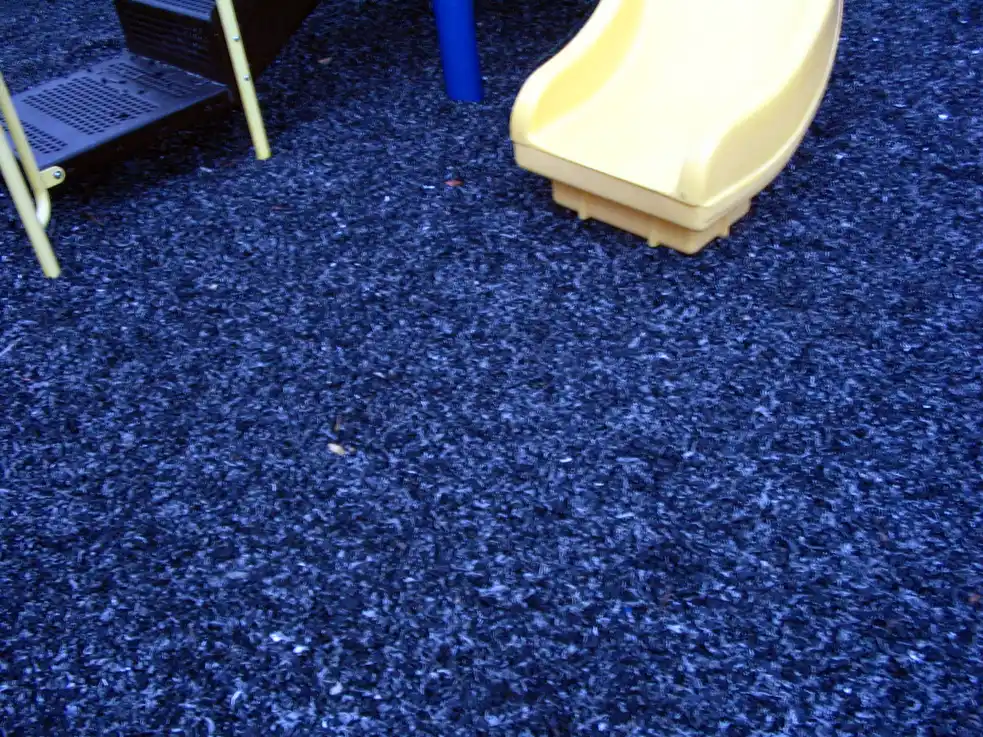
Playground surfacing needs a separate estimate from a decorative bed. The depth is usually higher, and the order should be rounded up more carefully because performance and coverage both depend on the finished layer. A calculator should treat playground depth as a separate input, not as a decorative default.
When deeper coverage changes the order size fast
Depth has a direct multiplier effect. If the depth doubles, the volume doubles. That matters when comparing 2 in decorative coverage with 6 in playground coverage. The area can stay the same while the order triples, which is why depth is the input that changes the result fastest.
Rubber mulch coverage cheat sheet
Use this cheat sheet to match depth, area, and order format without redoing the full math each time. The same square footage can move from a few bags to a pallet or more once depth changes. The examples below use 1 cubic yard = 27 cubic feet and 2 in, 3 in, and 6 in layers.
| Area | 2 in depth | 3 in depth | 6 in depth | Approx. 2 cu ft bags at 2 in |
|---|---|---|---|---|
| 100 sq ft | 0.62 cu yd / 16.7 cu ft | 0.93 cu yd / 25.0 cu ft | 1.85 cu yd / 50.0 cu ft | 9 bags |
| 250 sq ft | 1.54 cu yd / 41.7 cu ft | 2.31 cu yd / 62.5 cu ft | 4.63 cu yd / 125.0 cu ft | 21 bags |
| 500 sq ft | 3.09 cu yd / 83.3 cu ft | 4.63 cu yd / 125.0 cu ft | 9.26 cu yd / 250.0 cu ft | 42 bags |
| 1,000 sq ft | 6.17 cu yd / 166.7 cu ft | 9.26 cu yd / 250.0 cu ft | 18.52 cu yd / 500.0 cu ft | 84 bags |
The bag counts above use a 2 cu ft bag size. That is a standard example size mentioned on mulch calculators, but bag size varies by supplier. Coverage per bag depends on material type and depth, so the count should always be tied to the specific product format.
Quick lookup for bags and pallets
Use bags for small projects, cubic yards for bulk orders, and pallets when the product ships that way. A 2 cu ft bag is easy to count from cubic feet. For bulk, divide cubic feet by 27 to get cubic yards. For pallet ordering, convert the supplier’s pallet yield into the same volume math before comparing totals.
How many bags or pallets of rubber mulch do I need?
Bag count comes from cubic feet, while pallet count comes from the supplier’s pallet yield. The key is to calculate the volume first, then divide by the package size. A calculator can estimate material needed from area and depth, then convert that result into bags, cubic yards, or pallets without changing the underlying math.
Bag count from cubic feet
If a project needs 75.6 cubic feet, and each bag is 2 cubic feet, the order needs 37.8 bags. Since bags cannot be ordered in fractions, round up to 38 bags. That is why bag size matters so much. A 2 cu ft bag at a shallow depth covers far more square feet than the same bag at a deeper layer.
Cubic yards for bulk orders
Bulk orders use cubic yards. Divide cubic feet by 27 to convert. For example, 75.6 cu ft ÷ 27 = 2.8 cubic yards. That same conversion is the reason many calculators show both outputs. It lets the user move from site dimensions to bulk ordering without changing units midstream.
When pallet ordering changes the math
Pallets add a packaging step. The calculation still starts with volume, but the final order must match the number of bags or pallet units per shipment. If a pallet holds a fixed number of bags, the final count should be rounded to a full pallet when the order must ship that way. Partial pallet math usually does not help at checkout.
Are rubber mulch rings good for trees?
Rubber mulch rings can work well as a measured tree-bed cover, but they need a different estimating method than flat rectangular beds. The ring shape changes the area formula, and the depth often stays lighter than a playground surface. Measure the circle or the ring band, then convert that area into volume before ordering.
How to measure a ring bed
For a full circle, use radius squared times pi to find area. For a ring, subtract the inner circle from the outer circle. That leaves the actual covered band. Once the square footage is known, use the same depth math as any other project.
Why tree rings are different from flat beds
A tree ring rarely fits the length-by-width rectangle method. The geometry is different, and a ring often leaves exposed center space around the trunk. That means the order should be based on the actual covered band, not the full outer circle unless the entire circle is being filled.
Rounding rules for circular and irregular shapes
Round up when the ring is segmented, the edge is cut by hardscape, or the shape will be trimmed to fit. Round to exact math only when the measured circle or band is clean and the product is sold in a format that can be ordered precisely. Small measurement errors matter more in a narrow ring than in a large flat bed.
When should you round up the order?
Round up when safety, shape loss, or packaging leaves no room for short material. Playground surfacing should not be ordered tight to a thin calculation. Irregular borders, cut losses, and pallet minimums also justify extra material. Exact math is useful for the estimate; the order often needs a little more.
Playground safety and minimum depth
Playground depth should be treated conservatively. If the target depth is 6 in, the order should protect that finished depth after settling, trimming, and leveling. A short order can leave low spots that are hard to correct without another delivery. That is why playground projects usually get the strongest rounding-up rule.
Irregular borders and cut losses
Curves, edging, roots, and fixtures create cut losses. The more turns and offsets a bed has, the more likely the final installed amount will be lower than the simple rectangle estimate. A small waste allowance helps offset those losses and reduces the chance of coming up short at the end of the job.
Packing and pallet minimums
Bag and pallet formats both push the order upward. If the math says 37.8 bags, the order becomes 38 bags. If the product ships by pallet, the order may need to move to a full pallet even when the measured volume lands just below it. That is a packaging rule, not a volume rule.
Frequently asked questions
How to calculate how much rubber mulch I need
Measure the space, calculate area, and multiply by depth. For rectangular areas, use length × width. For irregular spaces, split the project into rectangles and add them together. Then convert the result into cubic feet, cubic yards, bags, or pallets based on the order format.
How many bags of rubber mulch do I need?
Convert the total volume into cubic feet, then divide by the bag size. A 2 cu ft bag is a common example size, but suppliers vary. If the result is not a whole number, round up to the next full bag so the order is not short.
What depth of rubber mulch is best for playgrounds?
Playground surfacing should be treated as its own depth choice, not copied from a decorative bed. The calculator should use the intended playground depth directly, because the required volume changes fast as depth increases. A deeper setting increases both material needs and order size.
How much rubber mulch covers square feet?
Coverage depends on depth and package size. A 2 cu ft mulch bag covers more square feet at a shallow layer than at a deeper one. As a reference point, a 2 cu ft wood mulch bag covers 12 sq ft at 2 in deep and 6 sq ft at 4 in deep, showing how depth changes coverage.